• About
  • Colonel Unthank and the Golden Triangle (Unthank #1)
  • Colonel Unthank’s Norwich #2
  • Contact
  • Latest Colonel Unthank’s Norwich Book #3
  • Posts

COLONEL UNTHANK'S NORWICH

~ History, Decorative Arts, Buildings

COLONEL UNTHANK'S NORWICH

Tag Archives: Norwich City Hall doors

City Hall Doors # 2

15 Friday Mar 2019

Posted by reggie unthank in Norwich buildings, Norwich history

≈ 16 Comments

Tags

James Woodford, Norwich City Hall doors, Public art

The Normans left Norwich a magnificently tangible legacy of Castle and Cathedral but traces of their Scandinavian cousins – the Vikings – are harder to find.

Roundel 4A: The Vikingsvikings.jpg
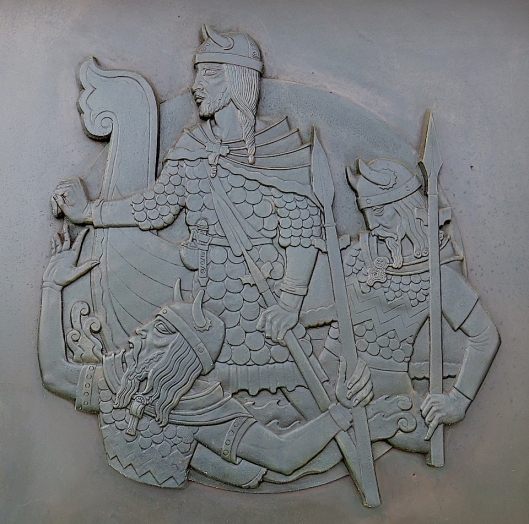
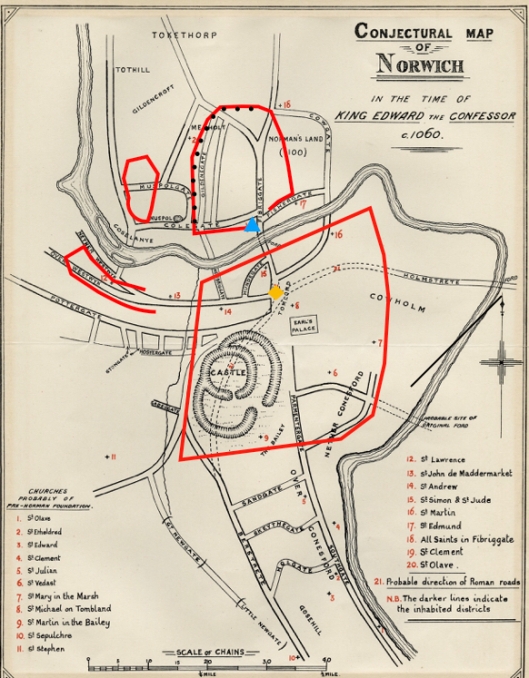
For the first roundel in this ‘second half’ of his plaques on the City Hall doors (1936-8), James Woodford acknowledged the significance of the Viking invasion to the development of proto-Norwich. The Great Heathen Army first invaded East Anglia in 865AD but there is little physical evidence that Scandinavians settled in Norwich until the C10 [1]. Then, there is evidence of an Anglo-Scandinavian settlement – a North wic on the northern side of the Wensum, centred along modern-day Magdalen Street, defended by a looping, 13-foot-deep ditch and probably topped by bank and fence. This may have been constructed in response to Anglo-Saxon pressure from Edward the Elder of Wessex who overcame the East Anglian Danelaw in 9 I 7.
Map2.001.jpg

Anglo-Scandinavian Norwich outlined in red. Dotted lines mark the known defensive ditch. Blue triangle = St Clement Colegate; yellow diamond = Tombland marketplace. Map courtesy of Norfolk Museums Service, redrawn from Philip Judge’s map in [1].

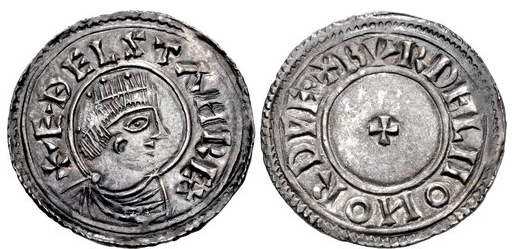
This protected settlement was sufficiently important and stable in the C10 to have its own mint making Anglo-Saxon ‘Nordwic’ coins. 
Coins2.jpg

Æthelstan, Anglo-Saxon King of Wessex. Penny minted in Nordwic ca 930AD.  © CNG 2019 

Scandinavian influence can be detected in the naming of churches: St Clement – the patron saint of sailors – was much favoured by the Scandinavians and his churches occur at rivers or portals as here, at St Clement’s on the corner of Fye Bridge Street and Colegate. Norwich also had two churches named after St Olave or Olaf, the Norwegian king canonised in 1030.IMG_0357.jpg
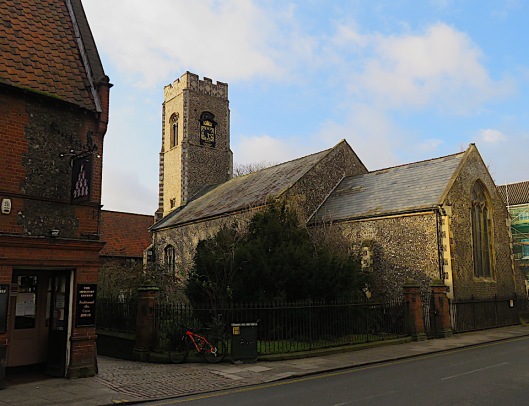
St Clement’s Fye Bridge/Colegate, perhaps pre-Conquest, now mostly C15/16 

The Anglo-Scandinavian settlement was not confined to the northern bank for it extended southwards to form a double burh joined across the river by a wooden causeway where Fye Bridge now stands [1]. A few hundred yards south of the river was the marketplace in Tombland, from the Danish word täm for open space and it is from their word ‘gata’ meaning street that we have inherited Finkelgate, Fishergate, Pottergate, Colegate, Mountergate etc. What may have caused Nordwic to abscond to the south bank was the raid in 1004 when Sweyn Forkbeard – whose sister Gunhilde had been amongst the hundreds of  Vikings killed in the so-called St Brice’s Day Massacre – laid waste to Norwich. When the French descendants of the Vikings – the Christianised Normans – arrived a few decades later they established their presence on the south side with their cathedral of stone and a castle overlooking a re-sited marketplace. 

Roundel 4B: Textiles and agriculture
Doors3&4A.jpg

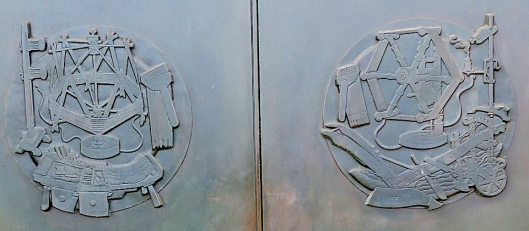
The middle roundels 3B and 4B on the central pair of doors

On roundel 4B Woodford presents us with much the same layout he used on the facing roundel (3B, see previous post): the wool comb could be a mirror image of the comb on the left-hand roundel, there is another yarn winder and, again, a stand – this time a candle holder seemingly warming a tool clamped above (anyone?). Again, an object at the bottom breaks the weaving sequence but here it is not specifically related to Norwich industry but to Norfolk in general. The wheels on this plough reduce friction so that one ox could draw it through the light Norfolk soil and as such the image refers to Thomas Coke, 1st Earl of Leicester (1754-1842), who was first to have harnessed rather than yoked oxen. From his Holkham estate on  the North Norfolk coast Coke is credited with sparking the British Agricultural Revolution [2].

Screenshot 2019-02-04 at 11.22.03.png

The Leicester Monument (1845) at Holkham Hall, in memory of the 1st Earl. Between the wheeled plough and the ox are sheep, referring to the ‘English Leicester’ – an improved breed promoted by Lord Leicester. © racns [3]

Roundel 4C: Kett’s Rebellion

Here hangs Robert Kett from the walls of Norwich Castle. IMG_0270.jpg
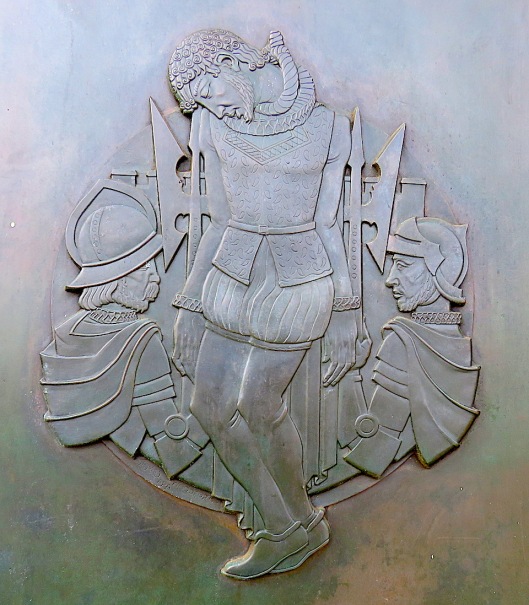
The success of the Norwich weaving trade, and the rising price of wool, led to rich landlords enclosing common land in order to graze their own sheep. In 1549 Robert Kett, a tanner from Wymondham, sided with those uprooting hedges and fences. Under his leadership the uprising swelled to about 15,000 ‘rebels’ encamped on Mousehold Heath. Kett’s men defeated forces led by the Marquess of Northampton but were finally overcome at the Battle of Dussindale. Robert Kett was hanged from a gibbet erected on the battlements of Norwich Castle and “left hanging, in remembrance of his villany, till his body being consumed, at last fell down”. His brother was left hanging by chains from the steeple at Wymondham [4]. The C18 historian Francis Blomefield wrote that Kett’s army contained the ‘scum of Norwich’ but, of course, one man’s rebel is another man’s freedom fighter and a plaque on the castle walls expresses a more enlightened view:

In 1549 AD Robert Kett yeoman farmer of Wymondham was executed by hanging in this castle after the defeat of the Norfolk Rebellion of which he was the leader.
In 1949 AD – four hundred years later – this memorial was placed here by the citizens of Norwich in reparation and honour to a notable and courageous leader in the long struggle of the common people of England to escape from a servile life into the freedom of just conditions.

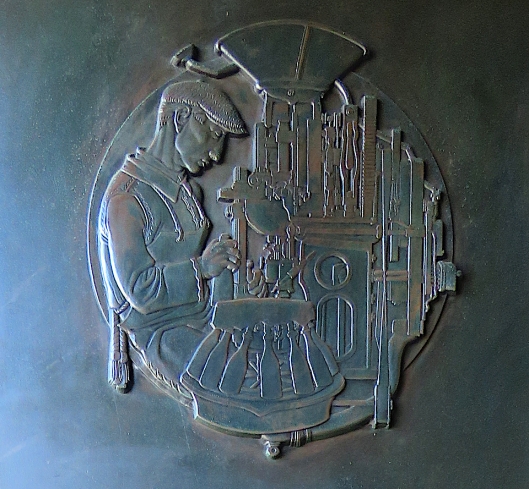
Roundel 5A: Chocolate and crackers
IMG_0272.jpg

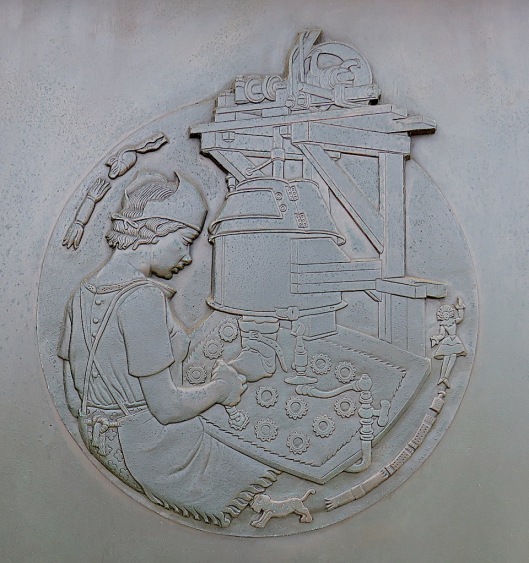
We know this represents Caley’s, rather than other confectioners, because of the combination of chocolate-making and Christmas crackers that we see arranged around the perimeter of this roundel. Twelve years before James Woodford drew this design Caley’s installed 44 chocolate-piping machines [5] so the worker is piping chocolate in their Fleur-de-Lys Factory in Chapelfield.
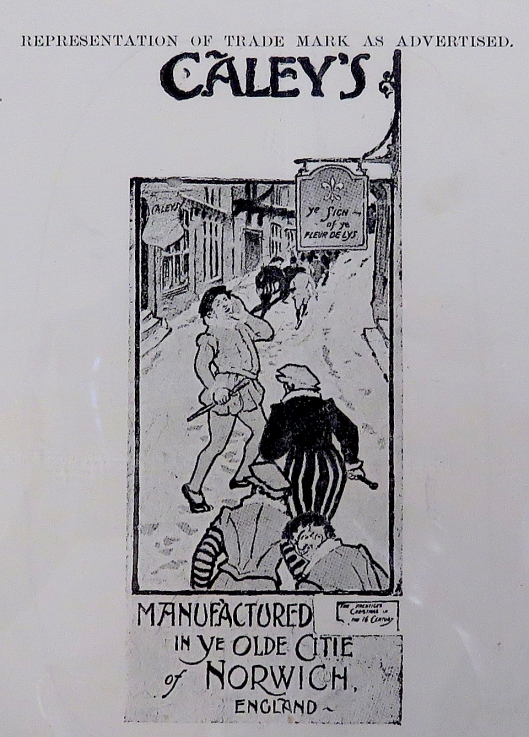
Caley's TM2.jpg

Registration of Caley’s trade mark ‘The Prentices Christmas in the Snow’ (1899). Note ‘Ye Sign of ye Fleur de Lys’. Courtesy Norfolk Record Office BR266/119/2

Between the 1864 and the 1883 editions of Kelly’s Directory, chemist and druggist Albert Jarman Caley – ‘manufacturer of aerated & mineral waters, & ginger ale’ – had moved from London Street to Chapelfield (1883), presumably to take advantage of a nearby deep well with the purest water in the city [7]. His sodas were bottled in an old factory in Chapelfield that had made cloth for glove-making but this was just the beginning of Caley’s expansion.
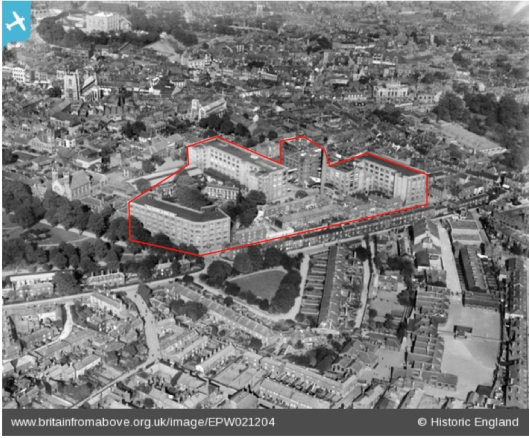
Caley's Lined latest.001.jpeg

Caley’s Fleur de Lys works 1928 now the site of Chapelfield shopping mall. Chapelfield Gardens are to left and, below, is the triangle of The Crescent where Alfred Caley lived

In order to provide year-round employment for his summer workforce, Caley started to make drinking chocolate in 1883 and three years later began to make chocolate confectionery using milk from a farm in nearby Whitlingham [6]. In 1932 Caley’s was sold to Mackintosh’s, the toffee-makers from Halifax, who modernised the factory and produced new lines, like the chocolate-toffee combos ‘Rolo’ and ‘Quality Street’ assortment. The factory was rebuilt after being badly damaged in the 1942 Baedeker Raids. In 1969 the business was acquired by Rowntree’s and then by Nestlé (1988) who sold the site to be redeveloped as intu Chapelfield shopping mall (2005). Have I mentioned the aroma of chocolate over the city, usually – it seemed – on Sunday mornings?
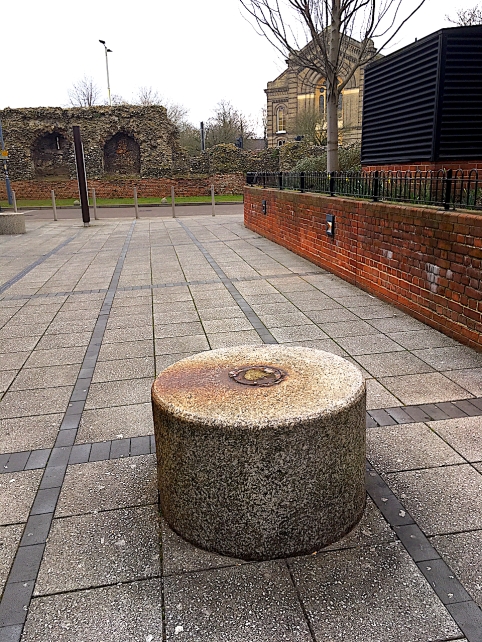
Round thing.jpg

This stone roller once used for grinding cocoa beans is now used as a seat at the Chapelfield Road entrance to the intu Chapelfield mall where Caley’s once stood

In 1899 the Caley’s fancy box department expanded into making Christmas crackers – some of the boxes decorated by a young Alfred Munnings who had recently graduated from the Norwich School of Art. Tom Smith, inventor of the Christmas cracker [8], opened his factory on Salhouse Road in 1953, too late to be considered an influence on Woodford’s roundel.
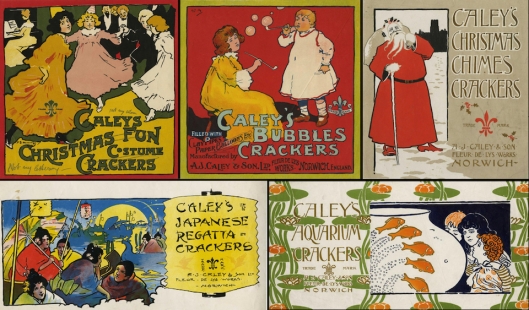
caleys5.001.jpeg

Caley’s Christmas cracker boxes ca 1900. Some, such as the first two, bear Munnings’ signature. Courtesy Norfolk Museums Collections


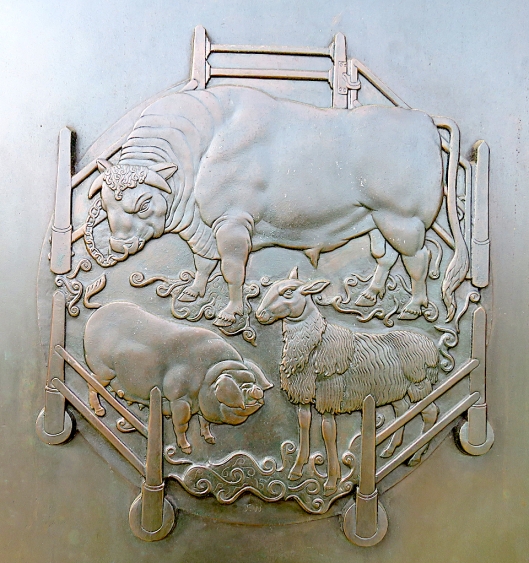
Roundel 5B: Livestock marketsAnimals.jpg
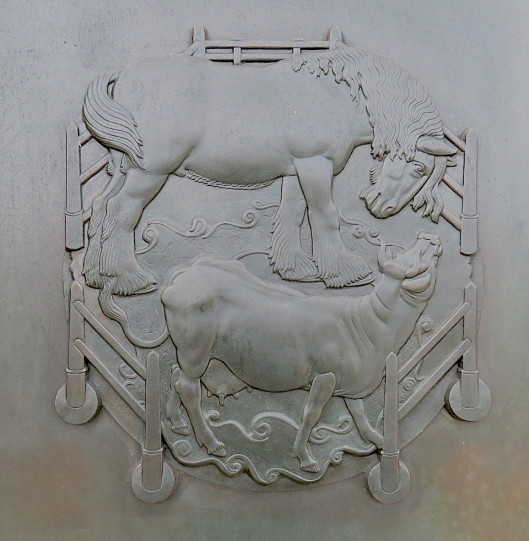
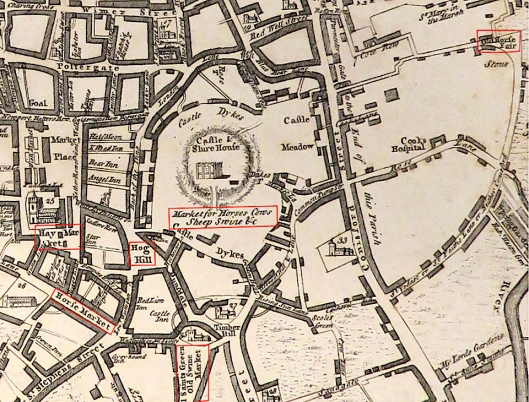
Norwich was the trading centre for a major agricultural county and, since at least the time of James II, livestock was brought to the Castle Ditches or Dykes for sale [9]. The ‘Market for Horses Cows Sheep & Swine’ is clearly marked on King’s C18 map. Also marked are Old Horse Fair, Haymarket, Hog Hill (Orford Hill near the Bell Hotel), Horse Market (now Rampant Horse Street) and the Old Swine Market on All Saints’ Green – all contributing to a sense of the city as a hub for the county’s agriculture.
Annotated Kings 2.001.jpeg

Samuel King’s New Plan of Norwich 1766. Courtesy of Norfolk Museums Service

After the coming of the railways, cattle would be driven from Norwich Thorpe Station, up the new, wide Prince of Wales Road to various sites around the castle commemorated in the street names: Cattlemarket Street, Market Avenue, Farmer’s Avenue.

Cattle Market view NE from Market Avenue [4541] 1960-03-12.jpg

Norwich Cattlemarket from Market Avenue, 1960. This is to the rear of the Agricultural Hall with the cathedral spire just visible, right of centre. Courtesy of http://www.georgeplunkett.co.uk

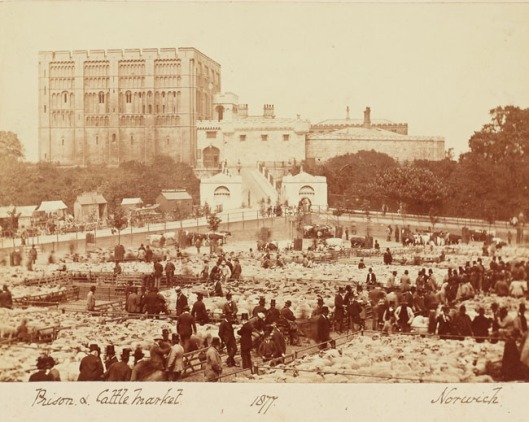
Here we see the Cattlemarket in 1877. Today, this is the site for the garden and glazed roof of subterranean Castle Mall. In 1960 the Cattlemarket was taken out of town to Hall Road.
30129065940745Cattlemarket1877.jpg

Sheep sale at the Cattlemarket at a time when the castle was Norwich Prison. Courtesy of Norfolk County Council at Picture Norfolk

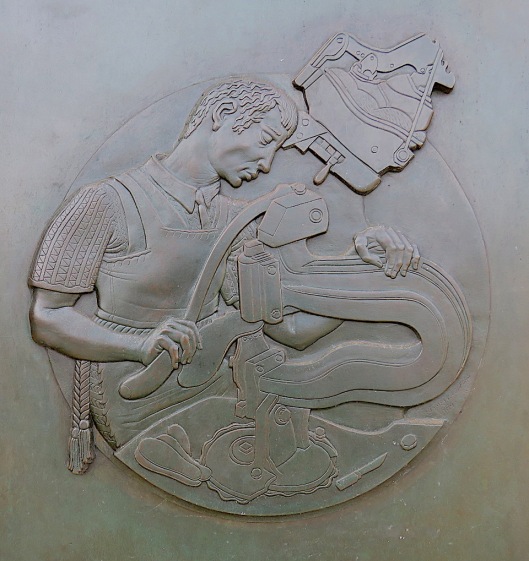
Roundel 5C: Shoe-making

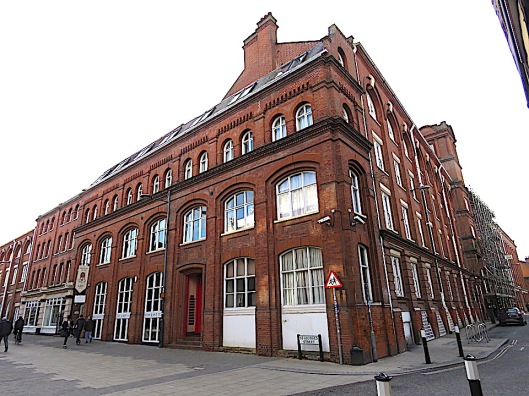
The City Hall stands on the site of a former Start-rite shoe factory and it is shoe-making that is celebrated in this roundel.
Shoemaking.jpg

Preparing soles

By the 1840s the city’s textile trade was in decline but the same pattern of work – production by outworkers controlled by garret-masters – was inherited by the city’s rapidly expanding boot and shoe manufacturing trade. Soon, this piecemeal form of production was overtaken by large-scale manufacture in factories. Numerous small businesses became consolidated into the Big Five companies that dominated Norwich’s boot and shoe trade: Edwards & Holmes; Howlett & White (later the Norvic Shoe Co.); Haldinstein’s (later the Bally Shoe Co.); James Southall (later Start-rite); and H. Sexton & Sons (later Sexton, Son & Everard). About the time that Woodford was designing this roundel the Norwich boot and shoe trade was employing about 10,000 workers, although none of the major factories are operating now [10, 6].
Norvic.jpg

The former Norvic Shoe Co at the corner of St George’s Street and Colegate was once the biggest shoe factory in the country

Roundel 6A: Soldering mustard tins

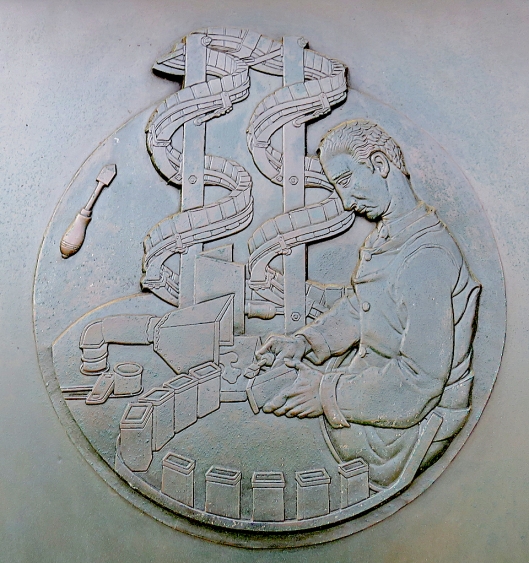
Here, the worker is soldering tins with what appears to be a pool of molten lead; a soldering iron is highlighted on the left. He would have been working on a production line at Colman’s of Carrow, famous worldwide for producing mustard. This company’s yellow tins of mustard powder were emblematic of the city and it is a great sadness that the factory will close in 2019 after over 150 years at the old Carrow Abbey site.Roundel 6A.jpg
Roundel 6B: More livestock

Roundel 6B.jpg

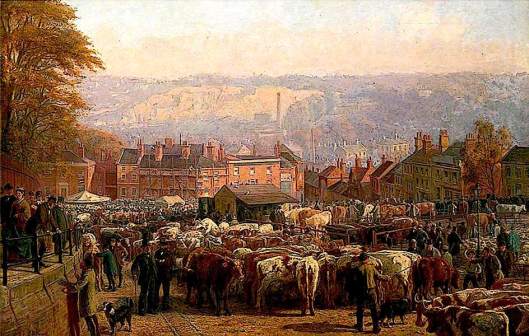
This image is paired with the ‘livestock’ roundel on the facing door (5B above).
The hill at Norwich on Market Day.jpeg

The Hill at Norwich on Market Day, by Frederick Bacon Barnwell (1871). Looking down Cattlemarket Street at the ‘back’ of the Castle, separating into Market Avenue to the left and, to the right, down Rose Lane to a distant Thorpe Hamlet  

Roundel 6C: Silk weaving
6C Silk weaving.jpg

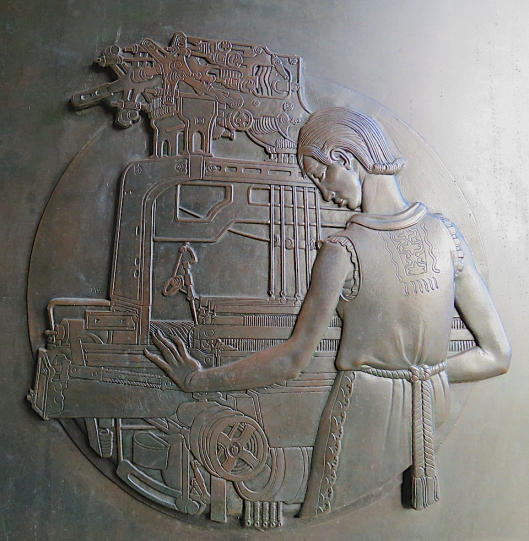
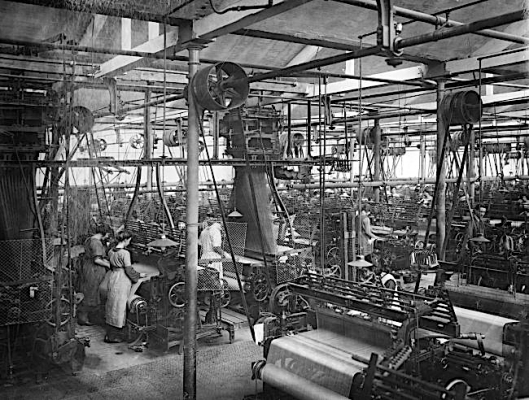
This plaque almost certainly refers to the firm of Francis Hinde & Hardy who employed several hundred people in St Mary’s Works on Oak Street [6].
30129032942345SilkWeavingHindeB.jpg

Silk weaving at Hinde’s St Mary’s Mill at Oak Street. Courtesy of Norfolk County Council at Picture Norfolk

In the 1550s and 60s Dutch and Belgians Protestants fleeing from religious persecution settled in Norwich, eventually comprising a third of the city’s population. These ‘Strangers’ revived our flagging textile trade and helped develop New Draperies that included silk. Even in the C19, when the textile trade was in serious decline, Norwich silk shawls and ‘Mourning Crape’ kept business alive [11]. In the 1920s Hindes expanded, taking over other Norwich silk weavers and building a silk-weaving mill at Mile Cross; they also owned another silk mill at Oulton Broad. In the 1920s and 30s Hindes were experimenting with nylon and an artificial silk (Rayon) so the roundel may depict the weaving of artificial yarn [12]. Later, Hindes’ produced parachute fabric in WWII.

Im1949BIF-Hinde.jpg

1949 advertisement. Courtesy [13]

In 1964 Hindes was bought by the giant Courtaulds; the factory closed in 1982, ending 700 years of textile manufacture in the city [6].

The 19th roundel 

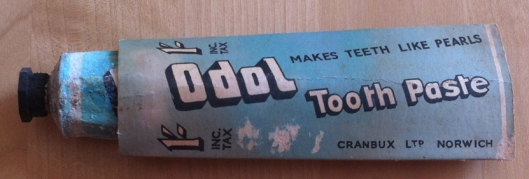
For the final – the 18th – roundel, Woodford chose to illustrate silk weaving but  his designs indicate that his original intention was to show tubes being filled with toothpaste [3]. I did read that the toothpaste was ‘Odells’ but it turns out to have been ‘Odol’ by Cranbux Ltd of 103 Westwick Street – a firm owned by Coleman & Co Ltd [14]. Remember Coleman’s (with an ‘e’), the wine-bottling company from Westwick Street that we saw on roundel 1A?
Odol1.jpg

When Norwich had its own toothpaste. ‘Odol’ marketed by Cranbux, owned by Coleman & Co Ltd, Norwich.  Photo courtesy of atlasrepropaperwork.com [14]

We have to ask whether these roundels gave a fair reflection of the city. Well, it’s rather puzzling why Woodford even considered the filling of toothpaste tubes when he could have chosen the famous home-grown insurance business, Norwich Union (now Aviva). Woodford’s vision was decidedly backward-looking but who in 1936 anticipated the war and could imagine what post-war life would be like in a post-industrial Britain? Now, Norwich is a city of literature and science, amongst many other things, but it would take a brave person to commission another set of roundels to fix this moment in time.

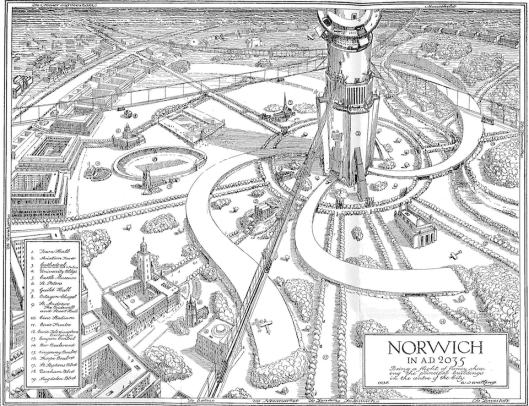
(That was to have been my ending but, serendipitously, I came across someone who did have the courage to predict the city’s future. In 1935 an Art Master at CNS School, Walter Watling, drew ‘Norwich in AD 2035’. In his prophetic dream he was introduced to someone over the “televisophone” who “promised to send along the glasses and in another minute they arrived by the pneumatic tube delivery service [15].” Quite a good stab at the smartphone and Amazon, no?)
Norwich2035 copy.jpg

‘Norwich in AD 2035’ by WT Watling [15, 16]. 

©2019 Reggie Unthank

Sources

  1. Brian Ayers (2004). The Urban Landscape. In, Medieval Norwich (Eds Carole Rawcliffe and Richard Wilson. Pub: Hambledon and London.
  2. https://en.wikipedia.org/wiki/Thomas_Coke,_1st_Earl_of_Leicester_(seventh_creation)
  3. http://racns.co.uk/sculptures.asp?action=getsurvey&id=6
  4. Francis Blomefield (1806).  ‘The City of Norwich’ Ch 25, online at: https://www.british-history.ac.uk/topographical-hist-norfolk/vol3/pp220-265
  5. Norfolk Record Office BR266/93.
  6. Nick Williams (2013). Norwich: City of Industries. Pub: Norwich Heritage Economic and Regeneration Trust.
  7. Barry Pardue (2005). Norwich Streets. Pub: Tempus.
  8. https://en.wikipedia.org/wiki/Christmas_cracker
  9. http://www.georgeplunkett.co.uk/Norwich/markets.htm
  10. Frances and Michael Holmes (2013). The Story of the Norwich Boot and Shoe Trade. Pub: Norwich Heritage Projects.
  11. Gillian Holman (2015). Made in East Anglia: A History of the Region’s Textile & Menswear Industries. Pub: The Pasold Research Fund http://www.pasold.co.uk/download/%7BA14AC35B-4095-46E1-BBB9-F54A05D5DA92%7D/made-in-east-anglia
  12. Communication from Cathy Terry, Senior Curator at Strangers’ Hall Museum, Norwich.
  13. https://www.gracesguide.co.uk/Francis_Hinde_and_Sons
  14. https://www.atlas-repropaperwork.com/odol-toothpaste/#comment-22921
  15. Walter T Watling (1935). ‘Norwich AD 2035: A Prophetic Fantasy’. In, The Norwich Annual 1935.
  16. https://www.edp24.co.uk/features/remembering-scatty-an-art-master-with-a-future-vision-1-5894702

Thanks: to Cathy Terry of the Strangers’ Hall Museum for information on silk weaving; Cathy acknowledges the research of Thelma and Alan Morris. I am grateful, as ever, to Clare Everitt of Picture Norfolk for permission to reproduce images. I also thank Derek James of the Eastern Daily Press for kindly sending me the Watling illustration. See his article on Walter Watling in [16].
 

Share this:

  • Click to share on Facebook (Opens in new window) Facebook
  • Click to share on X (Opens in new window) X
  • Click to share on Pinterest (Opens in new window) Pinterest
  • Click to email a link to a friend (Opens in new window) Email
  • Click to print (Opens in new window) Print
Like Loading...

City Hall Doors # 1

15 Friday Feb 2019

Posted by reggie unthank in Norwich buildings, Norwich history

≈ 9 Comments

Tags

Boulton & Paul, Norwich City Hall doors, Norwich industry

The northern mill towns that had put Norwich’s centuries-old textile industries out of business celebrated their new prosperity in a Victorian campaign of civic building that passed our city by. In the 1930s, by the time Norwich got around to replacing the medieval Guildhall, the city had reinvented itself as a centre of light industry that could advertise its modernity, not with Town Hall Gothic or Georgian Classical, but with the clean lines of Scandinavian Art Deco. This made Norwich City Hall “the foremost English public building of between the wars” [1] – the figurative roundels on its bronze doors providing a snapshot of Norwich in this inter-war period.3xDoors.jpg

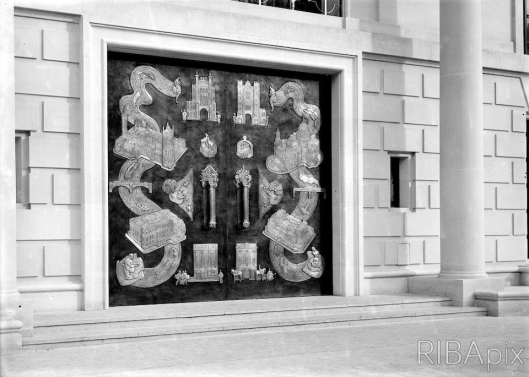
In 1934, James Woodford had designed magnificent bronze doors for the Royal Institute of British Architects headquarters in London …

RIBA15095 Doors.jpg

James Woodford’s bronze doors for the Royal Institute of British Architects at 66 Portland Place London1934 ©RIBApix

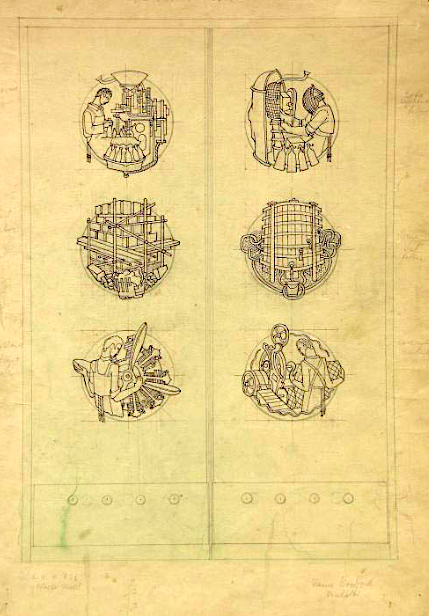
… and was subsequently commissioned to design three pairs of bronze entrance doors for Norwich City Hall [2]. Unveiled in October 1938 the 18 roundels – three per door – paid homage to history, trade and industry.

Woodford image.jpg

James Woodford’s design for the left-hand side pair of doors. ©Norfolk Museums and Archaeology Service

Roundel 1A.Bottling wine *[The three pairs of doors are numbered 1-6 and the three roundels on each door are labelled A-C, downwards].

Pic A.jpg

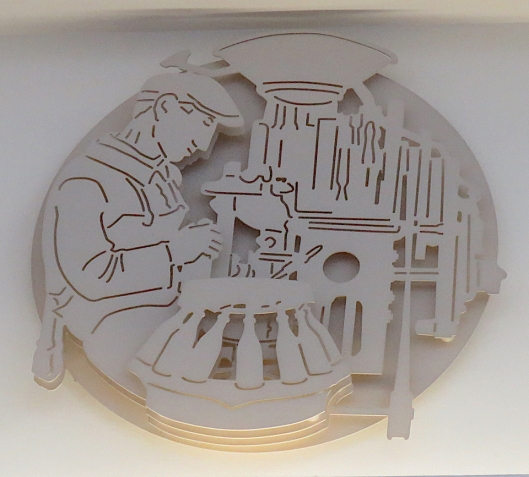
Incidentally, all 18 of Woodford’s designs are repeated – albeit in a simplified form and without the Art Deco influence – around the top floor of Chapelfield Mall (2005).

Chapelfield.jpg

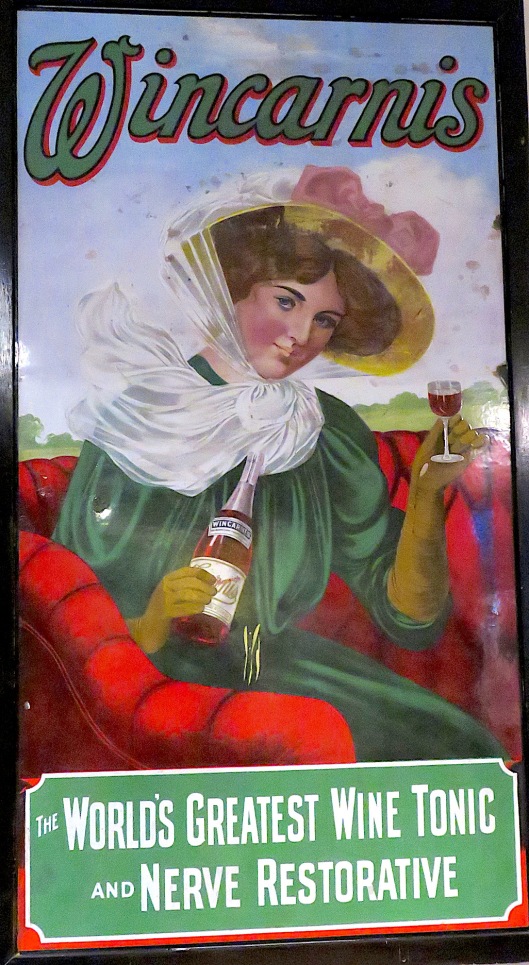
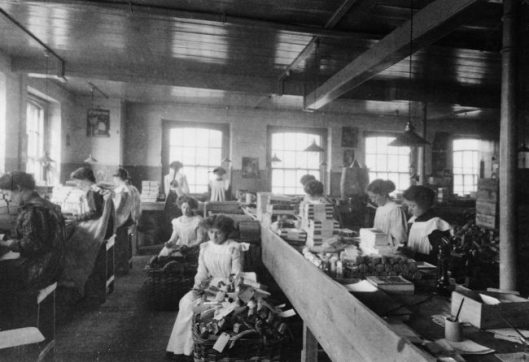
Coleman & Co Ltd – not to be confused with Colman’s of mustard fame, who took them over in 1968 – bottled wine that arrived in tankers from various European countries. The factory on Westwick Street/Barn Road occupied a large area centred around Toys R Us (but even this landmark closed in 2018) [3]. Another first for Norwich: Coleman’s were the first company in the UK to make wine-in-a-box. From the 1880s Colemans also made Wincarnis, the name describing a mixture of fortified wine and carne, meat, from a time when this pick-me-up contained beef stock.

wincarnis.jpg

From, The Museum of Norwich at the Bridewell

Coronation Westwick St Wincarnis works [1623] 1937-05-13.jpg

The Wincarnis Works in Westwick Street 1937, destroyed by the Luftwaffe in an incendiary attack 1942 ©georgeplunkett.co.uk

30129028198001Coleman&Co.jpg

Wine being bottled and labelled by hand, not by a man in a cap as in the roundel, but by female workers at Coleman & Co Ltd. Courtesy of Norfolk County Council at Picture Norfolk. 

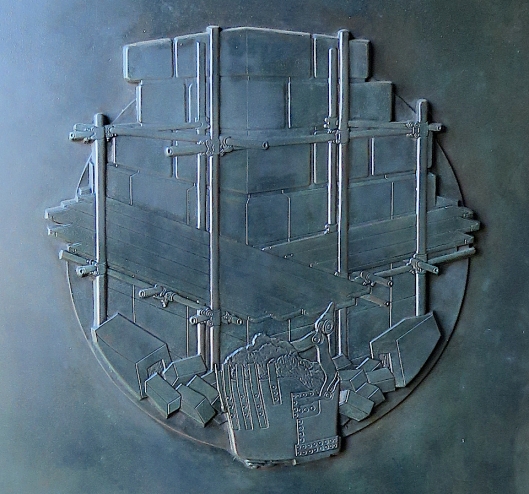
Roundel 1B illustrates building the base of the City Hall using blocks of stone with rusticated (set-back) edges. Incidentally, when buying a suit (a rare occurrence) in London the shop assistant told me that his grandfather, a master mason, travelled to Norwich each week to help build the City Hall. Pic B.jpg

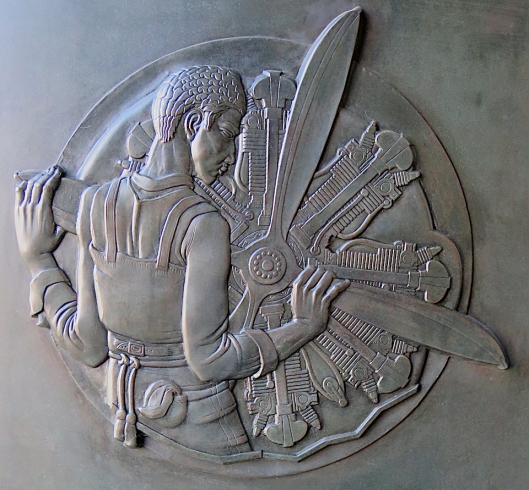
Roundel 1C. The city’s aeronautical industryPic C.jpg

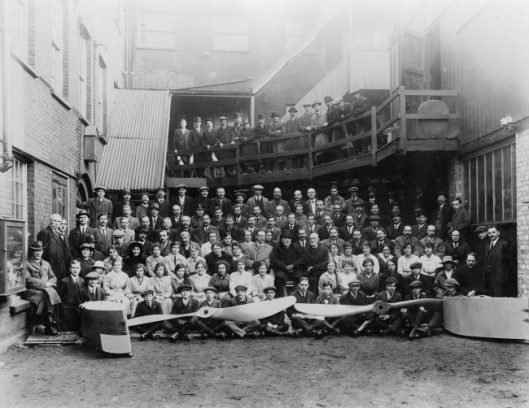
This roundel celebrates one of our largest industries of the time, mainly based around Boulton and Paul’s engineering works on Riverside where they made aeroplane parts. B&P were used to making prefabricated structures like sheds and bungalows; in 1915 this led them being awarded government contracts to build planes [4]. The roundel also acknowledges another Norwich firm, formed by Henry Trevor and his step-son John Page. Trevor, Page & Co. had made furniture since the 1850s and in WWI were contracted by the government to make wooden propellers.

30129032937048Trevor,Page.jpg

Staff of Trevor, Page & Co (registered at Upper King Street) with two wooden propellers. Courtesy of Norfolk County Council at Picture Norfolk

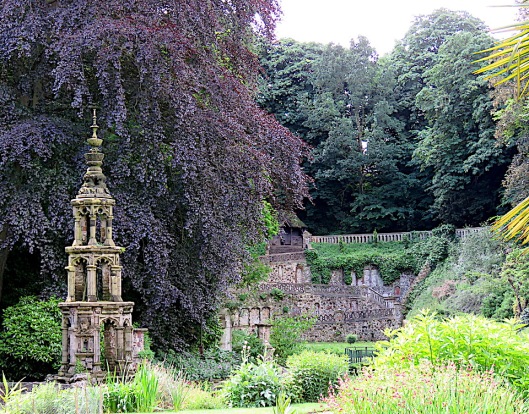
Trevor is perhaps best known locally for his transformation in the 1850s of a disused quarry on Earlham Road into the wonderful Plantation Garden.

IMG_1658.jpg

Henry Trevor’s Plantation Garden on Earlham Road  https://www.plantationgarden.co.uk/

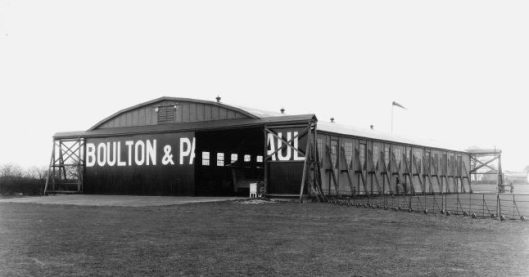
The planes were assembled and tested by Boulton & Paul on Mousehold Heath, which became Norwich Municipal Aerodrome in 1933. 30129032936909Boulton&PaulHangar.jpg

One of Boulton and Paul’s hangars on Mousehold Heath. Courtesy of Norfolk County Council at Picture Norfolk.

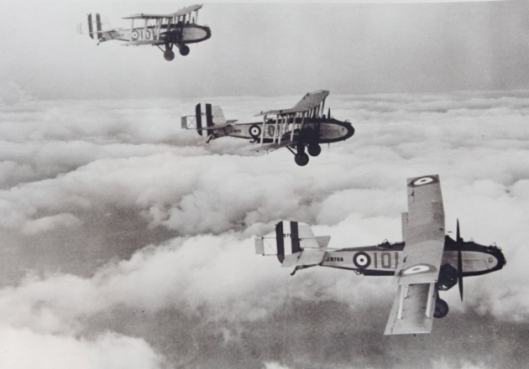
The Municipal Aerodrome was opened in 1933 by the Prince of Wales who inspected a flight of B&P’s medium bomber, the Sidestrand – a twin engined biplane.

B&P.jpg

The Sidestrand. Picture: Ian Burt

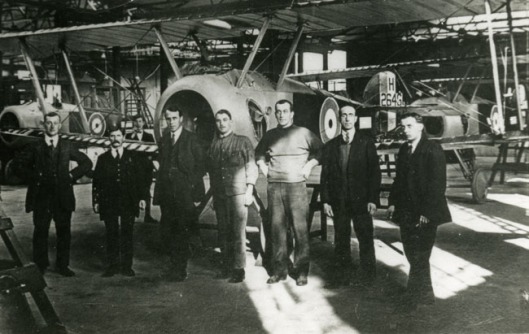
Towards the end of WWI, the Sopwith Camel became the country’s most successful fighter (and 50 years later Snoopy’s biplane of choice). Boulton & Paul are said to have made more Sopwith Camels than any other company. Here is the production team with what may well have been one of their last Camels.

30129065965841SopwithCamel.jpg

Courtesy Norfolk County Council at Picture Norfolk

In 1936, at about the time that Woodward was designing the City Hall doors, Boulton and Paul’s aeroplane division moved to Wolverhampton [4] leaving the old aerodrome to become the Heartsease housing estate. In 1971 the old RAF Bomber Command airfield at Horsham St Faith was redeveloped as Norwich Airport.

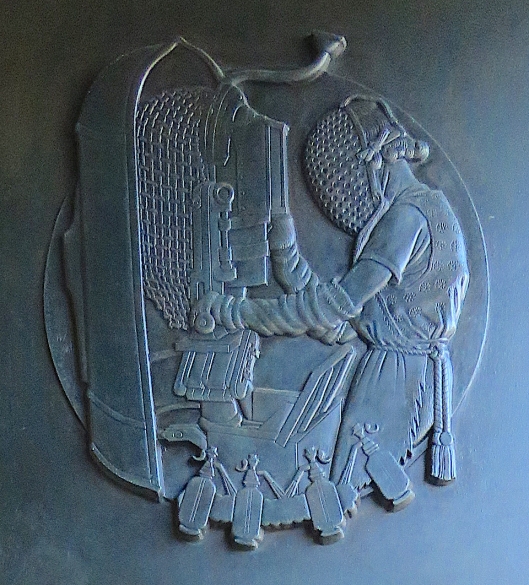
Roundel 2A: the filling of soda siphons. Door2A.jpg

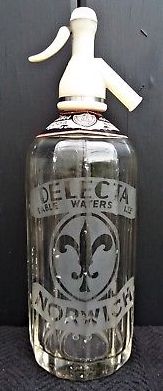
Each of the big four Norwich breweries (Bullards, Youngs Crawshay & Youngs, Morgans, and Steward & Patteson) marketed their own soda siphons. In addition, Caley’s produced table waters from 1862, which were its main product until they began manufacturing drinking and eating chocolate some 20 years later [5]. Caley’s Fleur-de-Lys works in Chapelfield, which was destroyed in the Baedeker raids of 1942, was rebuilt  only to be demolished in 2004 to make way for the intu Chapelfield shopping mall. For a few years, from 1958, Caley’s marketed their table waters under the Delecta brand.

DELECTA-TABLE-WATERS-Ltd.jpg

Delecta soda siphon Norwich ©picclick.co.uk

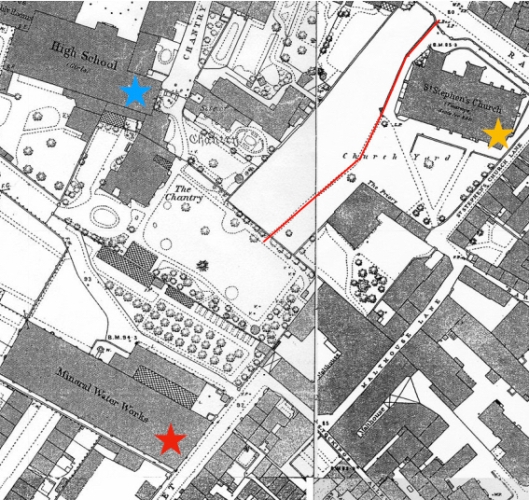
The Mineral Water Works (red star) was situated inside what is now the Theatre Street entrance to Chapelfield Mall.

New Map.001.jpeg

Red star = Caley’s Mineral Water Works; Blue star = Assembly House (formerly the Girls’ High School; Yellow star = St Stephen’s Church. The red line = the walk through St Stephen’s Churchyard. 1885 OS map hosted by norwich-yards.co.uk courtesy of georgeplunkett.co.uk

Roundel 2B. The brewing industry. Door2B.jpg

Although Norwich is famed for having so many medieval churches, this number (‘one for each week of the year’) was dwarfed in the late C19 by 655 licenced houses, far more than the well-rehearsed ‘and one for each day of the year’ [2]. Most of these were eventually brought under the umbrella of the big four Norwich breweries; all, of course, now gone: Bullards on Anchor Quay [2]; Morgans at the Old King Street Brewery – the site now being redeveloped for housing as St Anne’s Quarter; Steward and Patteson’s Pockthorpe Brewery on Barrack Street; and Youngs Crawshay and Youngs on the Wensum Lodge Adult Education site, King Street. Walking down historic King Street today you would never realise it was once home to two large breweries.

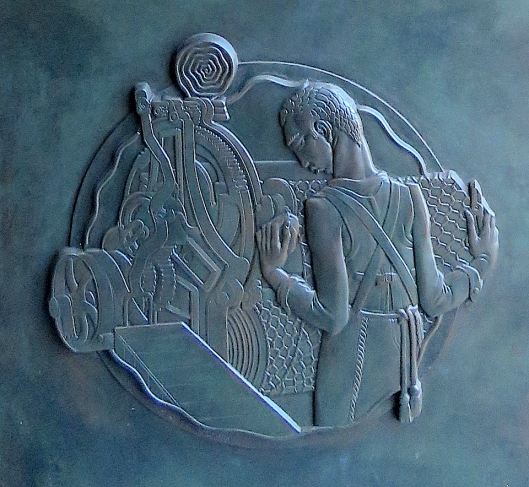
Roundel 2C: Making wire netting.Door2C.jpg

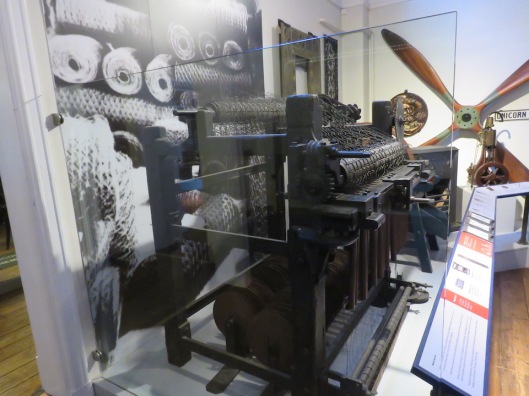
In 1844 Charles Barnard invented a machine for making wire netting based on weaving looms that would still have been a common sight and sound around the city. His Norfolk Iron Works [see previous post 6] was on the north side of the river, opposite Bullards’ Anchor Quay Brewery.

Barnards loom.jpg

Charles Barnard’s wire netting loom in The Museum of Norwich at The Bridewell.

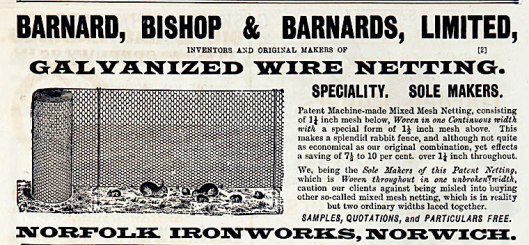
Barnards wire netting.jpg

The advertisement underlines the point that Barnards were the originators of wire netting and warns against being misled by other brands. Who might they be?

Boulton and Paul wire netting.jpg

In 1903, Boulton & Paul stocked over 700 miles of wire netting

Across the city, Boulton and Paul were also making wire netting. In WWII – a few years after Woodford designed his roundels – B&P were producing the ‘Summerfeld’ wire-netting track, used as temporary runways for aircraft [7].

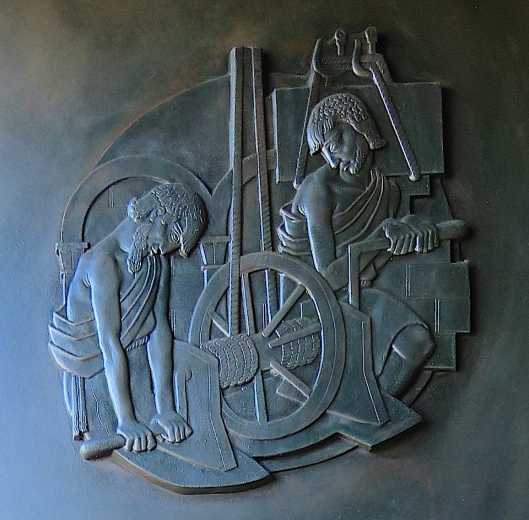
Roundel 3A: Building the Castle.Door3A–Altv.jpg

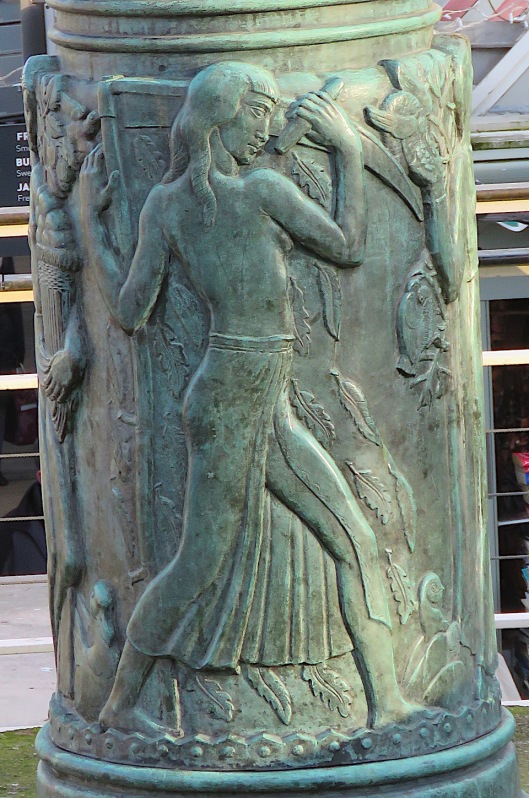
If we had to guess the location of this scene from the scant clothing and hair styles alone we would be excused for placing these men somewhere between the Nile and the Tigris rather than cold old Norwich. This would at least be consistent with Woodford’s Assyrian designs for the two flagpole bases [2] in the Memorial Gardens opposite City Hall where figures ‘walk like an Egyptian’: torso twisted, face in profile.Flagpost2.jpg

The roundel illustrates blocks of stone being hoisted up to a building with rounded Norman arches. However, something more efficient than the cranked windlass illustrated here would have been needed to lift large stone blocks (although the treadwheel only seems to have appeared in the mid-C13 [8]). Whatever … it is stone that is being celebrated here for there is none in this desert of flint and chalk, and to raise both castle and cathedral the Norman conquerors imported their own stone at great expense from Caen in Normandy. Norwich Castle was ‘architecturally the most ambitious secular building in western Europe’ [9] and, as the only royal castle in Norfolk and Suffolk, this assertion of Norman power made Norwich the regional capital [10].

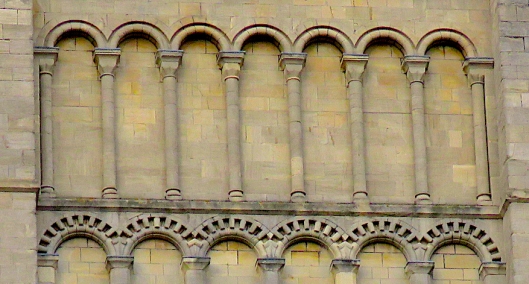
arcades3.jpg

Blind arcading on Norwich Castle, which was re-faced with Bath stone in the 1830s

On the roundel we can just make out that the space beneath the rounded arch, which frames the left-hand worker, is filled in with blocks of stone. Such blind arcading is a common decorative element in Norman architecture but the fact that a utilitarian building like the castle has external decoration at all is “remarkable”. As Pevsner and Wilson wrote, “France e.g. has nothing to compare with Norwich” [1]. Hurrah!

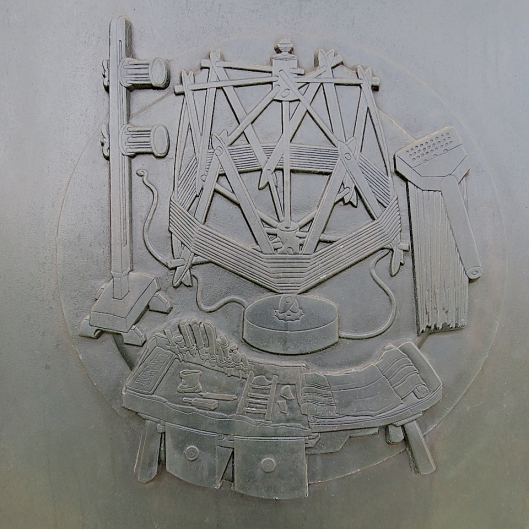
Roundel 3B: ‘Historical implements’ [11]Roundel3B.jpg

The wool comb on the right is for carding wool; that is, disentangling it and  drawing it into parallel fibres ready for spinning the thread. A denser comb with shorter nails would be needed to produce finer yarn used for worsted. Worsted is a smooth cloth without a nap that was particular to Norwich and the surrounding villages (e.g., Worstead); the manufacture of worsted was probably the city’s major industry throughout the late middle ages [12]. The whirligig in the centre is an ‘umbrella swift’ for winding yarn – either silk or wool [13]. The stand on the left holds two yarn winders on which the thread is spooled ready for weaving. The simplicity of these implements emphasises the pre-industrial nature of the early textile business, often conducted in small workshops and attics by family groups [13].

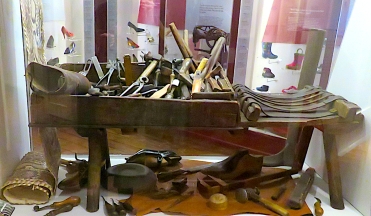
I was surprised that the final object, seen at the bottom of the roundel, was a cobbler’s bench [2] because, surely, Woodford wouldn’t interrupt his textile cycle by including a different trade? Well, there it is at The Bridewell Museum, a turnshoe maker’s bench.  shoemaker's bench1.jpg

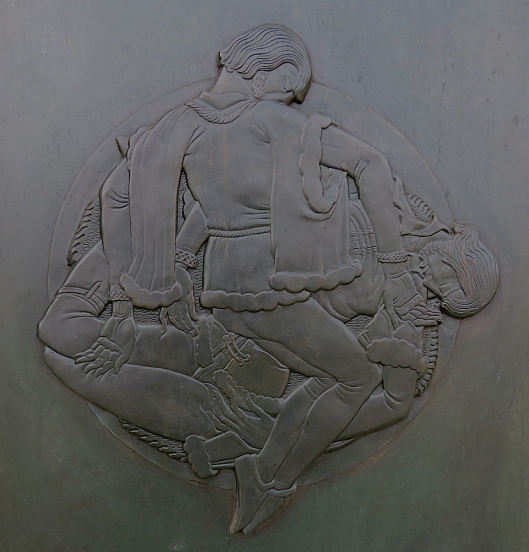
Roundel 3C: The Black DeathRoundel 3C.jpg

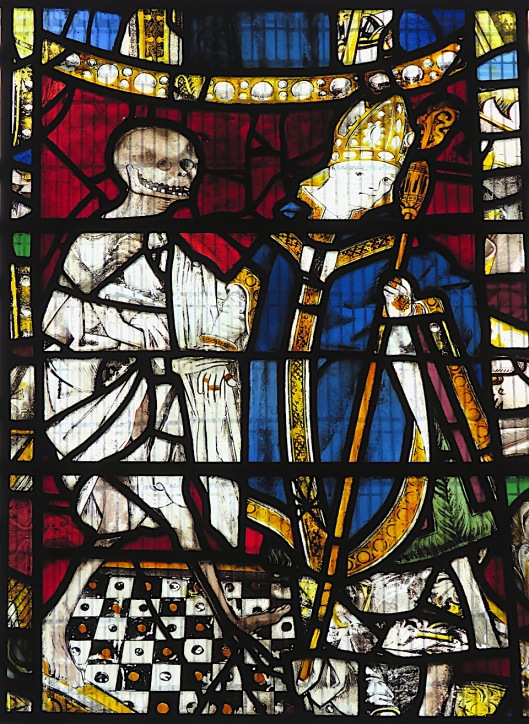
According to the historian Francis Blomefield the bubonic plague first arrived in Norwich on January 1st 1348 [14] but it was to return intermittently over the next three centuries. In the years preceding the first outbreak the city’s numbers were swelled hugely by the arrival of land-starved peasants coming in from the country to seek work [15]. The Black Death reduced this jam-packed population by about a third to a half and wasn’t to return to its original level until the late C17 [15]. Bodies were buried in communal pits in the Cathedral Close and the churchyard of nearby St George Tombland; in the Great Plague of 1665-6 Chapelfield was used as a mass grave [16]. High and low were struck down alike.

IMG_5369.jpg

The last British example of the Dance of Death in stained glass. St Andrews, Norwich ca 1510.

Next month, the other nine roundels

©2019 Reggie Unthank

Contains Photographs of the Unthanks and material not included in the blog. Available from The Bookhive, Norwich and online from City Bookshop, Davey Place, Norwich.

Sources

  1. Nikolaus Pevsner and Bill Wilson (1997). The Buildings of England. Norfolk 1: Norwich and North-East. Pub: Yale University Press.
  2. Richard Cocke (photography by Sarah Cocke) (2103). Public Sculpture of Norfolk and Suffolk. Pub: Liverpool University Press.
  3. http://www.wisearchive.co.uk/story/the-silent-e-in-colemans/
  4. https://en.wikipedia.org/wiki/Boulton_%26_Paul_Ltd
  5. http://letslookagain.com/tag/a-j-caley-of-norwich/
  6. https://colonelunthanksnorwich.com/tag/barnard-bishop-and-barnards/
  7. Boulton and Paul (1947). The Leaf and the Tree: The Story of Boulton and Paul Ltd 1797-1947. Pub: Boulton and Paul.
  8. https://uccshes.files.wordpress.com/2012/09/medieval-treadwheels-artists-views-of-building-construction.pdf
  9. T.A. Heslop (1994). Norwich Castle Keep: Romanesque Architecture and Social Context. Pub: Centre of East Anglian Studies, UEA.
  10. Bryan Ayers (2004). The Urban Landscape. In, Medieval Norwich. Eds Carole Rawcliffe and Richard Wilson. Pub: Hambledon and London.
  11. http://www.georgeplunkett.co.uk/Norwich/stp.htm#Stpet
  12. Penelope Dunn (2004). Trade. In, Medieval Norwich. Eds Carole Rawcliffe and Richard Wilson. Pub: Hambledon and London.
  13. Ursula Priestley (1990). The Fabric of Stuffs: the Norwich Textile Industry from 1565. Pub: Centre of East Anglian Studies, UEA.
  14. Francis Blomefield’s history of the City of Norwich (1806) available online at:  https://www.british-history.ac.uk/topographical-hist-norfolk/vol3/pp79-101
  15. Elizabeth Rutledge (2004). Economic Life. In, Medieval Norwich. Eds Carole Rawcliffe and Richard Wilson. Pub: Hambledon and London.
  16. http://www.chapelfieldsociety.org.uk/history-of-chapelfield/.

Share this:

  • Click to share on Facebook (Opens in new window) Facebook
  • Click to share on X (Opens in new window) X
  • Click to share on Pinterest (Opens in new window) Pinterest
  • Click to email a link to a friend (Opens in new window) Email
  • Click to print (Opens in new window) Print
Like Loading...

Enter your email address to follow this blog and receive notifications of new posts by email.

Recent Posts

  • Gothick Norwich
  • The Sons of Flora
  • The United Friars: Charity and Enquiry in the Age of Reason
  • Plans for a Fine City
  • Three Unthank books in print

Recent Comments

Jonathan Dutton's avatarJonathan Dutton on The Nursery Fields of Eat…
Jacqui edgar's avatarJacqui edgar on Two Bs or not two Bs? Norfolk…
Unknown's avatarJapan goes on show |… on Jeckyll and the sunflower…
reggie unthank's avatarreggie unthank on Gothick Norwich
huroncityradio's avatarhuroncityradio on Gothick Norwich

Archives

  • December 2023
  • October 2023
  • April 2023
  • January 2023
  • November 2022
  • October 2022
  • July 2022
  • March 2022
  • February 2022
  • January 2022
  • December 2021
  • November 2021
  • October 2021
  • September 2021
  • August 2021
  • July 2021
  • June 2021
  • May 2021
  • April 2021
  • March 2021
  • February 2021
  • January 2021
  • December 2020
  • November 2020
  • October 2020
  • September 2020
  • August 2020
  • July 2020
  • June 2020
  • May 2020
  • April 2020
  • March 2020
  • February 2020
  • January 2020
  • December 2019
  • November 2019
  • October 2019
  • September 2019
  • August 2019
  • July 2019
  • June 2019
  • May 2019
  • April 2019
  • March 2019
  • February 2019
  • January 2019
  • December 2018
  • November 2018
  • October 2018
  • September 2018
  • August 2018
  • July 2018
  • June 2018
  • May 2018
  • April 2018
  • March 2018
  • February 2018
  • January 2018
  • December 2017
  • November 2017
  • October 2017
  • September 2017
  • August 2017
  • July 2017
  • June 2017
  • May 2017
  • April 2017
  • March 2017
  • February 2017
  • January 2017
  • December 2016
  • November 2016
  • October 2016
  • September 2016
  • August 2016
  • July 2016
  • June 2016
  • May 2016
  • April 2016
  • March 2016
  • February 2016
  • January 2016
  • December 2015

Categories

  • Aesthetic Movement
  • Amelia Opie
  • Art
  • Art Nouveau
  • Arts and Crafts
  • Decorative Arts
  • James Minns carver
  • Linnean Society
  • Norwich architect
  • Norwich Banking
  • Norwich buildings
  • Norwich Department Stores
  • Norwich history
  • Norwich libraries
  • Norwich maps
  • Norwich parks
  • Norwich School of Painters
  • Norwich streets
  • Paston Letters
  • River Wensum history
  • Shutter Telegraph
  • Sir Thomas Browne
  • Stained Glass
  • The Royal Society
  • Uncategorized

Meta

  • Create account
  • Log in
  • Entries feed
  • Comments feed
  • WordPress.com

Recent Posts

  • Gothick Norwich
  • The Sons of Flora
  • The United Friars: Charity and Enquiry in the Age of Reason
  • Plans for a Fine City
  • Three Unthank books in print

Recent Comments

Jonathan Dutton's avatarJonathan Dutton on The Nursery Fields of Eat…
Jacqui edgar's avatarJacqui edgar on Two Bs or not two Bs? Norfolk…
Unknown's avatarJapan goes on show |… on Jeckyll and the sunflower…
reggie unthank's avatarreggie unthank on Gothick Norwich
huroncityradio's avatarhuroncityradio on Gothick Norwich

Archives

  • December 2023
  • October 2023
  • April 2023
  • January 2023
  • November 2022
  • October 2022
  • July 2022
  • March 2022
  • February 2022
  • January 2022
  • December 2021
  • November 2021
  • October 2021
  • September 2021
  • August 2021
  • July 2021
  • June 2021
  • May 2021
  • April 2021
  • March 2021
  • February 2021
  • January 2021
  • December 2020
  • November 2020
  • October 2020
  • September 2020
  • August 2020
  • July 2020
  • June 2020
  • May 2020
  • April 2020
  • March 2020
  • February 2020
  • January 2020
  • December 2019
  • November 2019
  • October 2019
  • September 2019
  • August 2019
  • July 2019
  • June 2019
  • May 2019
  • April 2019
  • March 2019
  • February 2019
  • January 2019
  • December 2018
  • November 2018
  • October 2018
  • September 2018
  • August 2018
  • July 2018
  • June 2018
  • May 2018
  • April 2018
  • March 2018
  • February 2018
  • January 2018
  • December 2017
  • November 2017
  • October 2017
  • September 2017
  • August 2017
  • July 2017
  • June 2017
  • May 2017
  • April 2017
  • March 2017
  • February 2017
  • January 2017
  • December 2016
  • November 2016
  • October 2016
  • September 2016
  • August 2016
  • July 2016
  • June 2016
  • May 2016
  • April 2016
  • March 2016
  • February 2016
  • January 2016
  • December 2015

Categories

  • Aesthetic Movement
  • Amelia Opie
  • Art
  • Art Nouveau
  • Arts and Crafts
  • Decorative Arts
  • James Minns carver
  • Linnean Society
  • Norwich architect
  • Norwich Banking
  • Norwich buildings
  • Norwich Department Stores
  • Norwich history
  • Norwich libraries
  • Norwich maps
  • Norwich parks
  • Norwich School of Painters
  • Norwich streets
  • Paston Letters
  • River Wensum history
  • Shutter Telegraph
  • Sir Thomas Browne
  • Stained Glass
  • The Royal Society
  • Uncategorized

Meta

  • Create account
  • Log in
  • Entries feed
  • Comments feed
  • WordPress.com

Recent Posts

  • Gothick Norwich
  • The Sons of Flora
  • The United Friars: Charity and Enquiry in the Age of Reason
  • Plans for a Fine City
  • Three Unthank books in print

Recent Comments

Jonathan Dutton's avatarJonathan Dutton on The Nursery Fields of Eat…
Jacqui edgar's avatarJacqui edgar on Two Bs or not two Bs? Norfolk…
Unknown's avatarJapan goes on show |… on Jeckyll and the sunflower…
reggie unthank's avatarreggie unthank on Gothick Norwich
huroncityradio's avatarhuroncityradio on Gothick Norwich

Archives

  • December 2023
  • October 2023
  • April 2023
  • January 2023
  • November 2022
  • October 2022
  • July 2022
  • March 2022
  • February 2022
  • January 2022
  • December 2021
  • November 2021
  • October 2021
  • September 2021
  • August 2021
  • July 2021
  • June 2021
  • May 2021
  • April 2021
  • March 2021
  • February 2021
  • January 2021
  • December 2020
  • November 2020
  • October 2020
  • September 2020
  • August 2020
  • July 2020
  • June 2020
  • May 2020
  • April 2020
  • March 2020
  • February 2020
  • January 2020
  • December 2019
  • November 2019
  • October 2019
  • September 2019
  • August 2019
  • July 2019
  • June 2019
  • May 2019
  • April 2019
  • March 2019
  • February 2019
  • January 2019
  • December 2018
  • November 2018
  • October 2018
  • September 2018
  • August 2018
  • July 2018
  • June 2018
  • May 2018
  • April 2018
  • March 2018
  • February 2018
  • January 2018
  • December 2017
  • November 2017
  • October 2017
  • September 2017
  • August 2017
  • July 2017
  • June 2017
  • May 2017
  • April 2017
  • March 2017
  • February 2017
  • January 2017
  • December 2016
  • November 2016
  • October 2016
  • September 2016
  • August 2016
  • July 2016
  • June 2016
  • May 2016
  • April 2016
  • March 2016
  • February 2016
  • January 2016
  • December 2015

Categories

  • Aesthetic Movement
  • Amelia Opie
  • Art
  • Art Nouveau
  • Arts and Crafts
  • Decorative Arts
  • James Minns carver
  • Linnean Society
  • Norwich architect
  • Norwich Banking
  • Norwich buildings
  • Norwich Department Stores
  • Norwich history
  • Norwich libraries
  • Norwich maps
  • Norwich parks
  • Norwich School of Painters
  • Norwich streets
  • Paston Letters
  • River Wensum history
  • Shutter Telegraph
  • Sir Thomas Browne
  • Stained Glass
  • The Royal Society
  • Uncategorized

Meta

  • Create account
  • Log in
  • Entries feed
  • Comments feed
  • WordPress.com

Enter your email address to follow this blog and receive notifications of new posts by email. It's free, no junk.

Join 722 other subscribers

Recent Posts

  • Gothick Norwich
  • The Sons of Flora
  • The United Friars: Charity and Enquiry in the Age of Reason
  • Plans for a Fine City
  • Three Unthank books in print
  • The new Colonel Unthank’s Norwich book #3
  • Female Suffrage in Norwich
  • Norfolk Rood Screens
  • Norwich Guides: Ancient and Modern
  • Chapel in the Fields
  • Noël Spencer’s Norwich
  • Georgian Norwich
  • Cecil Upcher: soldier and architect
  • Sculptured Monuments #2
  • Sculptured Monuments
  • Madness
  • New Book: Colonel Unthank’s Norwich
  • AF Scott, Architect:conservative or pioneer?
  • Norwich Department Stores
  • Revolutionary Norwich
  • Parson Woodforde and the Learned Pig
  • A postscript on Eaton Nurseries
  • The Nursery Fields of Eaton
  • Vanishing Plains
  • Parson Woodforde goes to market
  • Norwich, City of the Plains
  • The Plains of Norwich
  • Twentieth Century Norwich Buildings
  • Thomas Browne’s World
  • The angel’s bonnet
  • After the Norwich School
  • A few of my favourite buildings
  • James Minns, carver
  • The Norwich Banking Circle
  • Behind Mrs Opie’s medallion
  • Norwich: shaped by fire
  • Street Names #2
  • Street names
  • The Norwich School of Painters
  • Going Dutch: The Norwich Strangers
  • The Captain’s Parks
  • Norfolk’s Napoleonic Telegraph
  • Catherine Maude Nichols
  • The Norfolk Botanical Network
  • City Hall Doors # 2
  • City Hall Doors # 1
  • Late Extra: The Norwich Pantheon
  • Pleasure Gardens
  • The absent Dukes of Norfolk
  • Nairn on Norwich
  • The Norwich Way of Death
  • Norwich: City of Trees
  • The Bridges of Norwich Part 2: Around the bend
  • The Bridges of Norwich 1: The blood red river
  • Norwich knowledge (libraries)
  • Street furniture: palimpsests
  • Putting Norwich on the map
  • Clocks
  • Faces
  • The Norwich coat of arms
  • New book: Colonel Unthank and the Golden Triangle
  • The Pastons in Norwich
  • Reggie through the underpass
  • Gildencroft and Psychogeography
  • Bullards’ Brewery
  • Post-medieval Norwich churches
  • The end of the Unthank mystery?
  • Barnard Bishop and Barnards
  • Public art, private meanings
  • Colonel Unthank rides again

Archives

  • December 2023
  • October 2023
  • April 2023
  • January 2023
  • November 2022
  • October 2022
  • July 2022
  • March 2022
  • February 2022
  • January 2022
  • December 2021
  • November 2021
  • October 2021
  • September 2021
  • August 2021
  • July 2021
  • June 2021
  • May 2021
  • April 2021
  • March 2021
  • February 2021
  • January 2021
  • December 2020
  • November 2020
  • October 2020
  • September 2020
  • August 2020
  • July 2020
  • June 2020
  • May 2020
  • April 2020
  • March 2020
  • February 2020
  • January 2020
  • December 2019
  • November 2019
  • October 2019
  • September 2019
  • August 2019
  • July 2019
  • June 2019
  • May 2019
  • April 2019
  • March 2019
  • February 2019
  • January 2019
  • December 2018
  • November 2018
  • October 2018
  • September 2018
  • August 2018
  • July 2018
  • June 2018
  • May 2018
  • April 2018
  • March 2018
  • February 2018
  • January 2018
  • December 2017
  • November 2017
  • October 2017
  • September 2017
  • August 2017
  • July 2017
  • June 2017
  • May 2017
  • April 2017
  • March 2017
  • February 2017
  • January 2017
  • December 2016
  • November 2016
  • October 2016
  • September 2016
  • August 2016
  • July 2016
  • June 2016
  • May 2016
  • April 2016
  • March 2016
  • February 2016
  • January 2016
  • December 2015

Follow me on Twitter

My Tweets

previous posts

  • About
  • Colonel Unthank and the Golden Triangle (Unthank #1)
  • Colonel Unthank’s Norwich #2
  • Contact
  • Latest Colonel Unthank’s Norwich Book #3
  • Posts

Blog at WordPress.com.

  • Subscribe Subscribed
    • COLONEL UNTHANK'S NORWICH
    • Join 722 other subscribers
    • Already have a WordPress.com account? Log in now.
    • COLONEL UNTHANK'S NORWICH
    • Subscribe Subscribed
    • Sign up
    • Log in
    • Report this content
    • View site in Reader
    • Manage subscriptions
    • Collapse this bar
 

Loading Comments...
 

    %d