• About
  • Colonel Unthank and the Golden Triangle (Unthank #1)
  • Colonel Unthank’s Norwich #2
  • Contact
  • Latest Colonel Unthank’s Norwich Book #3
  • Posts

COLONEL UNTHANK'S NORWICH

~ History, Decorative Arts, Buildings

COLONEL UNTHANK'S NORWICH

Tag Archives: Norwich churches

Norwich: City of Trees

15 Saturday Sep 2018

Posted by reggie unthank in Norwich buildings, Norwich history

≈ 19 Comments

Tags

Heavenly Gardens, Norwich churches, Norwich silk, Norwich trees, trees

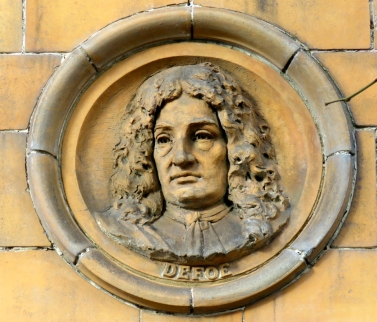
On his ‘tour thro’ the whole island of Great Britain’, 1724-6 Daniel Defoe came to Norwich and wrote: “The walls of this city are reckoned three miles in circumference, taking in more ground than the city of London; but much of that ground lying open in pasture-fields and gardens [1].”
Defoe.jpg

Daniel Defoe, novelist and journalist, on Norfolk Daily Standard Offices (now ‘Fired Earth’) by George Skipper

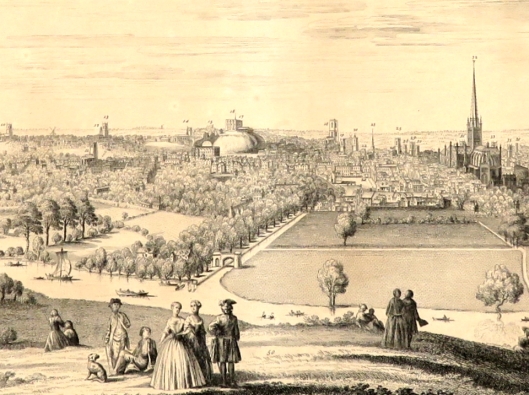
As well as open spaces the walled city was characterised by its trees for in 1662 the historian Thomas Fuller described Norwich as, “either a city in an orchard, or an orchard in a city, so equal are houses and trees blended in it”. The city was still jam-packed with trees nearly a century later …
IMG_7867.jpg

From, South-East Prospect of the City of Norwich. Samuel and Nathaniel Buck 1741. NWHCM: 1922.135.4:M 

Identifying trees from such illustrations is, however, not easy for they are often drawn in artistic shorthand. Even John Sell Cotman – who produced countless studies of trees – was criticised for making them, “as unintelligible to the virtuosi as to the public.” [2]

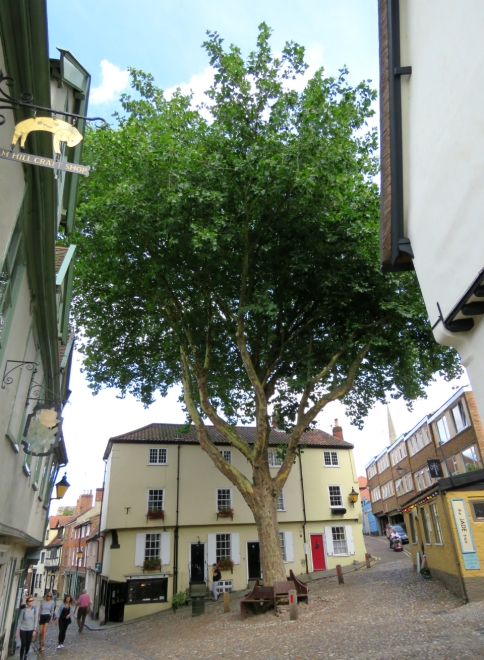
We can only guess what trees Defoe saw but he is likely to have seen the eponymous tree in Elm Hill.

Elm Hill elm tree prior to felling [5925] 1978-07-25.jpg

An elm in Elm Hill photographed in 1978, six months before it was felled due to Dutch Elm Disease. Courtesy of http://www.georgeplunkett.co.uk.  

The diseased elm cut down in the 1970s is unlikely to have been alive during Defoe’s visit. What we now see is a London Plane – a species that features prominently in the city’s urban landscape.
elm hill.jpg

The London Plane planted in Elm Hill 1978

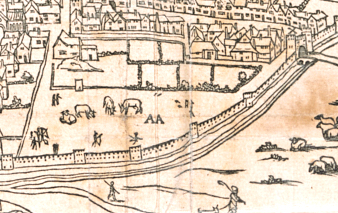
We know from a map of 1559 that Chapelfield Gardens was at one time an archery ground.
Cuningham.jpg

Chapel Field, used for archery practice. From Cuningham’s perspectival map of Norwich 1559.

In 1746, the gardens were leased by one-time mayor Thomas Churchman [3] whose mansion was to become the C20 Register Office in nearby Bethel Street.ChurchmanHse.jpg
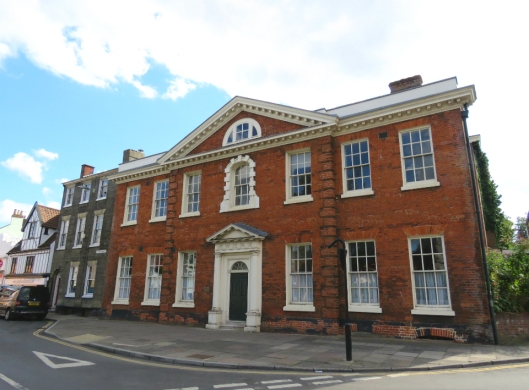
He enclosed the gardens and planted three avenues of elms that would eventually be replaced with native limes and plane trees [4,5].

Samuel King'sMapInset.jpg

Three avenues of elm planted as a triangular walk in Chapel Field by Thomas Churchman. From Samuel King’s 1766 map NWHCM:1997.550.81:M

A century later, the waterworks company had a reservoir in the garden but after an outbreak of cholera they surrendered their interest to the Corporation on the condition that the gardens were to be, “Laid out in the style of London parks”. This was funded by public subscription and in 1880 Mayor Harry Bullard of the city’s brewing family formally opened Chapelfield as a public park [4,5].

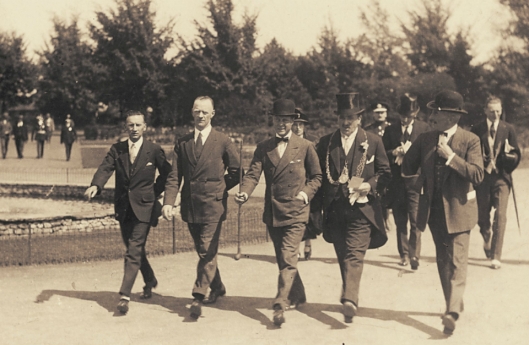
By the early C20 there were few other public parks in Norwich but this was to change under the guidance of Parks Superintendent Captain Arnold Sandys-Winsch who, between 1919 and 1956, oversaw the creation of 600 acres of parks and open spaces [6].
Pr 2 of Wales arriving1928 cr.jpg

Sandys-Winsch (second left) in lock-step with future abdicant Edward VIII at the opening of Eaton Park 1928. 

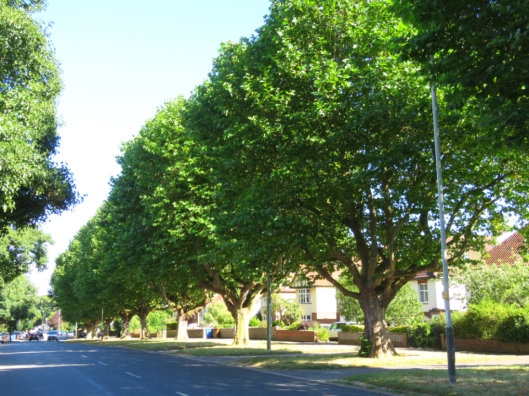
‘The Captain’ planted 20,000 trees and is perhaps best known for the goblet-pruned London Plane trees that line some of the city’s major avenues.
earlham road.jpg

Goblet-pruned London Plane trees along Earlham Road, planted by Sandys-Winsch

The London Plane – the most common tree in London – became an even more common sight in Paris [7,8]. The secret of its success in an urban environment seems to be its habit of discarding pollutants as it sheds large flakes of bark.P orientalis.jpg
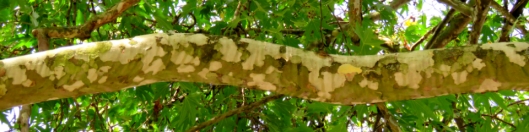
One idea is that the London Plane (Platanus x acerifolia) originated around 1650 as a cross between the Oriental Plane (P. orientalis) and the American Sycamore (P. occidentalis) in Southern France or Spain [8]. A more romantic suggestion is that the famous botanist and gardener John Tradescant the Younger (1608-1662) – who took three voyages to Virginia in 1637 – found it as an accidental hybrid in his nursery garden at Vauxhall, London [9]. Tradescant, like his father John Tradescant the Elder, was Keeper of Silkworms for Charles I – the importance of silkworms to the Norwich economy comes later.

Two examples of the parent species, the Oriental Plane, can be seen on Guildhall Hill [8]. IMG_9379.jpg
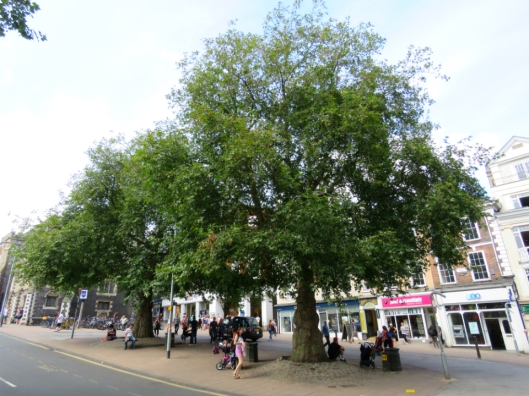
According to the historian Herodotus, the Persian king Xerxes came upon an Oriental Plane that he admired so much he adorned it with chains of gold and set someone to guard the tree. In Handel’s opera Xerxes the king stands in the shade of the plane and sings to it the aria Ombra mai fu (Never was a shade) [10]. [Click link to hear Beniamino Gigli sing this courtesy of YouTube: https://www.youtube.com/watch?v=yk_1R9UdIuY]

I remember the devastation caused by The Great Storm of 1987 to the city in general and Chapelfield Gardens in particular.
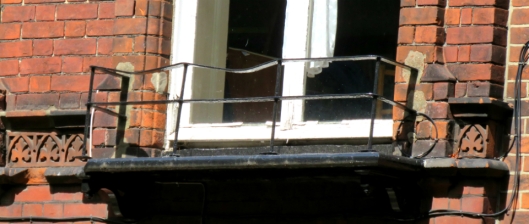
Damage ChapelfieldRoad.jpg

Balcony in Chapelfield Road damaged by a falling tree in the Great Storm of 1987

With 190 trees Chapelfield Gardens is a significant arboretum, comprised of 45 native and foreign species [5]. Below, the trunk of this London Plane, which occupies a prominent site in the centre of the Gardens, was split down the middle by the Great Storm …
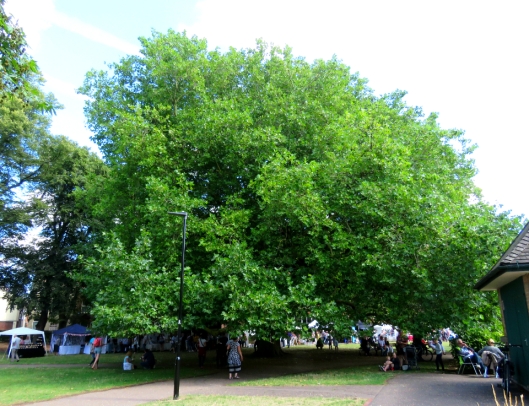
ChapelfieldGardens.jpg

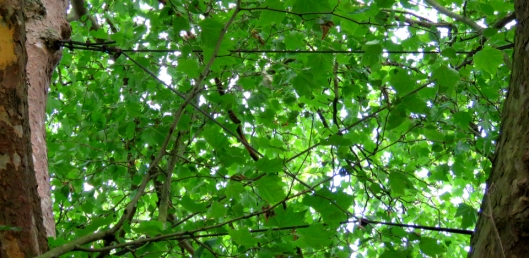
… it was rescued by binding the trunk with metal bands (now removed) and bolting hawsers (still there) through the upper branches to draw them together. IMG_9348.jpg
Chestnut trees also provide avenues, as here on Newmarket Road.IMG_9398.jpg
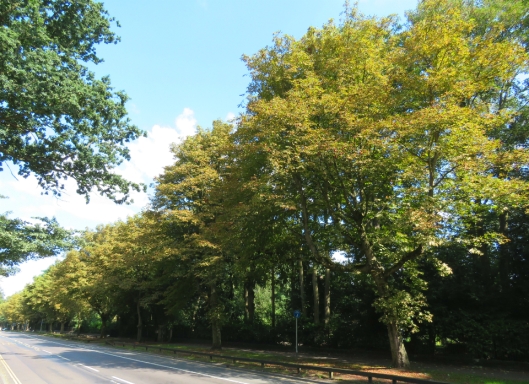
But since the beginning of the millennium, browning foliage in the second part of summer shows the damage caused by a leaf-mining moth.
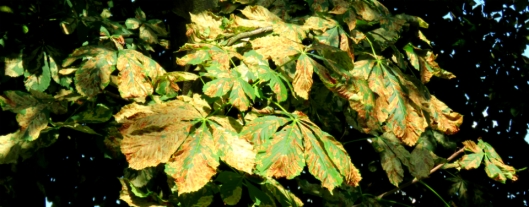
IMG_9402.jpg

The effects of the horse-chestnut leaf miner, Cameraria ohridella

The oak (Quercus robur), which assumes the status of a national emblem, is said to spend ‘300 years growing, 300 resting and 300 declining’. It can achieve prodigious size: the ancient oak in Earlham Park, just behind UEA Porters’ Lodge, is about 22 feet in circumference [8]. According to The Woodland Trust’s ready-reckoner [11] it might have been an acorn when Henry VII was born (1491), 200 years before Charles I had need of a royal oak in which to hide.
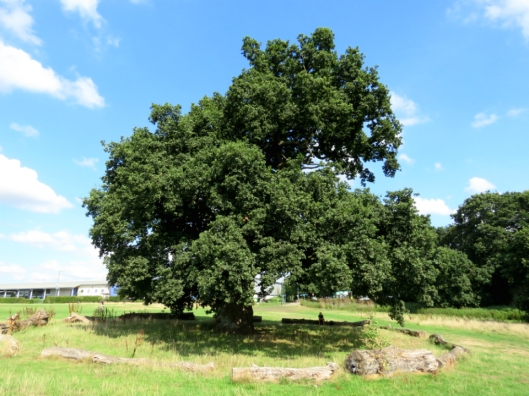
IMG_9408.jpg

The oldest living thing in Norwich, probably

In 1549, in order to meet the demands for wool for Norwich’s thriving weaving industry, some wealthy landowners from Wymondham – ten miles south-west of Norwich – began to enclose common land on which to graze their sheep. Rebels tore down the fences and so began the uprising led by Robert Kett – a ‘tanner of Windham’ [12]. The rebel army is said to have assembled at Kett’s Oak between Wymondham and Norwich [13].
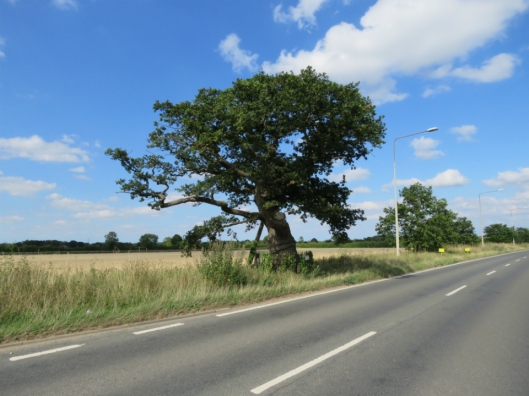
IMG_9411.jpg

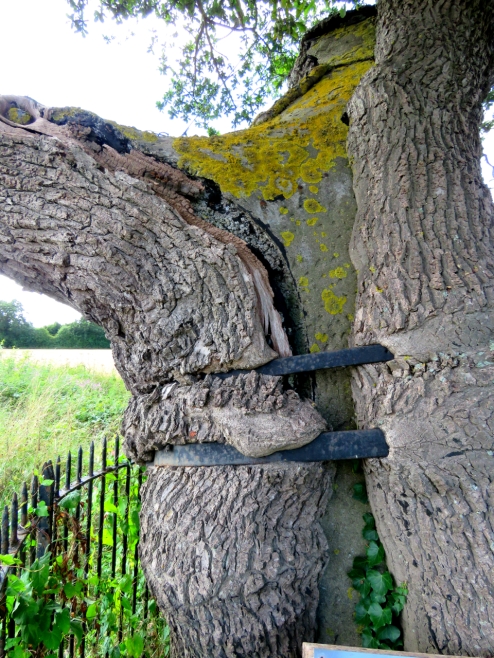
Kett’s Oak, near Hethersett

But Gerry Barnes and Tom Williamson [14] noted that when measured in 1829 the oak’s girth was only seven feet seven inches. That is, just a third of the circumference of the ancient oak in Earlham Park. According to The Woodland Trust’s ready reckoner [11] it was only about 100 years old at that time, still in its growth phase. In 1933 the hollow tree was painted with bitumen, filled with concrete and corseted with iron bands [14]. Although this survivor commemorates Kett and his followers it seems unlikely to be the original Kett’s Oak.IMG_9417.jpg
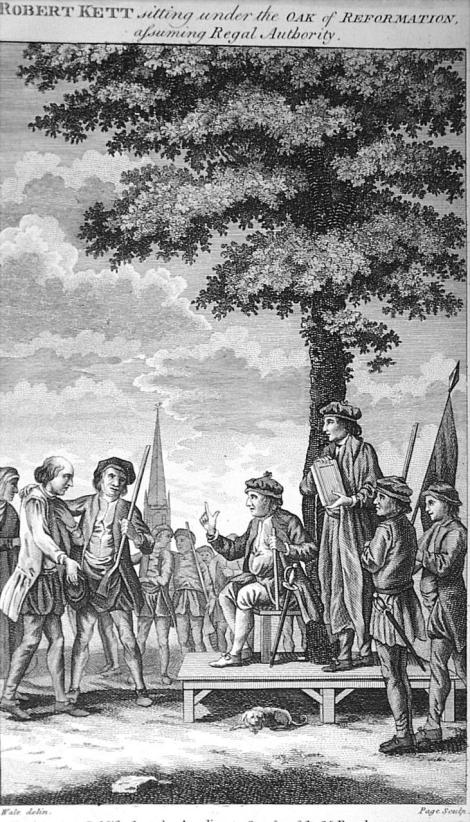
Kett is also associated with another oak. By the time his army encamped on Mousehold Heath overlooking Norwich, their numbers had swelled to about 16,000. According to C18 historian Francis Blomefield [12] this is where Kett set up court, dispensing the king’s justice beneath the Oak of Reformation.
RbtKettUnderOak.jpg

‘Robert Kett sitting under the Oak of Reformation assuming Regal Authority’ by Wale 1778. Courtesy of Norfolk Museums Service NWHCM: 1954.138.Todd5.Norwich.193

After skirmishes in and around the city the rebel army was drawn eastward into the Battle of Dussindale (near Boundary Lane, Thorpe St Andrews) where they were defeated by a superior army of 14,000 reinforced by German mercenaries [13]. Nine of Kett’s men were hanged from the Oak of Reformation [12]; Kett himself was hanged in chains from the walls of Norwich Castle but the same walls now bear a plaque declaring him a local hero.

In 1549 AD Robert Kett yeoman farmer of Wymondham was executed by hanging in this castle after the defeat of the Norfolk Rebellion of which he was the leader
In 1949 AD – four hundred years later – this memorial was placed here by the citizens of Norwich in reparation and honour to a notable and courageous leader in the long struggle of the common people of England to escape from a servile life into the freedom of just conditions.


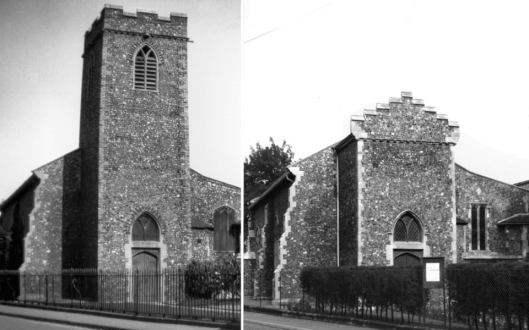
Oak Street in Norwich seems to have derived its name from the C15 church, St Martin at Oak. According to Blomefield [12] the church was named after, ” a famous image of the Virgin Mary, placed in the oak, which grew in the churchyard…” , making it a site of pilgrimage. The church was badly damaged in the Blitz and from 1976-2002 was in the care of St Martins Housing Trust – a charity for the homeless.
church duo2.jpg

St Martin’s at Oak 1931, and after restoration in 1955. ©www.georgeplunkett.co.uk

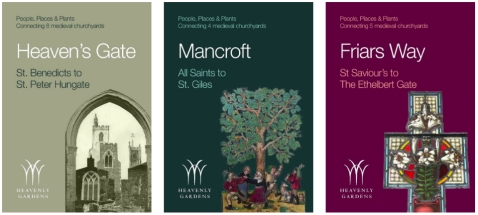
Norwich takes pride in having the greatest density of medieval churches “north of the Alps” (for those who might confuse us with Rome). Of the 58 pre-Reformation churches built within its city walls, more than 30 still stand [15]. In the Heavenly Gardens project, George Ishmael and colleagues plan to interconnect the often underused churchyards into a publicly accessible botanical garden[16]. Trails involving 28 medieval churchyards are covered in the first five (of six) downloadable PDFs (http://www.heavenlygardens.org.uk/churchyard-trails/).
Screen Shot 2018-08-29 at 12.jpg

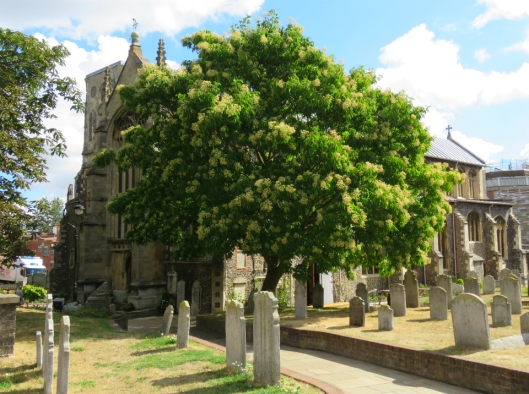
On my visit to one of George’s churchyards, St Stephens, this rare Himalayan Euodia fraxinifolia was in flower.
IMG_9333.jpg

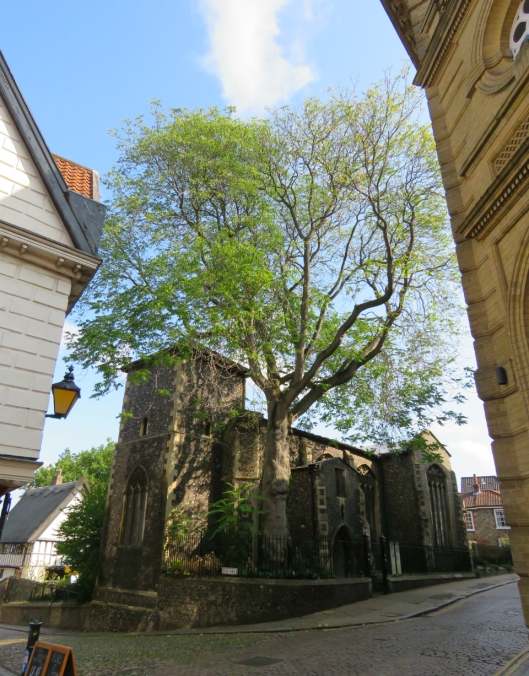
Chiming with the Heavenly Gardens project, a Tree of Heaven (Ailanthus altissima) grows outside St Peter Hungate at the top of Elm Hill. This is the church where, in 1466, John Paston’s body rested for one night before his grandiose funeral in Bromholm Priory [17]. The Tree of Heaven was introduced into Britain from Western China in 1751. Its leaves are used in silkworm culture although I can find no record of it being used for that purpose in Norwich. IMG_9447.jpg
The Stuarts, like the Elizabethans before them, were often portrayed in fine silk clothing. Not long after coming to the English throne (1609) King James I tried to invigorate the domestic silk trade, and to compete with the French, by offering mulberry saplings to his Lord Lieutenants at ‘six shillings the hundred‘. These were not, however, the preferred White Mulberry (Morus alba) grown in China but the Persian Black Mulberry (Morus nigra). Silkworms can feed on the Black Mulberry but – in a surprising example of ‘you are what you eat’ – the larvae then produce coarser silk and less of it, causing King James’ experiment to fail [18]. Over two centuries later, Norwich silk mills (e.g., St Mary’s Silk Mills in Oak Street and the Albion Yarn Mills in King Street) were using raw silk imported from China. Once more, there was an attempt to produce English silk: a “silk company established in 1835 planted upwards of 1500 mulberry trees on two acres of land in Thorpe Hamlet, stocked with 40,000 silkworms” [19] but this, too, failed.

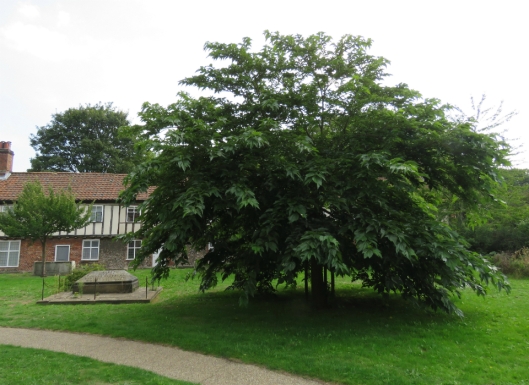
The mulberry tree growing in St Augustine’s churchyard has a particular relevance since it celebrates the life and work of silk weaver Thomas Clabburn, buried in its shadow.
StAugustinesNorwich.jpg

Mulberry in St Augustine’s churchyard; left, the Clabburn family burial plot

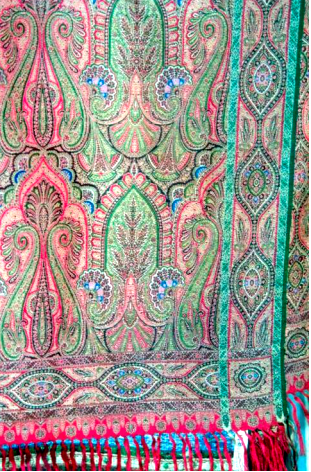
Norwich shawls were hugely popular in the mid-C19, due largely to Queen Victoria’s patronage [20]. The firm of Clabburn, Sons and Crisp were prominent members of this industry; they patented a method for producing the same pattern on both sides and sent examples to the royal family. Thomas was evidently a benevolent employer: upwards of 600 Norwich weavers and assistants subscribed to a memorial plaque inside the church extolling him as, “a kind good man.”
Clabburn silk shawl.jpg

Jacquard silk shawl c1850 woven by Clabburn, Sons and Crisp

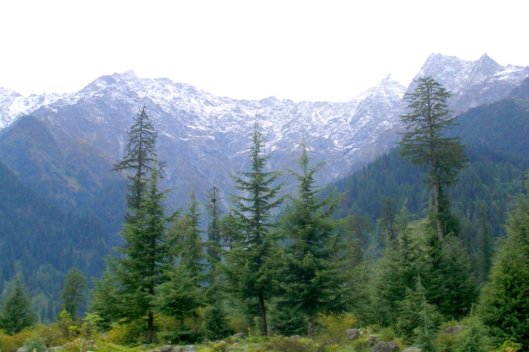
Norwich and the Tree of Life. Carl Linnaeus (1707-1778) is famed for his method of classifying plants and animals in hierarchical groups according to shared family characteristics. This paved the way for Darwin’s Tree of Life in which such groupings are not seen as fixed but related through time by evolution. When Linnaeus died, James Edward Smith (1759-1828), the son of a wool merchant and Norwich mayor, used his father’s wealth to buy the Linnean collection of books and – more importantly – his herbarium of dried plants containing examples of ‘standard types’ (see a previous post [21]). When this collection came to Norwich it was visited by naturalists from around the scientific world. Smith’s wonderful garden once contained many rare species but now lies beneath the Surrey Street bus station. He is commemorated by the West Himalayan Spruce, Picea smithiana, named after “the late immortal President of the Linnean Society.”
Picea_smithiana.jpg

Picea smithiana, the Morinda Spruce, named for Norwich naturalist Sir James Edward Smith ©Vyacheslav Argenberg


©2018 Reggie Unthank

Sources

  1. Daniel Defoe (1722). A Tour Through the Whole Island of Great Britain. Tour through the Eastern Counties of England, 1722, available as an e-book:   http://www.gutenberg.org/files/983/983-h/983-h.htm
  2. From, The Norwich Mercury. Quoted by Josephine Walpole (1993) in ‘Leonard Squirrell: The Last of the Norwich School?’  Pub. Antique Collectors’ Club, Woodbridge, Suffolk.
  3. http://www.norwich-heritage.co.uk/monuments/Thomas%20Churchman/Thomas_Churchman.shtmhttp:/
  4. /www.georgeplunkett.co.uk/Norwich/parksandgardens.htm
  5. http://www.chapelfieldsociety.org.uk/arboretum/
  6. http://friendsofeatonpark.co.uk/captain-sandys-winsch/
  7. https://www.london.gov.uk/what-we-do/environment/parks-green-spaces-and-biodiversity/trees-and-woodlands/london-tree-map#acc-i-44112
  8. Rex Hancey (2005). Notable Trees of Norwich. Pub: Norfolk & Norwich Naturalists’ Society.
  9. https://londonist.com/2015/03/the-secret-history-of-the-london-plane-tree
  10. https://en.wikipedia.org/wiki/Platanus_orientalis
  11. http://www.wbrc.org.uk/atp/Estimating%20Age%20of%20Oaks%20-%20Woodland%20Trust.pdf
  12. Francis Blomefield (1806). https://www.british-history.ac.uk/topographical-hist-norfolk/vol3
  13. https://en.wikipedia.org/wiki/Kett%27s_Rebellion
  14. Gerry Barnes and Tom Williamson (2011). Ancient Trees in the Landscape: Norfolk’s Arboreal Heritage. Pub: Windgather Press.
  15. https://norwichmedievalchurches.org/
  16. http://www.heavenlygardens.org.uk/
  17. https://colonelunthanksnorwich.com/2017/12/15/the-pastons-in-norwich/
  18. https://www.moruslondinium.org/research/faq
  19. William White (1836). History, Gazetteer, and Directory of Norfolk, and the City  and County of Norwich. Pub: William White, Sheffield.
  20. Caroline Goldthorpe (1989). From Queen to Empress: Victorian Dress 1837-1877. Pub: Metropolitan Museum of Art.
  21. https://colonelunthanksnorwich.com/2017/01/15/when-norwich-was-the-centre-of-the-world/

Thank you: George Ishmael of Heavenly Gardens (and Olly Ishmael); James Emerson, Secretary, Norfolk & Norwich Naturalists Society; Clare Haynes of UEA History; Hazel Harrison of the Chapel Field Society; Kerrie Jenkins of The Woodland Trust; Paris Agar, Norfolk Museums Service; Lesley Cunneen, garden historian; Joy Evitt, Norwich silk historian.
 

Share this:

  • Click to share on Facebook (Opens in new window) Facebook
  • Click to share on X (Opens in new window) X
  • Click to share on Pinterest (Opens in new window) Pinterest
  • Click to email a link to a friend (Opens in new window) Email
  • Click to print (Opens in new window) Print
Like Loading...

Post-medieval Norwich churches

15 Tuesday Aug 2017

Posted by reggie unthank in Norwich buildings, Norwich history

≈ 11 Comments

Tags

Edward Boardman, Geoffrey Camp, Norwich churches, Norwich nonconformist chapels, The Norwich Panorama

Once, the walled city of Norwich had 58 churches within its confines. After the break from Rome these Anglican churches were supplemented by new kinds of building to accommodate the varying shades of non-conformism.

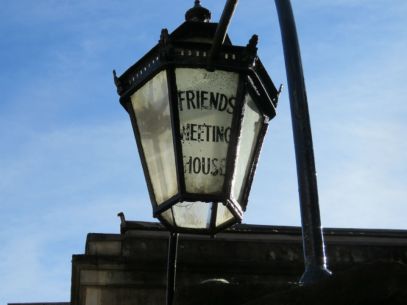
FriendsMtgHouse.JPG

The term nonconformist can be traced to the licensing of clergy who – during the reign of Elizabethan I – subscribed to the Act of Uniformity and were therefore ‘conformable’ to the rules of the established Protestant church [1]. But, as we know, Norwich citizens have always taken pride in their nonconformability [2] and this was expressed in the Dissenting or Nonconformist chapels built from the C17 onwards.

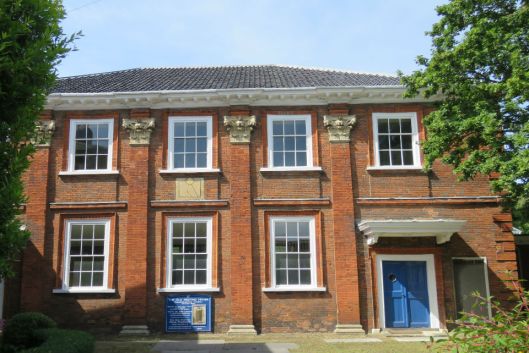
By 1580 nearly half of Norwich’s population were Protestant ‘Strangers’ from the Low Countries who had come seeking religious tolerance not granted by their Spanish overlords. These separatists from the Catholic church worshipped in ‘eglises libres‘ and The Old Meeting House off Colegate (1693) is an important architectural example of this Free Church Movement [3]. This square-plan building shows Classical rather than Gothic influences and we will see the four large brick pilasters capped by Corinthian capitals, used again. The sash windows are thought to be the first  in the city.

The invention of sash windows is uncertainly attributed to Robert Hooke who helped Christopher Wren survey and rebuild the City of London after the Great Fire (1666). The ability to set back sash windows helps prevent the spread of fire and they were specified in subsequent building acts.

old mtg house.JPG

The Old Meeting House Congregationalist Church

By the C19, Norwich was not a healthy place for the city’s poor living in the crowded and unsanitary ‘courts’ vacated by the wealthy merchant-class [4]. The rising population in the second half of the C19 created a demand for new, well-built, sanitary homes [5] that was met by the terraces built on land freed by the break-up of the Steward and Unthank estates in Heigham [6].

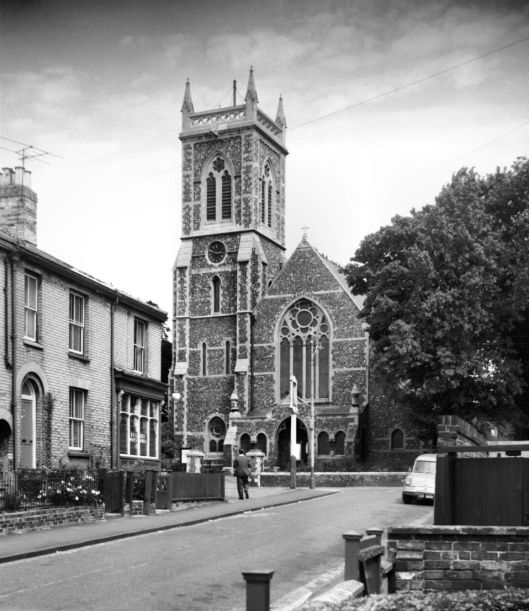
From 1801 to 1861 the population of Heigham had risen from 854 to 13,894 – too large to be served by the old parish church of St Bartholomew (bombed in WWII). Four new parishes were therefore formed: Holy Trinity in Trinity Street (built on one of the first blocks of land released by CW Unthank [5]); St Barnabas’ (at the junction of Heigham and Northumberland Streets); St Thomas’ Earlham Road (damaged in WWII and rebuilt in the 1950s and 60s) and St Philip’s (at the junction of Stafford Street and Heigham Road).

St Philip's 2.jpg

St Philip’s church 1962, looking up Stafford Street towards Heigham Road. ©www.georgeplunkett.co.uk

In late 1944 a US bomber, in difficulty and trying to find its way back to base, clipped a pinnacle on the tower of St Philip’s [7]. The pilot courageously steered the plane towards waste ground near the station but none of the crew survived the crash.

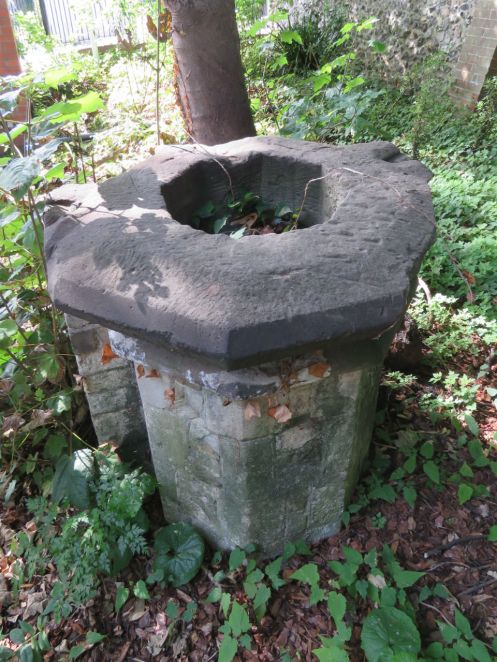
This increase in the number of churches continued into the C20. Pevsner notes that around a dozen churches were built in the new suburbs between 1900 and the start of WWI [8]. However, after WWII the next generation’s churchgoing declined and St Philip’s became redundant and was demolished in 1977. On a recent visit I was told that the stone basin in the garden of the adjacent care home had been the church’s font.

StPhilipsFont.jpg

Suggested to be the font from St Philip’s Church

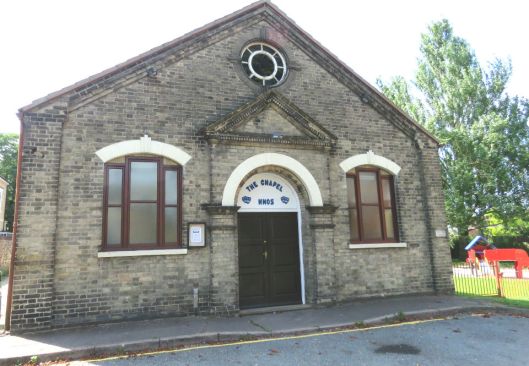
St Philip’s church rooms, at the rear of the site, survive as the Douro Place chapel.

Douro place chapel.jpg

Only the tower of the original parish church of Heigham – old St Bartholomew’s – survived WWII and so its congregation met instead in the disused Primitive Methodist church (1879) in Nelson Street.

Reflecting an era of public philanthropy, the Nelson Street church has a foundation stone laid by mustard manufacturer JP Colman with a commemorative stone dedicated to printer and Sunday school supporter Thomas Jarrold.

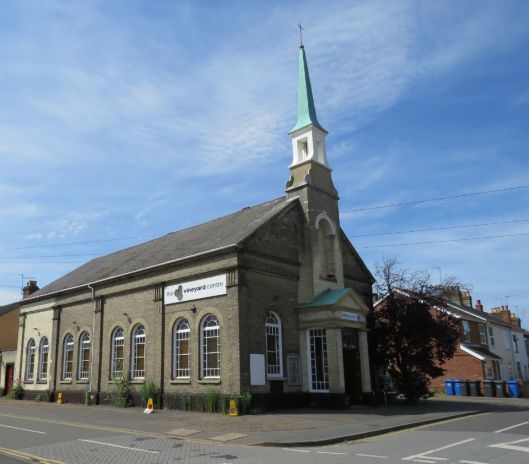
The church’s roofline does seem rather alien, more suited to New England than the flatlands of East Anglia. This can be attributed to the narrow spire that was added in 1956 when St Bartholomew’s North Heigham was adopted as the parish church [9]. It is now Gateway Vineyard Church.

nelson st.jpg

Built in Nelson Street as a Primitive Methodist in 1878-9, spire added by JP Chaplin in 1956. Now the evangelical Vineyard Centre

Nonconformist chapels like this sprang up across the expanding city during the latter part of the C19. While the Anglican Church (and perhaps the Wesleyan Methodists) tended to favour the Gothic other nonconformists built rectangular temples in Graeco-Roman form. In modernising his own Congregational Church in Princes Street (1869) Edward Boardman added a Classical facade with a triangular pediment, using white brick from Gunton’s Costessey brickworks (see previous post [10]). The ornate facade has four large Corinthian pilasters that Boardman may well have borrowed from the Old Meeting House across the river.

princes st.jpg

Below, Boardman repeated the use of giant Classical pilasters on the Primitive Methodist Chapel on Queen’s Road (1872).

Queens Rd.jpg

The Gothic Revival Baptist Chapel at the city end of Unthank Road was built (1874) during the city’s expansion southwards but – like other contemporaries – did not reach its century (1874-1954). Below, it is shown with the Catholic Church (now cathedral) of St John the Baptist in the background.

Unthank Rd Baptist church.jpg

Photographed in 1939, the original Baptist chapel on Unthank Road with St John the Baptist Catholic church to the right. ©www.georgeplunkett.co.uk

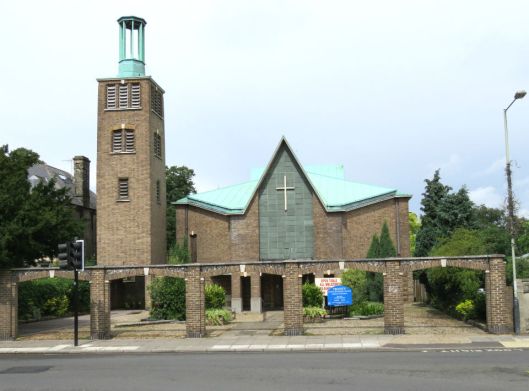
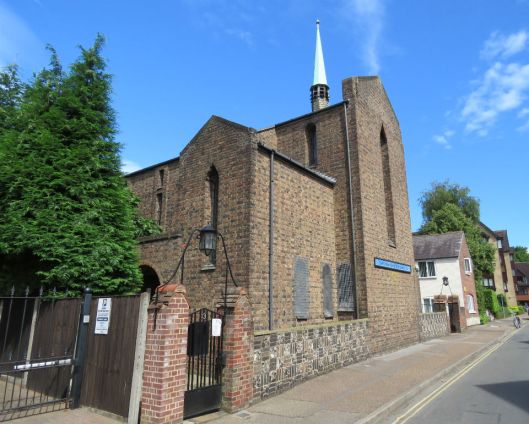
The original Unthank Road Baptist Chapel (above), designed by Edward Boardman in 1874, was demolished in 1954 to be superseded by a Presbyterian church – a replacement for the church in Theatre Street that was destroyed in the Blitz. The new Modernist church incorporates the original foundation stone from Theatre Street. In 1972 the Presbyterians and Congregationalists came together to form the United Reformed Church [11]. In 1956 a former member of the Boardman practice – Bernard Melchior Feilden –  designed what Pevsner thought the best postwar church in Norwich.

st peters.jpg

Trinity United Reformed Church, Unthank Road. Designed by Sir Bernard Feilden

On the eve of WWII (1939), the practice of Edward Boardman and Son replaced a Gothic-style Methodist chapel (1894) with the much larger St Peter’s Methodist that still stands – just about – at the junction of Park Lane and Avenue Road. It was a neighbour of mine for several years so it is sad to see it empty and in a state of disrepair.

st peters.jpg

Fewer churches were built between the wars [8]; the following come from the 1930s archives of local builder RG Carter.

This photograph taken by George Plunkett shows the Belvoir Street Wesleyan Methodist Church (1869) up for sale in 1989. It was demolished to make way for a block of flats but is survived by the adjoining twin-bayed Memorial Sunday School (seen on the far left) that Carters built in the 30s.

Belvoir St Wesleyan Reform Methodist church [6585] 1989-09-18.jpg

Courtesy RG Carter archive ©www.georgeplunkett.com

Screen Shot 2017-07-25 at 17.05.07.png

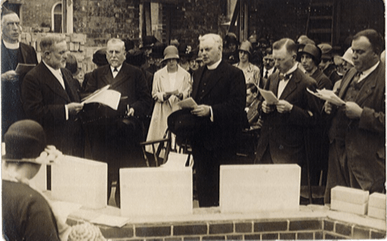
Blessing the foundations of the Belvoir St Sunday school in the 1930s. ©RG Carter Archive

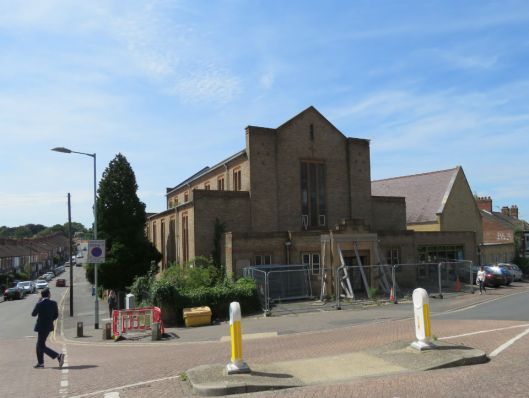
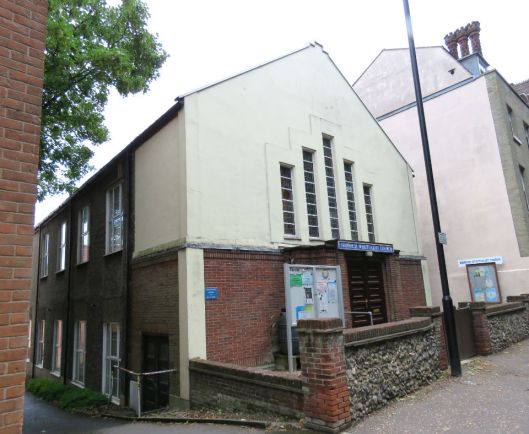
The simplicity of the Norwich Christian Spiritualist Church, built in 1936 by Carter’s, contrasts with Gunton’s chimneys peeping out from the Victorian St Mary’s Croft further along Chapel Field North (see previous post [10]). This steel-framed one-storey building was funded in part by a large Spiritualist meeting held in Norwich after WWI, which was addressed by the faith’s most famous member, Sir Arthur Conan Doyle.

spiritual Ch.jpg

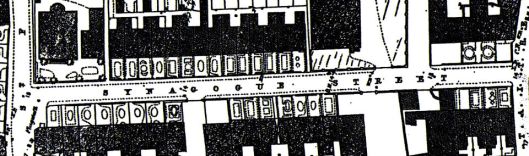
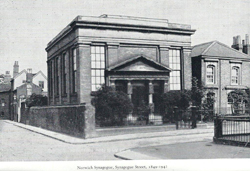
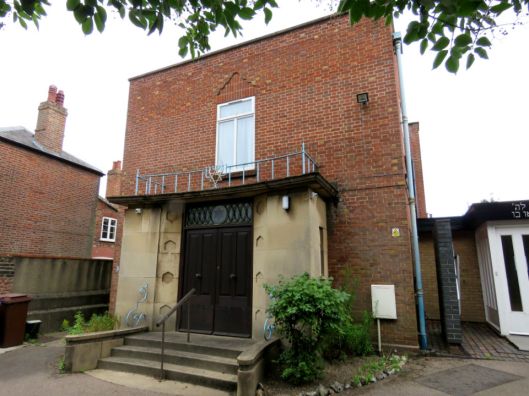
Incidentally, the Spiritualist Church was a temporary home for the city’s Jewish community after their synagogue was destroyed in the German Baedeker raids of 1942. The original building was in Synagogue Street – the only street of this name in the country. It was on the opposite side of the river to the Riverside complex alongside Thorpe Station.

1885 OS (query)_99.jpg

©Ordnance Survey 1885

norwich-old-synagogue.jpg

Synagogue in Synagogue St Norwich 1848-1942 [12]

In 1948 the Jewish congregation moved to a prefabricated building on Earlham Road, opposite St John’s Catholic cathedral. The present synagogue below was built (though not by Carters) on the site in 1968/9 and is now on a 999 year lease [13].

synagogue.JPG

Carters also built: the United Congregational School, Jessop Road (opened 1931); Dereham Road Baptist Sunday School in Goldsmiths Street; the Anglican shrine at Walsingham; and a garden house at the back of the Old Meeting House. The garden house was named for Reverend REF Peill who died in the pulpit on Easter Day 1930.

In Recorder Road, just off Prince of Wales Road, Carters built a Christian Scientist church (1934) to hold 300. It is now a Greek Orthodox church. The chequer of flint and brick on the boundary wall and the main north wall are reminiscent of the turret on The Gatehouse pub on Dereham Road, also built by Carters (see previous post [14]).

Greek church.jpg

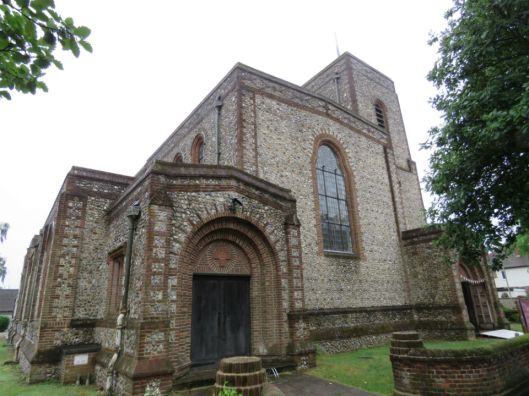
Of Carters’ inter-war churches a personal favourite is St Alban’s Lakenham (1932-1937). It was designed by local architect Cecil Upcher who lived and worked in Pull’s Ferry [15]. The detailing is especially pleasing. Externally, the vernacular whole-flint walls are outlined in red brick and tile …

Grove Rd.jpg

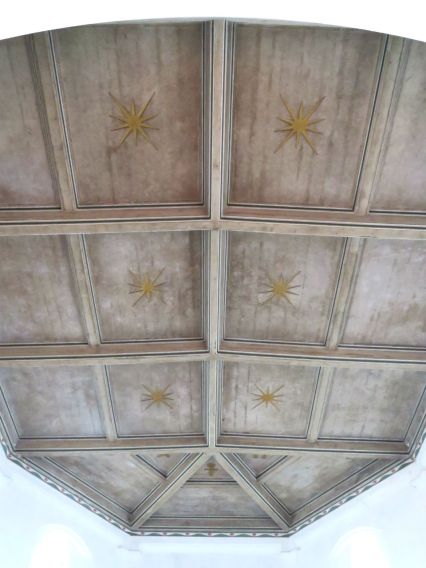
… internally there are several attractive features including the painted concrete ceiling.

Grove Road 2.jpg

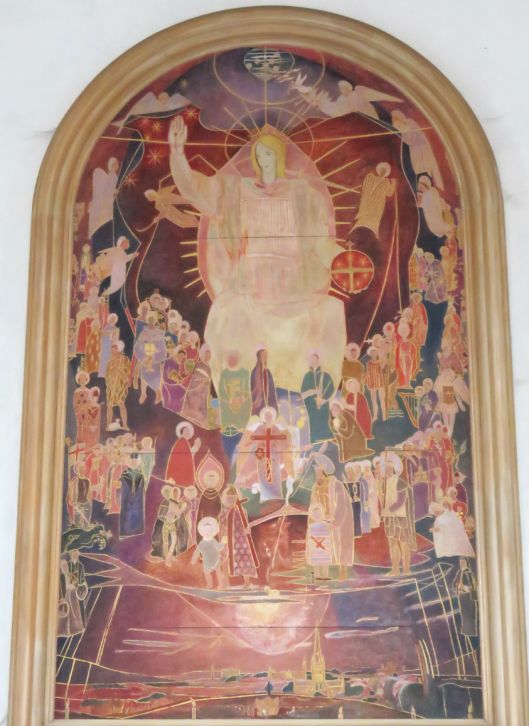
In 1955, in response to a competition by the Eastern Daily Press to provide a work of art above the altar, Jeffery Camp  painted a reredos of an androgynous Christ in Majesty above Norwich. Camp is a founding member of the Norwich Twenty group of artists and a Royal Academician.

christ in majesty.jpg

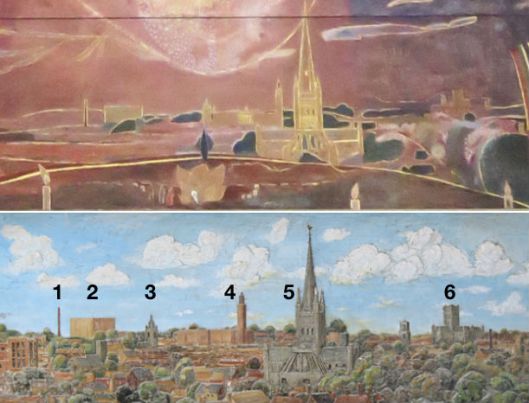
The cityscape at the bottom of the reredos shares the same viewpoint – St James’ Hill – that John Moray-Smith used for The Norwich Panorama (ca. 1947), recently restored by the Norwich Society [16].

panorama final.jpg

1, Caley’s chocolate factory; 2, Norwich Castle; 3, St Peter Mancroft; 4, City Hall; 5, Norwich Cathedral; 6, St John’s Catholic Cathedral.

A thread that runs throughout this post is that the city’s churches have been reused and adapted over a very long time. But despite Norwich being famed for its medieval churches (‘one church for every week of the year’) many of these older buildings are empty and still to find a new purpose. With such cultural treasure it should be possible to find imaginative uses to attract those who come to cities for something other than shopping.

An important start is being made by the Norwich Churches Project [17] who are looking into the relationship between the city, community and architecture. Its downloadable churches trail and guide is available HERE [18]. I can also recommend their free exhibition in the Archive Centre behind Norfolk County Hall, Norwich: ‘Drawing in the Archive: the Visual Record of Norwich’s Medieval Churches 1700-2017‘. Monday 21 August – Friday 17 November 2017.

©2017 Reggie Unthank. Archived by the British Library’s UK Web Archive

Thanks: I am grateful to the RG Carter Archives, whose list of Carter’s 1930 buildings prompted this post. I am grateful to Jonathan Plunkett for permission to reproduce images from the essential and fascinating archive of Norwich buildings photographed by his father George (www.georgeplunkett.co.uk). Thank you Shea Fiddes for the information on Synagogue Street.

Sources

  1. http://www.heritagecity.org/research-centre/churches-and-creeds/noncomformity-in-norwich.htm
  2. https://colonelunthanksnorwich.com/2017/03/15/three-norwich-women/
  3. http://www.heritagecity.org/research-centre/churches-and-creeds/the-old-meeting-house.htm
  4. Holmes, Frances and Holmes, Michael (2015). The Old Courts and Yards of Norwich: A Story of People, Poverty and Pride. Pub: Norwich Heritage Projects.
  5. O’Donoghue, Rosemary (2014). Norwich, an Expanding City 1801-1990. Pub: The Larks Press.
  6. https://colonelunthanksnorwich.com/2017/07/15/the-end-of-the-unthank-mystery/
  7. http://www.georgeplunkett.co.uk/Website/raids.htm
  8. Pevsner, Nikolaus and Wilson, Bill (2002). The Buildings of England. Norfolk 1: Norwich and North-East. Pub: Yale University Press.
  9. http://www.georgeplunkett.co.uk/Norwich/mid.htm#Nelso
  10. https://colonelunthanksnorwich.com/2016/05/05/fancy-bricks/
  11. https://historicengland.org.uk/listing/the-list/list-entry/1392268
  12. http://jscn.org.uk/small-communities/norwich-hebrew-congregation-synagogue/
  13. http://www.norwichsynagogue.org.uk/wp-content/uploads/2014/12/11th-12thcenteryjews.pdf
  14. https://colonelunthanksnorwich.com/2016/12/22/arts-crafts-pubs-in-the-c20th/
  15. http://www.norfolkchurches.co.uk/norwichalban/norwichalban.htm
  16. Burrall, Paul (2017). John Moray-Smith, a booklet published by the Norwich Society http://www.thenorwichsociety.org.uk/moray-smith-panorama (exceptional value at just £3!).
  17. https://norwichmedievalchurches.org/
  18. https://mediafiles.thedms.co.uk/Publication/ee-nor/cms/pdf/OTW_WEBChurchesWalkingTrail.pdf

Share this:

  • Click to share on Facebook (Opens in new window) Facebook
  • Click to share on X (Opens in new window) X
  • Click to share on Pinterest (Opens in new window) Pinterest
  • Click to email a link to a friend (Opens in new window) Email
  • Click to print (Opens in new window) Print
Like Loading...

Enter your email address to follow this blog and receive notifications of new posts by email.

Recent Posts

  • Gothick Norwich
  • The Sons of Flora
  • The United Friars: Charity and Enquiry in the Age of Reason
  • Plans for a Fine City
  • Three Unthank books in print

Recent Comments

Jonathan Dutton's avatarJonathan Dutton on The Nursery Fields of Eat…
Jacqui edgar's avatarJacqui edgar on Two Bs or not two Bs? Norfolk…
Unknown's avatarJapan goes on show |… on Jeckyll and the sunflower…
reggie unthank's avatarreggie unthank on Gothick Norwich
huroncityradio's avatarhuroncityradio on Gothick Norwich

Archives

  • December 2023
  • October 2023
  • April 2023
  • January 2023
  • November 2022
  • October 2022
  • July 2022
  • March 2022
  • February 2022
  • January 2022
  • December 2021
  • November 2021
  • October 2021
  • September 2021
  • August 2021
  • July 2021
  • June 2021
  • May 2021
  • April 2021
  • March 2021
  • February 2021
  • January 2021
  • December 2020
  • November 2020
  • October 2020
  • September 2020
  • August 2020
  • July 2020
  • June 2020
  • May 2020
  • April 2020
  • March 2020
  • February 2020
  • January 2020
  • December 2019
  • November 2019
  • October 2019
  • September 2019
  • August 2019
  • July 2019
  • June 2019
  • May 2019
  • April 2019
  • March 2019
  • February 2019
  • January 2019
  • December 2018
  • November 2018
  • October 2018
  • September 2018
  • August 2018
  • July 2018
  • June 2018
  • May 2018
  • April 2018
  • March 2018
  • February 2018
  • January 2018
  • December 2017
  • November 2017
  • October 2017
  • September 2017
  • August 2017
  • July 2017
  • June 2017
  • May 2017
  • April 2017
  • March 2017
  • February 2017
  • January 2017
  • December 2016
  • November 2016
  • October 2016
  • September 2016
  • August 2016
  • July 2016
  • June 2016
  • May 2016
  • April 2016
  • March 2016
  • February 2016
  • January 2016
  • December 2015

Categories

  • Aesthetic Movement
  • Amelia Opie
  • Art
  • Art Nouveau
  • Arts and Crafts
  • Decorative Arts
  • James Minns carver
  • Linnean Society
  • Norwich architect
  • Norwich Banking
  • Norwich buildings
  • Norwich Department Stores
  • Norwich history
  • Norwich libraries
  • Norwich maps
  • Norwich parks
  • Norwich School of Painters
  • Norwich streets
  • Paston Letters
  • River Wensum history
  • Shutter Telegraph
  • Sir Thomas Browne
  • Stained Glass
  • The Royal Society
  • Uncategorized

Meta

  • Create account
  • Log in
  • Entries feed
  • Comments feed
  • WordPress.com

Recent Posts

  • Gothick Norwich
  • The Sons of Flora
  • The United Friars: Charity and Enquiry in the Age of Reason
  • Plans for a Fine City
  • Three Unthank books in print

Recent Comments

Jonathan Dutton's avatarJonathan Dutton on The Nursery Fields of Eat…
Jacqui edgar's avatarJacqui edgar on Two Bs or not two Bs? Norfolk…
Unknown's avatarJapan goes on show |… on Jeckyll and the sunflower…
reggie unthank's avatarreggie unthank on Gothick Norwich
huroncityradio's avatarhuroncityradio on Gothick Norwich

Archives

  • December 2023
  • October 2023
  • April 2023
  • January 2023
  • November 2022
  • October 2022
  • July 2022
  • March 2022
  • February 2022
  • January 2022
  • December 2021
  • November 2021
  • October 2021
  • September 2021
  • August 2021
  • July 2021
  • June 2021
  • May 2021
  • April 2021
  • March 2021
  • February 2021
  • January 2021
  • December 2020
  • November 2020
  • October 2020
  • September 2020
  • August 2020
  • July 2020
  • June 2020
  • May 2020
  • April 2020
  • March 2020
  • February 2020
  • January 2020
  • December 2019
  • November 2019
  • October 2019
  • September 2019
  • August 2019
  • July 2019
  • June 2019
  • May 2019
  • April 2019
  • March 2019
  • February 2019
  • January 2019
  • December 2018
  • November 2018
  • October 2018
  • September 2018
  • August 2018
  • July 2018
  • June 2018
  • May 2018
  • April 2018
  • March 2018
  • February 2018
  • January 2018
  • December 2017
  • November 2017
  • October 2017
  • September 2017
  • August 2017
  • July 2017
  • June 2017
  • May 2017
  • April 2017
  • March 2017
  • February 2017
  • January 2017
  • December 2016
  • November 2016
  • October 2016
  • September 2016
  • August 2016
  • July 2016
  • June 2016
  • May 2016
  • April 2016
  • March 2016
  • February 2016
  • January 2016
  • December 2015

Categories

  • Aesthetic Movement
  • Amelia Opie
  • Art
  • Art Nouveau
  • Arts and Crafts
  • Decorative Arts
  • James Minns carver
  • Linnean Society
  • Norwich architect
  • Norwich Banking
  • Norwich buildings
  • Norwich Department Stores
  • Norwich history
  • Norwich libraries
  • Norwich maps
  • Norwich parks
  • Norwich School of Painters
  • Norwich streets
  • Paston Letters
  • River Wensum history
  • Shutter Telegraph
  • Sir Thomas Browne
  • Stained Glass
  • The Royal Society
  • Uncategorized

Meta

  • Create account
  • Log in
  • Entries feed
  • Comments feed
  • WordPress.com

Recent Posts

  • Gothick Norwich
  • The Sons of Flora
  • The United Friars: Charity and Enquiry in the Age of Reason
  • Plans for a Fine City
  • Three Unthank books in print

Recent Comments

Jonathan Dutton's avatarJonathan Dutton on The Nursery Fields of Eat…
Jacqui edgar's avatarJacqui edgar on Two Bs or not two Bs? Norfolk…
Unknown's avatarJapan goes on show |… on Jeckyll and the sunflower…
reggie unthank's avatarreggie unthank on Gothick Norwich
huroncityradio's avatarhuroncityradio on Gothick Norwich

Archives

  • December 2023
  • October 2023
  • April 2023
  • January 2023
  • November 2022
  • October 2022
  • July 2022
  • March 2022
  • February 2022
  • January 2022
  • December 2021
  • November 2021
  • October 2021
  • September 2021
  • August 2021
  • July 2021
  • June 2021
  • May 2021
  • April 2021
  • March 2021
  • February 2021
  • January 2021
  • December 2020
  • November 2020
  • October 2020
  • September 2020
  • August 2020
  • July 2020
  • June 2020
  • May 2020
  • April 2020
  • March 2020
  • February 2020
  • January 2020
  • December 2019
  • November 2019
  • October 2019
  • September 2019
  • August 2019
  • July 2019
  • June 2019
  • May 2019
  • April 2019
  • March 2019
  • February 2019
  • January 2019
  • December 2018
  • November 2018
  • October 2018
  • September 2018
  • August 2018
  • July 2018
  • June 2018
  • May 2018
  • April 2018
  • March 2018
  • February 2018
  • January 2018
  • December 2017
  • November 2017
  • October 2017
  • September 2017
  • August 2017
  • July 2017
  • June 2017
  • May 2017
  • April 2017
  • March 2017
  • February 2017
  • January 2017
  • December 2016
  • November 2016
  • October 2016
  • September 2016
  • August 2016
  • July 2016
  • June 2016
  • May 2016
  • April 2016
  • March 2016
  • February 2016
  • January 2016
  • December 2015

Categories

  • Aesthetic Movement
  • Amelia Opie
  • Art
  • Art Nouveau
  • Arts and Crafts
  • Decorative Arts
  • James Minns carver
  • Linnean Society
  • Norwich architect
  • Norwich Banking
  • Norwich buildings
  • Norwich Department Stores
  • Norwich history
  • Norwich libraries
  • Norwich maps
  • Norwich parks
  • Norwich School of Painters
  • Norwich streets
  • Paston Letters
  • River Wensum history
  • Shutter Telegraph
  • Sir Thomas Browne
  • Stained Glass
  • The Royal Society
  • Uncategorized

Meta

  • Create account
  • Log in
  • Entries feed
  • Comments feed
  • WordPress.com

Enter your email address to follow this blog and receive notifications of new posts by email. It's free, no junk.

Join 722 other subscribers

Recent Posts

  • Gothick Norwich
  • The Sons of Flora
  • The United Friars: Charity and Enquiry in the Age of Reason
  • Plans for a Fine City
  • Three Unthank books in print
  • The new Colonel Unthank’s Norwich book #3
  • Female Suffrage in Norwich
  • Norfolk Rood Screens
  • Norwich Guides: Ancient and Modern
  • Chapel in the Fields
  • Noël Spencer’s Norwich
  • Georgian Norwich
  • Cecil Upcher: soldier and architect
  • Sculptured Monuments #2
  • Sculptured Monuments
  • Madness
  • New Book: Colonel Unthank’s Norwich
  • AF Scott, Architect:conservative or pioneer?
  • Norwich Department Stores
  • Revolutionary Norwich
  • Parson Woodforde and the Learned Pig
  • A postscript on Eaton Nurseries
  • The Nursery Fields of Eaton
  • Vanishing Plains
  • Parson Woodforde goes to market
  • Norwich, City of the Plains
  • The Plains of Norwich
  • Twentieth Century Norwich Buildings
  • Thomas Browne’s World
  • The angel’s bonnet
  • After the Norwich School
  • A few of my favourite buildings
  • James Minns, carver
  • The Norwich Banking Circle
  • Behind Mrs Opie’s medallion
  • Norwich: shaped by fire
  • Street Names #2
  • Street names
  • The Norwich School of Painters
  • Going Dutch: The Norwich Strangers
  • The Captain’s Parks
  • Norfolk’s Napoleonic Telegraph
  • Catherine Maude Nichols
  • The Norfolk Botanical Network
  • City Hall Doors # 2
  • City Hall Doors # 1
  • Late Extra: The Norwich Pantheon
  • Pleasure Gardens
  • The absent Dukes of Norfolk
  • Nairn on Norwich
  • The Norwich Way of Death
  • Norwich: City of Trees
  • The Bridges of Norwich Part 2: Around the bend
  • The Bridges of Norwich 1: The blood red river
  • Norwich knowledge (libraries)
  • Street furniture: palimpsests
  • Putting Norwich on the map
  • Clocks
  • Faces
  • The Norwich coat of arms
  • New book: Colonel Unthank and the Golden Triangle
  • The Pastons in Norwich
  • Reggie through the underpass
  • Gildencroft and Psychogeography
  • Bullards’ Brewery
  • Post-medieval Norwich churches
  • The end of the Unthank mystery?
  • Barnard Bishop and Barnards
  • Public art, private meanings
  • Colonel Unthank rides again

Archives

  • December 2023
  • October 2023
  • April 2023
  • January 2023
  • November 2022
  • October 2022
  • July 2022
  • March 2022
  • February 2022
  • January 2022
  • December 2021
  • November 2021
  • October 2021
  • September 2021
  • August 2021
  • July 2021
  • June 2021
  • May 2021
  • April 2021
  • March 2021
  • February 2021
  • January 2021
  • December 2020
  • November 2020
  • October 2020
  • September 2020
  • August 2020
  • July 2020
  • June 2020
  • May 2020
  • April 2020
  • March 2020
  • February 2020
  • January 2020
  • December 2019
  • November 2019
  • October 2019
  • September 2019
  • August 2019
  • July 2019
  • June 2019
  • May 2019
  • April 2019
  • March 2019
  • February 2019
  • January 2019
  • December 2018
  • November 2018
  • October 2018
  • September 2018
  • August 2018
  • July 2018
  • June 2018
  • May 2018
  • April 2018
  • March 2018
  • February 2018
  • January 2018
  • December 2017
  • November 2017
  • October 2017
  • September 2017
  • August 2017
  • July 2017
  • June 2017
  • May 2017
  • April 2017
  • March 2017
  • February 2017
  • January 2017
  • December 2016
  • November 2016
  • October 2016
  • September 2016
  • August 2016
  • July 2016
  • June 2016
  • May 2016
  • April 2016
  • March 2016
  • February 2016
  • January 2016
  • December 2015

Follow me on Twitter

My Tweets

previous posts

  • About
  • Colonel Unthank and the Golden Triangle (Unthank #1)
  • Colonel Unthank’s Norwich #2
  • Contact
  • Latest Colonel Unthank’s Norwich Book #3
  • Posts

Blog at WordPress.com.

  • Subscribe Subscribed
    • COLONEL UNTHANK'S NORWICH
    • Join 722 other subscribers
    • Already have a WordPress.com account? Log in now.
    • COLONEL UNTHANK'S NORWICH
    • Subscribe Subscribed
    • Sign up
    • Log in
    • Report this content
    • View site in Reader
    • Manage subscriptions
    • Collapse this bar
 

Loading Comments...
 

    %d