Cotman & Squirrell

Tags

, ,

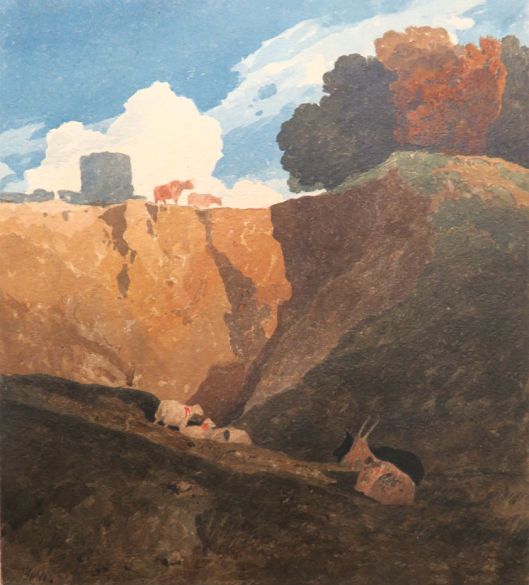
Whenever I visited Norwich Castle Museum I always made a point of seeing John Sell Cotman’s ‘The Marl Pit’ in the section devoted to the Norwich School, but for several years it has been missing. After enquiring about its whereabouts I was given an appointment to see it in storage at the adjacent Shirehall Study Centre. Watercolour is a fugitive medium so nowadays The Marl Pit is only exhibited in the (dimmed) light of day for three months at a time.
Cotman_TheMarlpit_New2.jpg

John Sell Cotman, The Marl Pit ca 1809-10 ©Norfolk Museums Service (Norwich Castle Museum and Art Gallery)


Cotman employed a limited palette with typical ‘Cotman Blue’ skies. His watercolours were composed of patches of colour built up in layers by placing different values of the same hue, one on top of the other, once the underpainting was quite dry. These textured blocks of colour were simplified, with little detail to mar the effect and it is perhaps this geometry, this massing of interlocking shapes that appeals to the modern eye. Cotman introduced drama by juxtaposing darks and lights and carefully controlling the edges.

He often used animals to provide scale as well as counterpoints of light against dark (and vice versa) as seen here where the cows are outlined against the cloud.  The sheep, almost a reflection of the cows above, are about the same size but are drawn towards the viewer by dabs of red.

The power of red crops up later in the well-known spat between Turner and Constable. On varnishing day of the Royal Academy’s 1832 Exhibition Turner came in and surveyed his own seascape. He quickly transformed it by painting a buoy with a dab of red then departed, leaving Constable to say,”He has been here and fired a gun”.

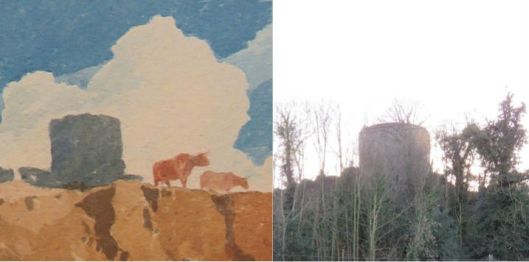
When driving across the Carrow Bridge I often look up Carrow Hill to see the Black Tower on the medieval city walls, so strongly reminiscent of the dark rectangle on top of the cliff in Cotman’s Marl Pit.
BlackTower3.jpg

Left: The Marl Pit (detail). Right: The Black Tower, Carrow Hill, Norwich

Updated 6/9/2019: The Marlpit at Whitlingham appears to have been well known to Norwich painters and may be a better candidate. Below is an 1882 painting of Whitlingham Church, Norwich 1822 by Joseph Clover (NWHCM: 1939.141.9). In addition, the Castle Museum holds another painting of ‘Marl Pit at Whitlingham’ , which is attributed to JS Cotman (NWHCM: 1951.235.214) although stylistically is quite unlike the more famous ‘Marl Pit’ above.
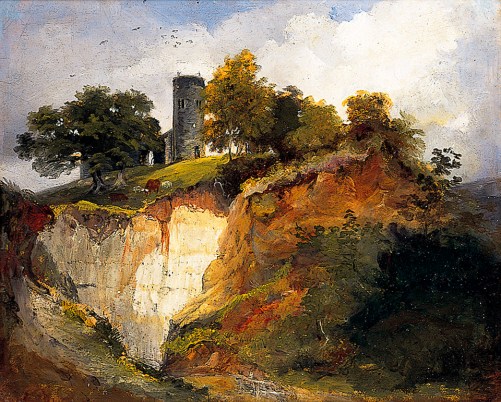
‘Whitlingham Church, Norwich 1822’ by Joseph Clover. Norwich Castle Museum and Art Gallery NWHCM: 1939.141.9 

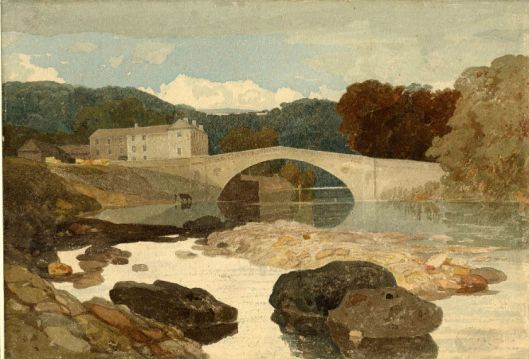
The early Cotman is illustrated by the painting below of the Greta Bridge made during his travels to Yorkshire: superb draughtsmanship, crisp boundaries between carefully regulated areas of wash, suppression of inessential detail, with controlled blocks of darker colour leading the eye around the picture. The way that the man-made objects (house and bridge) are outlined by darker negative shapes shows Cotman’s control of edges.
Greta Bridge (c) British Museum.jpg

John Sell Cotman. Greta Bridge Yorkshire ca 1805. (c) The Trustees of the British Museum

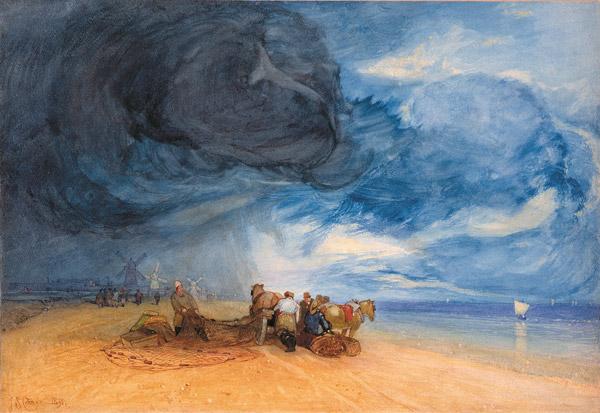
Cotman was not restricted to the placid rural idyll as this dramatic late  painting of Yarmouth beach illustrates. His colours are now denser and objects are less ‘blocky’, less clearly separated, as he literally begins to push the boundaries between them. As any amateur watercolourist knows you take your life into your hands when ‘going back in’ to a watercolour painting; but the addition of a medium like gum arabic (some say a paste made from wheat or even rice flour) seems to have allowed him to manipulate the still-wet paint with a rag or dry brush as can be seen at the right-hand edge of the dark and threatening cloud.
Cotman_Storm-on-Yarmouth-Beachx600.jpg

John Sell Cotman. Storm on Yarmouth Beach 1831 (c) Norfolk Museums Service (Norwich Castle Museum and Art Gallery)

Cotman’s experimentalism reveals itself in the painting of a Woodland Stream. Working on a surface briskly covered with probably no more than two colours he seems to have moved the surface by rubbing it with a rag, as can seen from the swirling marks in the foliage to the right. Form is given to the trees and reeds by ‘lifting out’; water applied with a fine brush is blotted to leave highlights. The freedom of this painting contrasts with the tight control displayed in Greta Bridge.
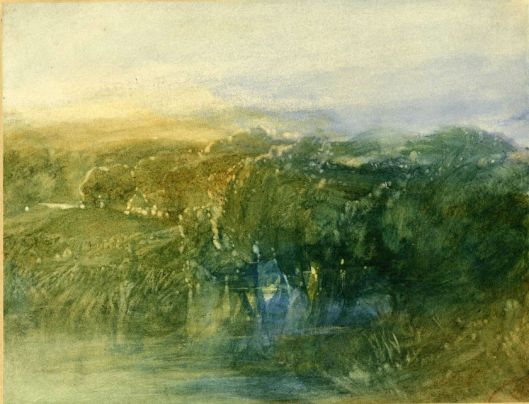
Cotman_Woodland_stream1.jpg

John Sell Cotman. Woodland Stream, undated. (c) Norfolk Museums Service (Norwich Castle Museum and Art Gallery)

Below, another densely-pigmented watercolour from the 1830s shows the darker side of the Romantic vision. Again, the boundaries are more fluid, the wet blue paint ragged to produce a deliberately fictional sky.
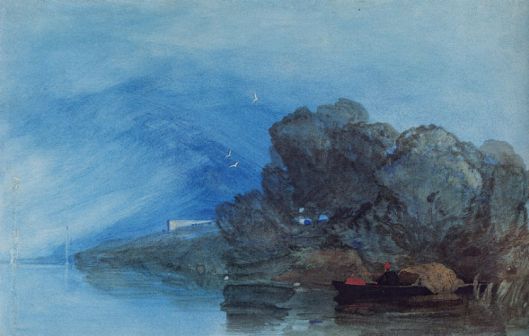
Cotman_a figure in a boat on a river.jpg

John Sell Cotman ca 1830. A Figure in a Boat on a River. (c) Norfolk Museums Service (Norwich Castle Museum and Art Gallery)

The painting is low key, blue dominates, the whole effect sufficiently sombre to anticipate the Isle of the Dead by the Swiss Symbolist painter, Arnold Böcklin …
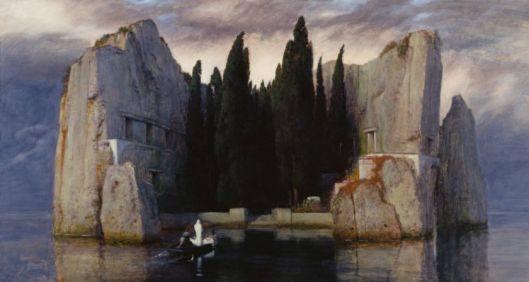
Bocklin.jpg

Arnold Bocklin 1883. Isle of the Dead (Third version). Alte Nationalgalerie Berlin.

Since the Greta Bridge period, Cotman had been criticised for his depiction of trees in both oil and watercolour. As a sensitive – probably depressive – man he was disturbed by this for as the picture below shows, he had made numerous studies of trees and foliage. To the modern eye it is hard to see how his contemporaries could have taken exception to Cotman’s rendering of trees yet the critic of The Norwich Mercury could write:

“… we regret to find that it [‘Trees at Kimberley’] is in this instance as unintelligible to the virtuosi as to the public. We were wholly unable to catch the effect” [1].
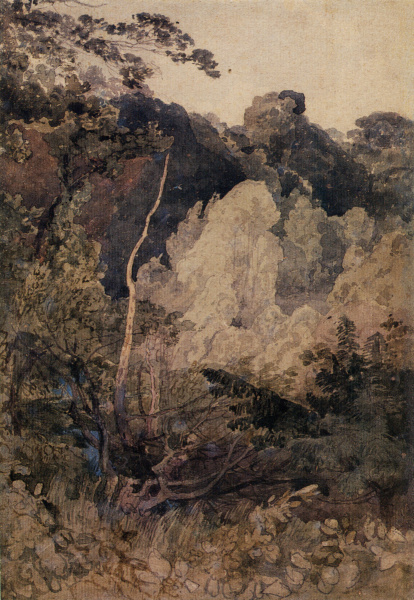
Cotman trees.jpg

John Sell Cotman 1805. Trees near the Greta River. Oil on canvas. The Hickman Bacon Collection

About ten years ago, in an antique fair in Southwold, I came across an engraving by the Suffolk artist Leonard Russell Squirrell (1893-1979). I had not heard of this artist previously and muttered to my wife that his trees looked like Cotman’s. In one of those rare moments of theatre (in fact, the only moment of theatre) at an antique fair the dealer reached beneath the counter and showed me a book that suggested these two artists might somehow be connected.
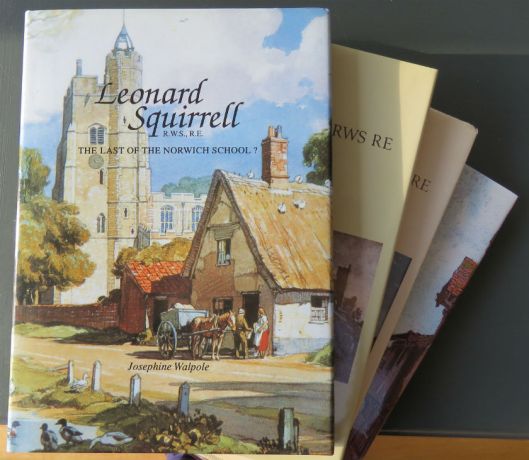
Josephine Walpole1.jpg

Leonard Squirrell: the Last of the Norwich School, by Josephine Walpole [1]

In her book  Josephine Walpole suggests that Squirrell continued the tradition of the Norwich School. Like Cotman, Leonard Squirrell was an excellent draughtsman. He  painted mainly East Anglian scenes in oil or watercolour but he was also a virtuoso etcher and engraver. The ‘Cotmanesque’ picture I had seen was a dry point engraving in which the image was scratched directly onto the copper plate with a needle.
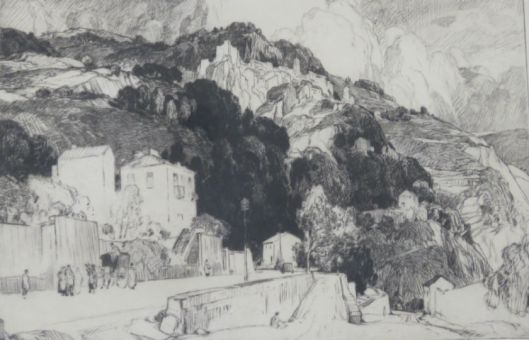
Rocquebrune1 .jpg

Leonard Squirrell. Rocquebrune Castle and the Monte Carlo Road, ca 1928.

In contrast to the inevitably linear effect of dry point engraving Squirrell also made masterful aquatints – a medium that lends itself to the massing of tones  [2]. Using this technique the copper plate is covered with a granular resin that gives a softer texture to the acid-etched surface. The resulting dramatic tonal effects can be seen in this print of Wymondham Abbey Church.
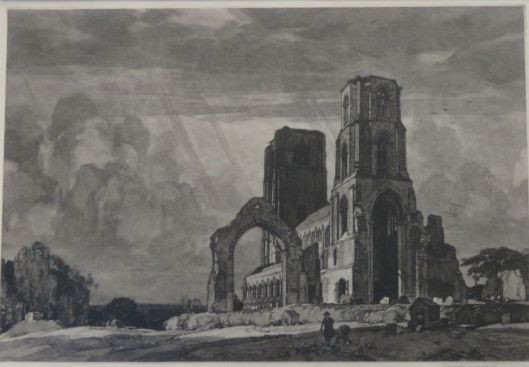
wymondham abbey1.jpg

Leonard Squirrell 1925. Aquatint, Wymondham Abbey Church.

But perhaps the most striking effect is produced in the mezzotint. In this technique the polished copper plate is laboriously prepared by being ‘rocked’ all over with a toothed tool. The burred, ink-retaining surface is then scraped away to various degrees to produce lighter areas that retain less ink. As Leonard Squirrell said, “The characteristic quality of the mezzotint is the richness of the dark areas and the soft edges of the toned spaces“[2].
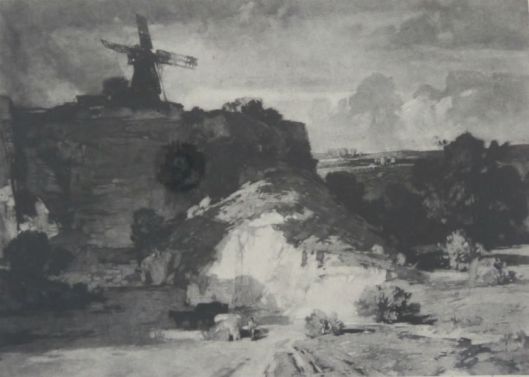
Needham Market.jpg

Leonard Squirrell 1923. Mezzotint, The High Mill, Needham Market. [Awarded the Silver Medal at the International Exhibition at Los Angeles].

With the mill at the top and the lightly-shaded animals below, thrown into relief against the dark wagon, Squirrell – who had a deep knowledge of Cotman’s work – would certainly have been mindful of ‘The Marlpit’.

Sources

  1. Walpole, Josephine. (1993). Leonard Squirrell: The Last of the Norwich School?    Pub. Antique Collectors’ Club, Woodbridge, Suffolk.
  2. Walpole, Josephine. (1983). Leonard Squirrell: Etchings and Engravings. Pub. Baron Publishing Ltd, Woodbridge, Suffolk.

I am grateful to Rosy Gray of the Norfolk Museums Service, Shirehall, Norwich for kindly arranging for me to see Cotman’s ‘The Marlpit’.


Arts & Crafts houses in Norfolk

Tags

, , , , , , ,

Following the explosion of terraced-house building in the latter part of the C19th it was perhaps the Arts & Crafts movement that had the greatest influence on the detached and semi-detached houses that were then built at the edges of a still-expanding Norwich.

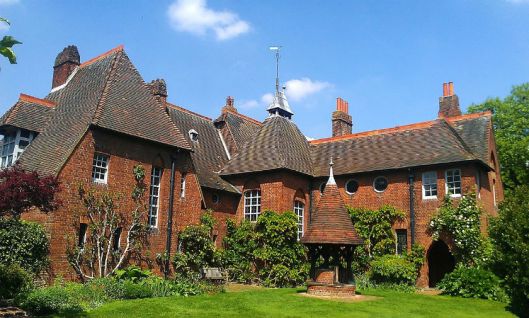
The Arts & Crafts Movement took its name from The Arts and Crafts Exhibition Society (1888). Its members believed in the fusion of art and craft and held to the principles of craftsmanship and truth to materials expounded by William Morris. Morris was revolted by Victorian mechanisation and started a moral crusade in search of a purer, craft-based way of living. His Red House, designed by his friend Philip Webb, represented a transition from full-blooded Gothic to a romanticised pre-industrial version.

Philip_Webb's_Red_House_in_Upton.jpg

The Red House, Bexleyheath. Built ca. 1860 (Ethan Doyle White)

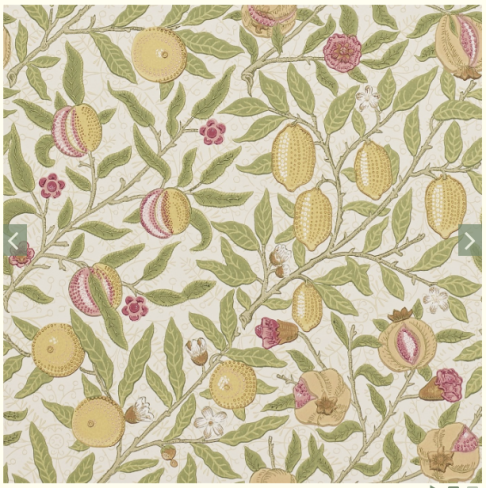
Morris despised much of contemporary design so he decorated the house with help from friends such as the Pre-Raphaelite artists Rosetti and Burne-Jones.  This was expressed in his famous motto: “Have nothing in your house that you do not know to be useful, or believe to be beautiful.” At about this time Morris formed  his own design company, Morris & Co, which became “the furnishing wing of the Pre-Raphaelite movement” [1].

'Fruit' Wm Morris 1864

William Morris’ wallpaper design ‘Fruit’ (1864) still in production today (william-morris.co.uk)

Richard Norman Shaw was a contemporary of Webb’s. Although both architects adhered to Morris’ principles of locally sourced materials and craftsmanship both diverted from the Gothic to develop a vernacular alternative. Webb developed Old English design but by the 1870s this had given way to a trademark ‘Queen Anne’ Revival style [2]. This Arts & Crafts style was not a slavish return to the architecture from Queen Anne’s age (early 1700s) but a mixture of influences: Dutch,  Flemish, French, Robert Adam and the Japanese-influenced Aesthetic Movement. Added to this was an English Renaissance style based on Christopher Wren (the ‘Wrenaissance’) in which red brick was favoured over the white stone (or brick) of classical Palladian buildings [3]. As well as red brick, red tiles and terracotta panels became the materials of choice during the Queen Anne Revival.

ipswich road.jpg

A celebration of red brick, Ipswich Road 1878

In Shaw’s version of Queen Anne, multi-paned windows with crisp white glazing bars were a distinguishing feature. By the time this had filtered down to the general building trade – which is when we see it in the provinces – a common formula for windows was for the small panes to be restricted to the upper part with larger panes of plate glass at the bottom [3].

Unthank Road1.jpg

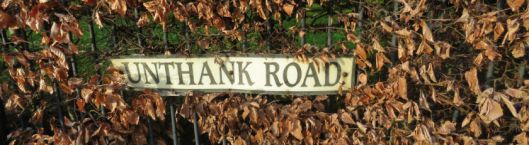
‘Queen Anne’ in Unthank Road

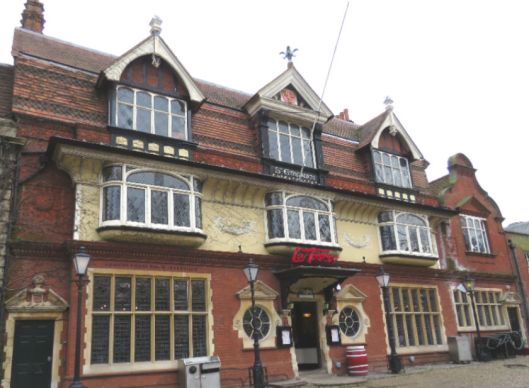
Bedford Park Estate in Chiswick London occupies an important place in the Arts & Crafts canon because it provided the model for the late nineteenth century suburb and led to the Garden City Movement [1].

the Tabard bedford Park.jpg

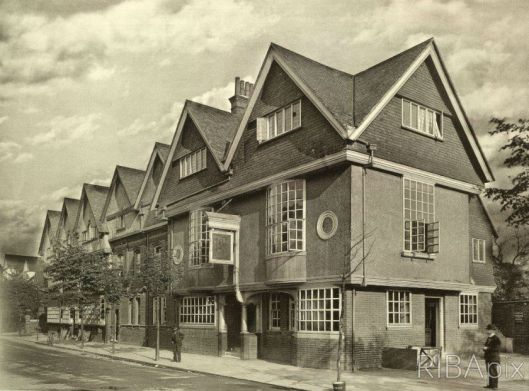
The Tabard in Bedford Park; a ‘pioneer’ Queen Anne pub designed in 1877 by R Norman Shaw. Courtesy architecture.com

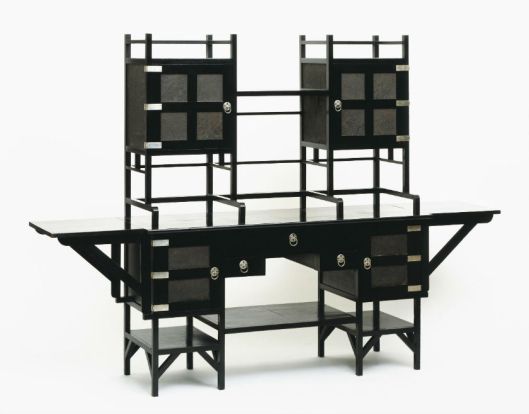
Initially, EW Godwin – who anticipated modernism with his stunning Aesthetic, Japanese-influenced sideboard – had designed small detached and semi-detached houses but these were not well received and so Norman Shaw was recruited  to provide further designs.

EW Godwin sideboard.jpg

EW Godwin was heavily influenced by Japanese design as in this sideboard 1867-1880 (copyright Victorian and Albert Museum). A bit off-piste but a favourite of mine

The Ballad of Bedford Park (below), although satirical in intent, gives an idea of the totality of the Arts & Crafts movement and shows how its spirit invaded all parts of the art-conscious middle-class home.

With red and blue and sagest green

Were walls and dado dyed

Friezes of Morris there were seen 

And oaken wainscot wide

Now he who loves aesthetic cheer

And does not mind the damp

May come and read Rosetti here

By a Japanese-y lamp.

(St James’s Gazette, 1881)

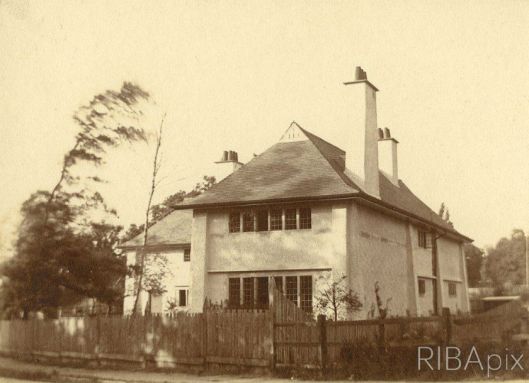
Two other architects had a major influence on Arts and Crafts style. The first was Charles Francis Annesley Voysey [4]. Characteristically, he employed large sweeping roofs set above horizontal ribbons of windows. Walls were covered with his trademark white-painted roughcast. Even when he wanted to use local materials, clients insisted on his popular roughcast [5]. This coating, which John Betjeman [6] thought ‘dematerialised’ the surface of a house, provided local builders with an inexpensive shortcut to an Arts & Crafts style unburdened by any underlying philosophy.

Voysey.jpg

Voysey designed this house for his father 1896. Photo FCG Dimmick (architecture.com)

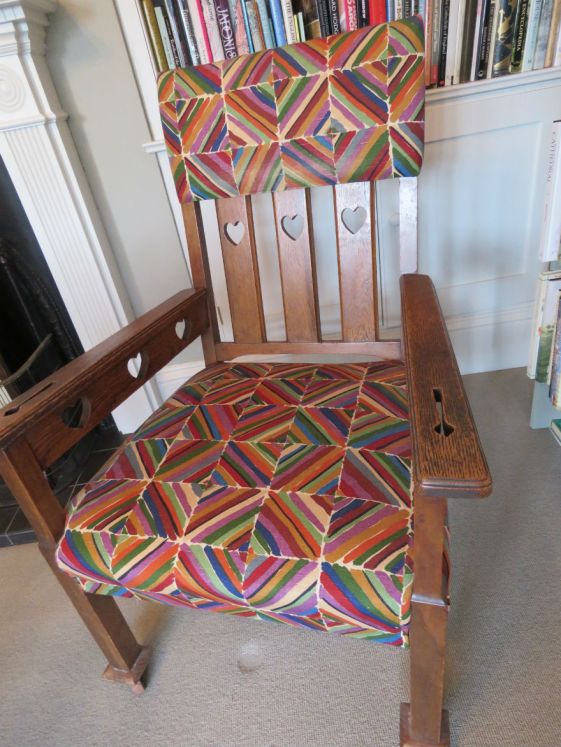
Voysey took a child-like approach to his work and used obvious imagery like hearts as cuts outs on woodwork and as a recurring motif in his ironwork – another shorthand for readers of weekly trade journals like The Builder.

Hearts of Oak Chair.jpg

‘Hearts of Oak’ chair for Liberty with heart-shaped cutouts.

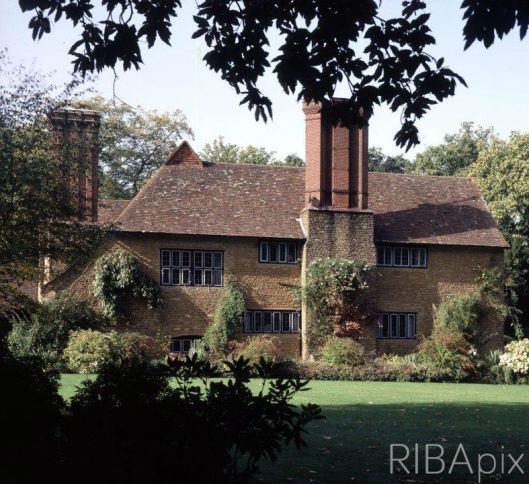
Edwin Lutyens was another key figure in the Arts & Crafts movement. He enjoyed a long professional partnership with the garden designer Gertrude Jekyll. In 1896 Lutyens built Munstead Wood. Miss Jekyll clearly wanted a house rooted in tradition (“Arts and Crafts simplicity was the note” [7]) for she specified something “designed and built in the thorough and honest spirit of the good work of old days” [8].

munstead wood.jpg

Munster Wood by Edwin Lutyens for Gertrude Jekyll (architecture.com)

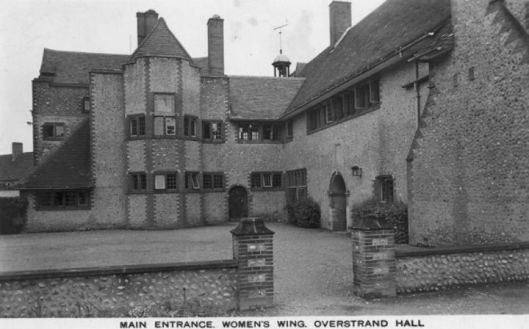
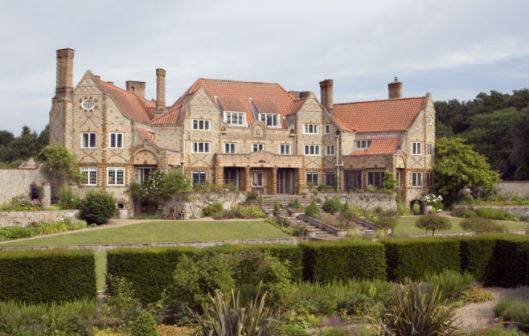
His early designs involved huge chimneystacks in Norman Shaw’s Old English style, horizontal bands of leaded casement windows, and great sweeping tiled roofs. These catslide roofs could come down to door level leaving the first floor bedrooms to protrude via large gables [1]. A Norfolk example can be seen at Overstrand Hall:

overstrandhall.jpg

Lutyens’ Overstrand Hall (overstrandparishcouncil.org.uk)

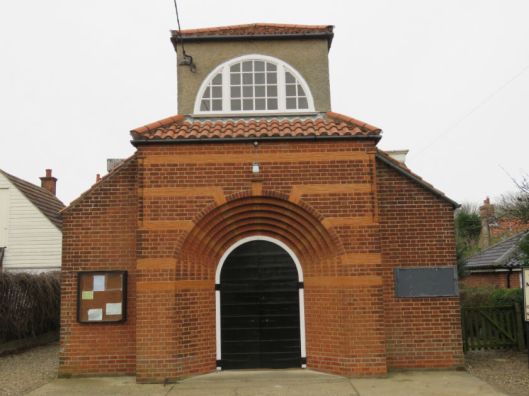
… and while we’re in Overstrand here’s a surprising Lutyens building:

overstrand chapel.jpg

Overstrand Methodist Church designed by Edwin Lutyens

Lutyens was famously playful and loved verbal as well as visual puns, such as shaping brackets to the silhouette of the client. In one version of a story he is claimed to have said to a bishop toying with a portion of fish, “I suppose that’s the piece of cod that passeth all understanding.”

George du Maurier Punch.jpg

George du Maurier, Punch (1895)

Although Arts & Crafts architecture became a popular movement its most iconic buildings were mainly architect-designed one-offs for the wealthy. Amongst the important examples in Norfolk is Home Place, now known as Voewood, at Kelling near Holt. Its architect was ES Prior, the co-founder of the Art Workers’ Guild and “perhaps the most brilliant of all Shaw’s pupils” [1].  Here he built a butterfly house with its obliquely projected wings. Building material dug from what is now the sunken garden was used to make the inner core of concrete to which the larger excavated flints were applied [7].

Voewood2.jpg

ES Prior’s Home Place/Voewood with sunken garden at front. (voewood.com)

Two other butterfly houses are found in Norfolk: Kelling Hall by Sir Edward Maufe and Happisburgh Manor by Detmar Blow and Ernest Gimson. Although they were built in the Arts & Crafts spirit their singularity (and cost) ensured that butterfly houses did not become models for a more widespread Arts & Crafts style.

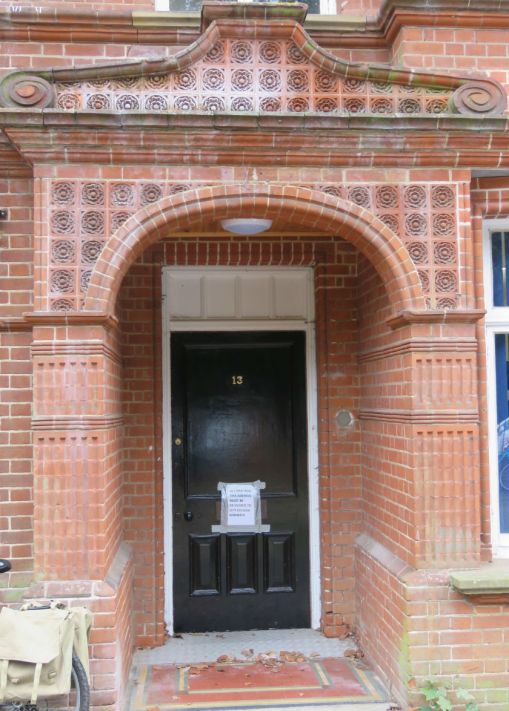
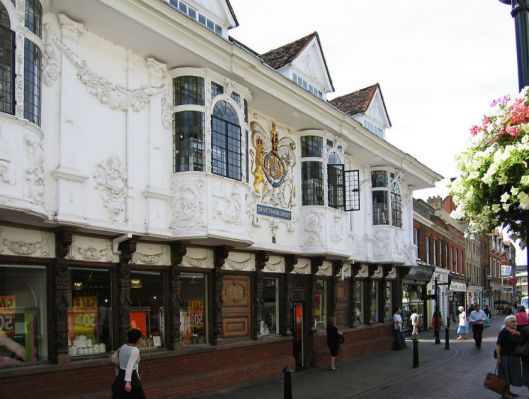
In Norwich, at number 24 Tombland is St Ethelberts designed by EP Willens and built in 1888. It throbs with A&C references: red brick, plaster swags between curved oriel windows, roughcast, dormers set in a tiled hipped roof. The design of this remarkable house is said [9]  to owe a debt to Norman Shaw (“wildly Norman Shavian”) but the original on which this was surely based is not too far to find.

St Ethelbert's Norwich_A.jpg

St Ethelbert’s No 24 Tombland, Norwich (1888)

Ipswich_Ancient_House.jpg

The Ancient, or Sparrowe’s, House Ipswich 1670 (Photo: Andrew Dunn)

‘The Sparrowe’s House’ type of oriel (curved sides, flat front, leaded lights with a central arch) is recognised to be one of three Old English window designs used by Norman Shaw  [3]. However, these two East Anglian buildings, with oriel windows joined by botanical swags, are so similar that it seems likely that the Norwich architect had first hand knowledge of the Ipswich building as well as of Norman Shaw’s pattern book .

Swags are found on another Norwich building …

swags.jpg

… St Mary’s Croft in Chapelfield, built in the Tudor Revival style.

St Marys Croft Norwich.jpg

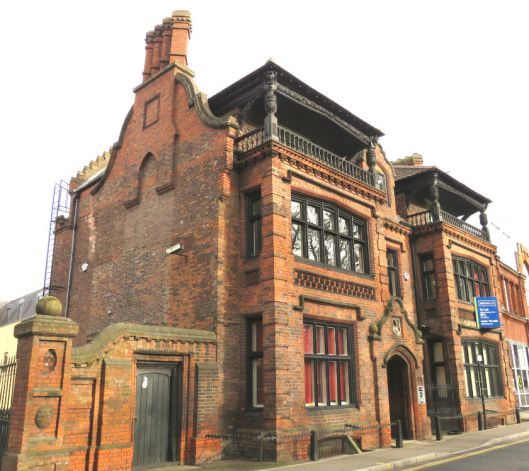
St Mary’s Croft 1881

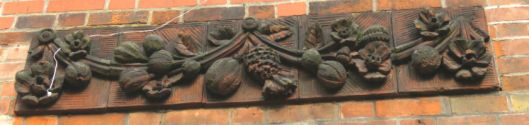
St Mary’s Croft is a symphony of red brick, from the concave/convex ovals on the gateposts – a humorous example of the bricklayer’s art – to the floral panels of moulded brick. I remember when it used to be my dentist’s surgery.

One of my favourite buildings in Norwich is Tower House at the junction of Newmarket and Kingsley Roads.

Tower House Norwich.jpg

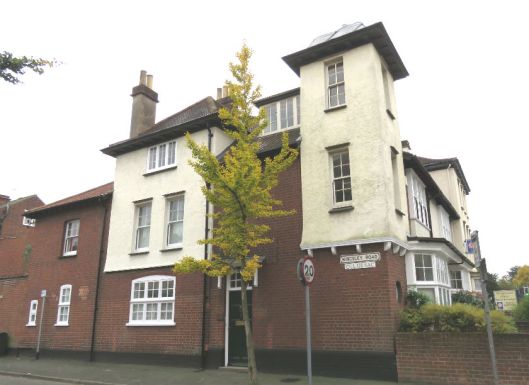
Tower House, Kingsley Road, Norwich

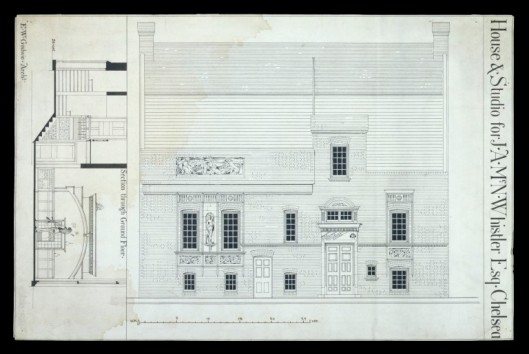
Tower House is generically Arts & Crafts with roughcast walls and a romantic tower capped by an ogee lead roof. What I find more interesting is the simplicity and asymmetry of this elevation – its effect depending on the massing of ten different windows (plus fanlight) in eight different styles. This irregularity echoes one of the most iconic buildings of the Arts & Crafts movement: the White House by EW Godwin. The irregular composition of its windows – really a blocking out of shapes on a flat surface – is thought to reflect Godwin’s fascination with Japanese art and the way it embraced asymmetry [3].

white house EW Godwin.jpg

The White House in Tite St, Chelsea, designed by EW Godwin for James Whistler (1878). Demolished in the 1960s.

Below, in Limetree Road, Norwich is this archetypal Arts & Crafts house by Percy Morley Horder. (His students couldn’t resist a Spoonerism and called him Holy Murder). He went on to design Nottingham University for Jesse Boot (the Chemist). This part  of the building (1908) containing the carriage arch, covered in roughcast, is pure Voysey.

Inv House.jpg

In 1879-1886, at the time of the first Ordnance Survey, the parts of Newmarket and ‘Unthanks’ Road south of the present Mile End ring road were mainly open fields and nurseries. Their development around 1900 shows how various Arts & Crafts features were absorbed by local builders to make the Edwardian house, some 40 years after Morris et al had tried to find an honest vernacular style.

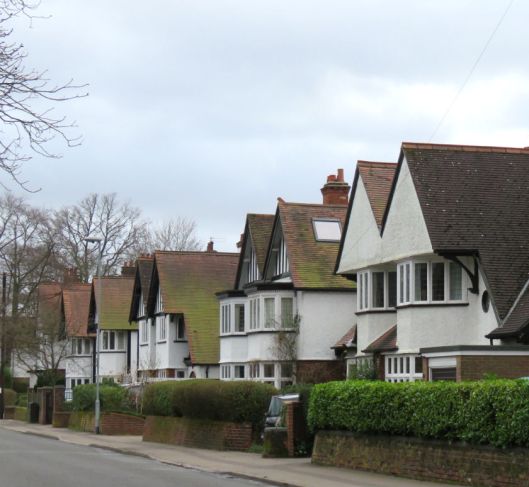
These semi-detached houses on Eaton Road were designed by architects Postle and Webster in 1906 for the builders Podd and Fisher of Aylsham Road.

Eaton Rd Norwich3.jpg

Eaton Road, Norwich

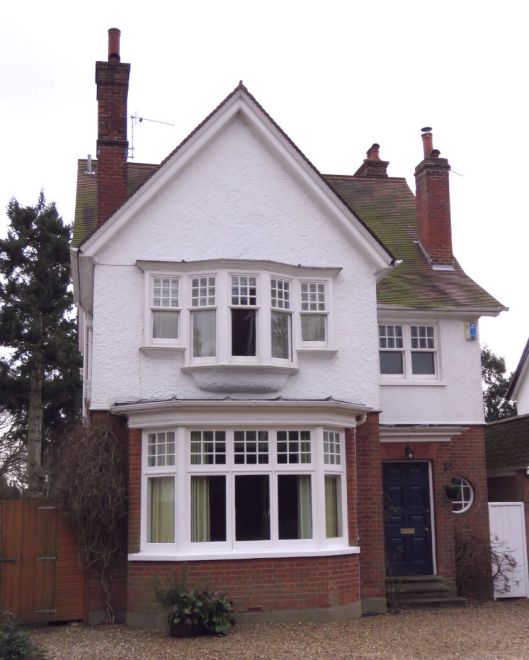
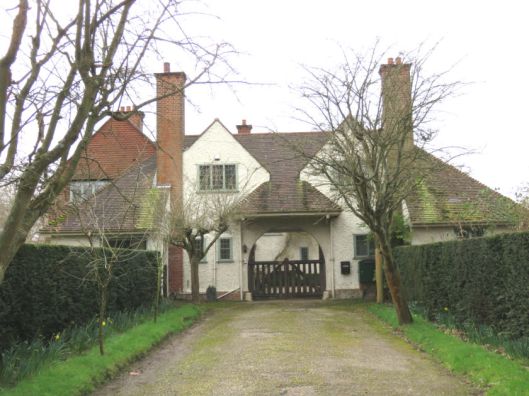
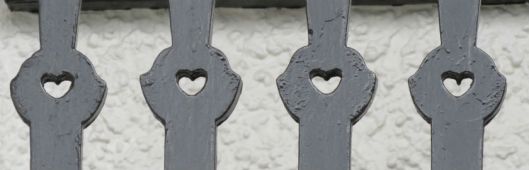
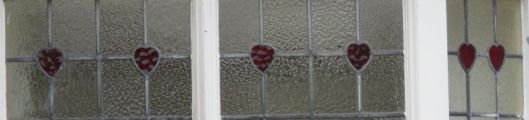
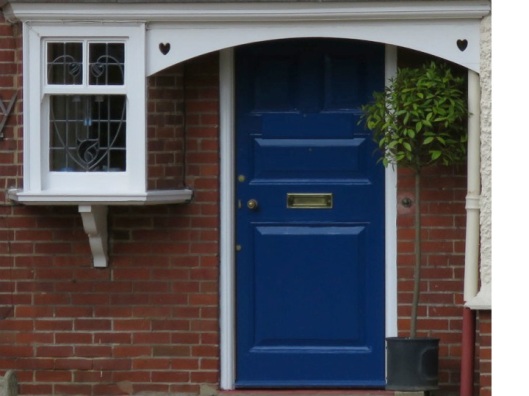
Constructed of red brick and tile the houses have Voyseyian touches: steeply-pitched roofs sometimes coming down to door level; roughcast for the upper floors; coloured glass hearts and heart-shaped cutouts in the woodwork.

Heart-shaped Cutout1.jpg

Glass Hearts1.jpg

This house on Unthank Road shows the now-familiar heart-shaped cutouts on an asymmetrical porch.

asymmetrical porch.jpg

Below, the house on Grove Road is a good example of how Arts & Crafts design became part of the everyday vocabulary of the local building trade. A neighbour said that his grandfather (“Youngs the Builder”) had built the house for his own family (presumably after the First World war).

Grove Road Norwich1.jpg

Grove Road, Norwich

rainwater hopper1.jpg

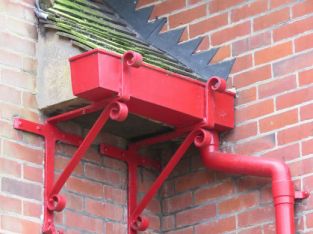
Handcrafted details include this decorative rainwater hopper

Sources

  1. Davey, Peter (1995). Arts and Crafts Architecture. Phaidon Press, Oxford.
  2. Anscombe, Isabelle (1991). Arts and Crafts Style. Phaidon Press, Oxford.
  3. Girouard, Mark (1990). Sweetness and Light: The Queen Anne Movement 1860-1900. Yale University Press, New Haven and London.
  4. Hitchmough, Wendy (1995). CFA Voysey. Phaidon Press, Oxford.
  5. Blakesley, Rosalind P. (2006).  The Arts and Crafts Movement. Phaeton Press, Oxford.
  6. Betjeman, John (1974). A Pictorial History of English Architecture. Penguin Books.
  7. Aslet, Clive (2011). The Arts & Crafts Country House. Arum Press, London.
  8. Tinniswood, Adrian (1999). The Arts and Crafts House. Mitchell Beasley, London.
  9. Pevsner, Nikolaus and Wilson, Bill. (1997). The Buildings of England. Norfolk 1: Norwich and North-East. Yale University Press, New Haven and London.

Thanks to David Bussey for background on the Eaton Road houses

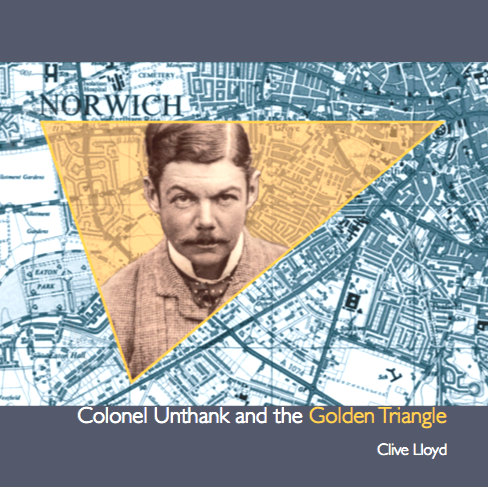
Colonel Unthank and the Golden Triangle

Tags

, ,

I have lived in Norwich for ages, mostly on or around the Unthank Road, and became fascinated by the name and the distinctive style of housing found in this area.

Unthank Road Norwich.jpg

“What’s in a name?” The name first occurs as William de Unthank (or Onthank) of Unthank Hall, Northumberland (ca 1231). Several explanations have been offered for the name [1]

  • Unthank = thankless or unthankfulness
  • the amount of land granted to a Saxon thane, or to a Scottish chieftain, each recipient holding “a thank” or one thane’s holding – about the size of a village or hamlet. A thane would be known as a “one thank man”  and un/on thank was originally confined to the borderland between England and Scotland [2].
  • Old English for land held without leave by squatters. Or common land annexed by outlaws, e.g., the border reivers.

Unthanks came down from the north to Norwich in the 17th century; others came in the 18th century [1] and became prosperous businessmen. In 1793 William Unthank moved outside the walls of the congested medieval city. He bought land in rural Heigham, just outside St Giles’ Gate, over a century before St John’s Catholic Cathedral was built (ca 1910).

Upper St Giles Norwich old_newPixlr.jpg

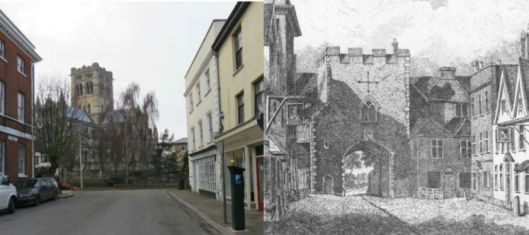
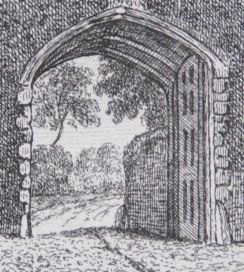
The houses at the end of Upper St Giles Street today (left) can be identified in  John Ninham’s engraving of 1792 (right). The catholic cathedral (left) now stands where open fields could once be glimpsed through St Giles’ Gate [2].

St Giles Gate.jpg

Open countryside could be seen through St Giles’ Gate in 1792

The family amassed about 2500 acres of land, including farmland to the south and west of Norwich as well as their Heigham Estate that stretched from St Giles’ Gate southwards to Eaton (aka Waitrose). This meant that when William’s son and heir, Clement William Unthank, went courting the heiress of the Intwood Estate, Mary Anne Muskett, he could ride for most of the journey without leaving family land [1,3, 4].

At first, Clement William and Mary Anne lived in Norwich at ‘Unthanks House’ near modern-day Bury and Onley Streets but in 1855 they moved to her childhood home, on the Intwood estate, at the outskirts of the city [3, 4]. (‘Onley’ was a family name of the Musketts).

Intwood Hall.jpg

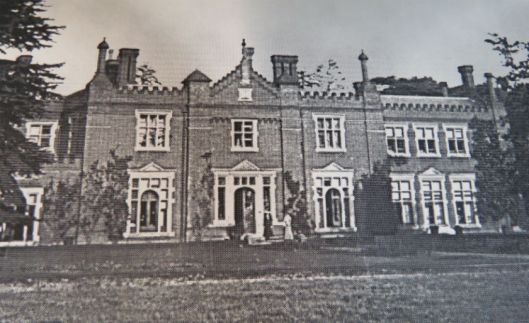
Intwood Hall

Unthank Road and the New City   The Unthanks had already begun to sell off parcels of their Heigham Estate for housing but this was accelerated when Clement William moved out to Intwood in 1855. This helped the spread of the New City. The old city itself contained unsanitary medieval courts  or yards [5] that had to wait until the C20th for demolition or improvement but Clement William’s buildings were of a higher standard. As the New City continued to be developed it became subject to the more enlightened bye-laws and acts that arrived in the latter half of the C19th [6,7].

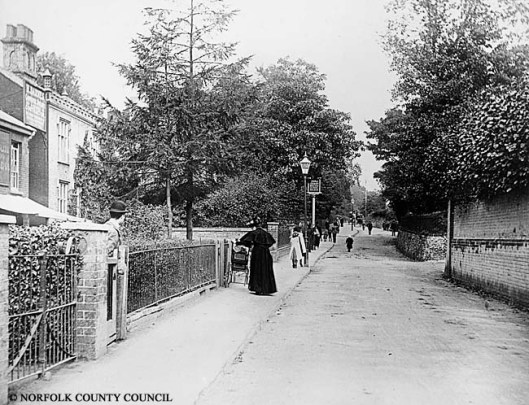
Originally, ‘Unthanks Road’ had been known as Back Road – a private sandy lane on the Unthank estate [1]. But between 1849-1870, when some of the early ‘Unthank’ streets (such as Essex, Cambridge and Trinity Streets) were built, Unthank Road became the main axis to which they were attached.

unthank road.jpg

Unthank Road when it was still little more than a lane. Looking up towards the city with the junction to Park Lane to the left, just beyond the pub sign. www.picture.norfolk.gov.uk

Norwich: “No place in England was further away from good building stone” Stefan Muthesius [8]

The Normans had to ferry stone for their cathedral from Caen in Normandy, much of the medieval city was built of flint, but the new city was to be built of brick and slate. This was helped by the arrival of the railways, which also allowed easier access to slate from North Wales. Clement William Unthank closely regulated the appearance of the estate and builders had to sign restrictive covenants stating how brick and other building materials were to be used [5, 6].

  • the building to be faced in good white brick and roofed in good slate or tiles
  • that doors should be arched in gauged brick
  • that no building be placed beyond the building line
  • that no gable peak be allowed to the front of the house
  • that no porch or projection should extend more than 18 inches from the building line unless agreed by Clement William Unthank

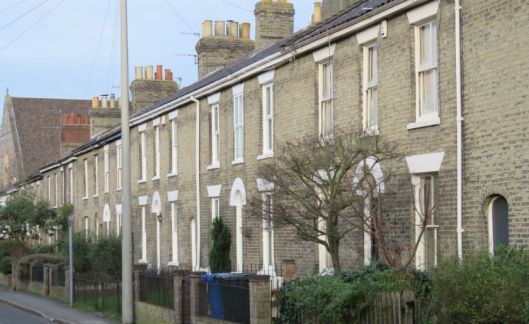
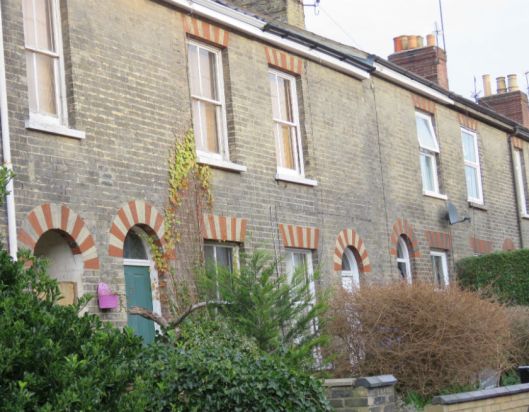
Uniform, flat-fronted terraces of a high standard were therefore assured across Unthank’s Heigham estate, as seen in Trinity Street below. Suffolk White bricks were known to have been used as were ‘Cossey Whites’ from the nearby village of Costessey.  I lived for some years in Cambridge with  its plain-fronted terraces of white brick and it was this that had drawn me to the Unthank estate.

Trinity St Norwich.jpg

Evidently, workers leaving the land for the city could be more economically housed in uniform terraces compared to the individuality of rural cottages. These modest houses may well have been a much diluted version of the Palladian houses and terraces seen by the upper classes on their Grand Tour. In Norwich, the use of white brick and arched doorways  are likely to have been influenced by the expensive white bricks used for country houses like William Kent’s Holkham Hall in north Norfolk and John Soane’s Shottesham Park, which was only five miles south of Norwich – a short horse ride from CW Unthank’s new home at Intwood [7,8].

The widespread use of arches made of ‘gauged’ bricks fired in specially-shaped concentric templates, and the fineness of their pointing, is thought to be characteristic of Norwich [8, 9]. Nowadays, generations of owners have personalised the houses by painting over the gauged brick and adding porches that would have been frowned on by Clement William Unthank. This British reaction against uniformity was celebrated in the Bonzo Dog Doo-Dah Band’s ‘My pink half of the drainpipe’.
Newmarket St norwich.jpg

Newmarket Street where some degree of variation was allowed, with white gauged bricks alternating with red brick rarely seen on front elevations

Kimberley Arms gauged brick.jpg

The recessed inner arch gives variation without breaking the building line; seen here in the former Kimberley Arms being refurbished in 2016. Compare the fine pointing between the arched gauged bricks with the thicker mortar in the horizontal courses.
However, compared to the gentility of the front elevations the backs of buildings were generally constructed of cheaper materials.

earlham Rd.jpg

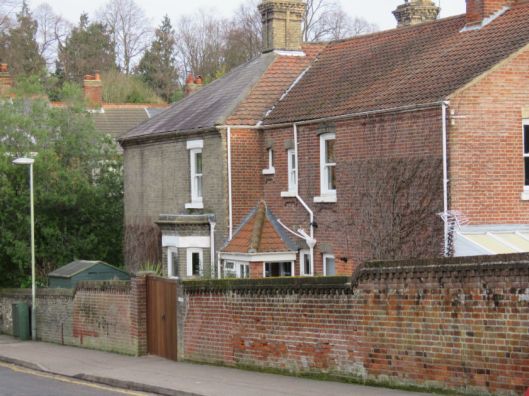
Earlham Road front: Recreation Road behind. The frontage is built from Suffolk White bricks and slate: the rear from Norfolk Red bricks and pantiles (based on 6).

The use of cruder materials to the back has been referred to as a Queen Anne front and a Mary Anne behind – as in the popular song: (6)

Queen Anne Front (lyric Robert Schmaltz)
When Great Grandfather was a gay young man
And Great Grandmother was his bride
They found a lot, a jolly little spot
Over on the old North Side
It sloped down toward the river, from River Avenue
Great Grandma said that it would give her
Such a lovely view
So they took a look in Godey's Ladies Book
To see what they could find
And they found a house, a jolly little house,
With a Queen Anne front
And a Mary Anne behind.

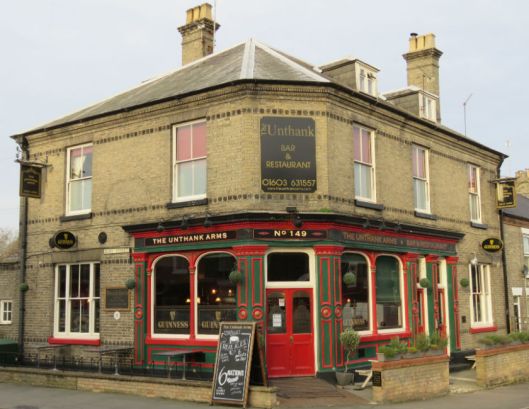
Larger houses for the middle classes were built along Unthank Road itself whereas the smaller houses for artisans were situated in the streets behind. As part of the Unthanks’ urban planning, trade was prohibited from the terraced houses so purpose-made public houses were confined to corner locations on back streets (e.g., York Tavern, Rose Tavern, Kimberley Arms and Unthank Arms).

Unthank Arms Norwich.jpg

The Unthank, formerly The Unthank Arms

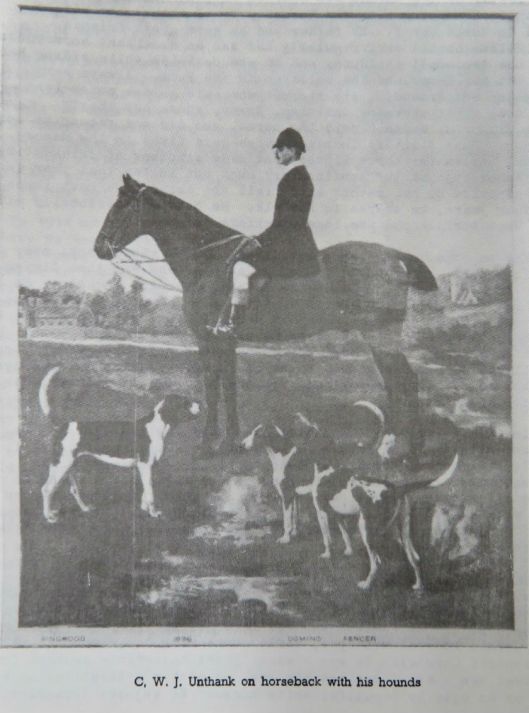
So who was Colonel Unthank? Clement William Unthank sold much of the land his father had amassed on the Heigham Estate. His son, Clement William Joseph, continued to sell parts of the state for building but the effect is said to be less good [7]. CWJ is the first of two Colonel Unthanks in this article.  He was a captain in the 17th Lancers and Lieutenant Colonel of the 4th Volunteer Battalion of the Norfolk regiment [1, 4].

Cavalryman.jpg

CWJ Unthank hunting.jpg

Clement Wm Joseph Unthank with his hounds Ringwood, Domino and Fencer [from 1]

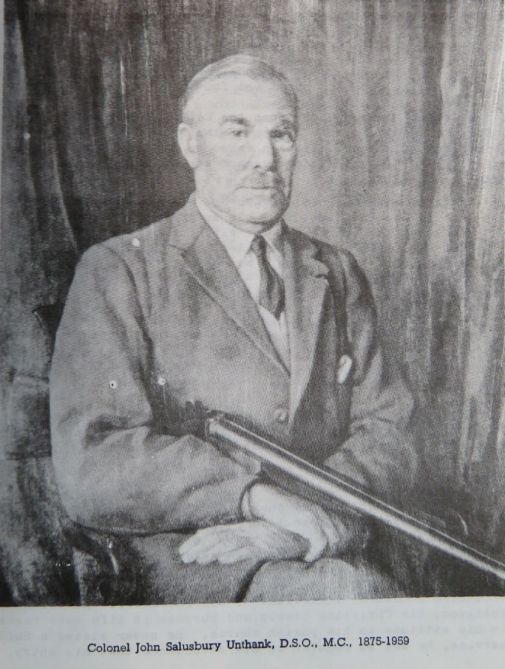
CWJ Unthank’s son was John Salusbury Unthank (below) who continued to develop the Heigham Estate into the C20th.  He served in The Boer War and World War I, where he fought at The Somme and Ypres. So John Salusbury Unthank is the second Colonel of this article. Anecdotal evidence of him survives into the C20th and there may be some who still remember him [1,3,4].

Col Unthank II.jpg

A hunting man [1]

Colonel Unthank would stride into Intwood church where the service would not start until he’d taken his place. Once, when he stood up in church to take off his mackintosh the congregation behind him also stood up, telling us something of his position in the community [3]. Imagine.

In addition to the Unthank family the area was also developed by others, notably the Eaton Glebe estate [7]. Their restrictive covenants also ensured quality and some uniformity e.g., all parts of buildings exposed to view to be faced in good red brick [7]. But in detail the different use of materials – not just red instead of white brick but different treatments of bays and porches – gave this area a different texture as can be seen along College Road.

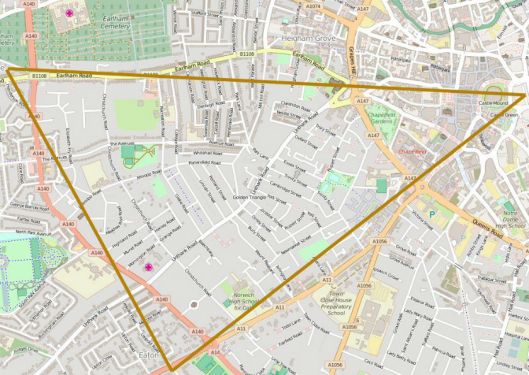
The entire area to the south-west of the medieval city is now known as The Golden Triangle, beloved of estate agents. The borders of this vibrant area can be drawn in various ways but the Triangle’s online organ, The Lentil (“Our finger on your pulse”), [10] gives this authoritative version:

Golden Triangle.jpg

The Golden Triangle (http://the-lentil.com).

The Wall

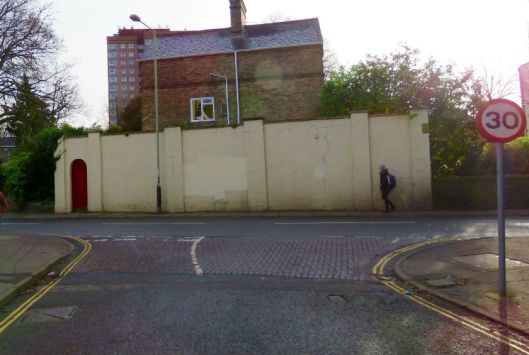
I can’t remember who told me that this piece of tall wall was the last remnant of the Unthank Estate, but it has adopted the status of urban myth. The wall shelters No 38 Unthank Road from traffic and is at the junction with Clarendon Road.

the wall.jpg

‘The Wall’, at the junction of Clarendon and Unthank Roads

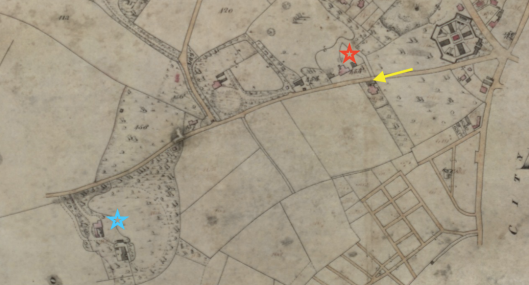
In the early C19th, according to Reverend Nixseaman [1], William Unthank lived in Heigham House and he places this directly opposite the stable wall above. However, it is claimed elsewhere [11] that the family estate was further down Unthank Road, too far away for ‘the wall’ to be part of their stables.

unthank road tithe map 1842.png

Tithe Map of Heigham 1842 (Norfolk Records Office). Red star = Heigham House/Lodge; blue star = ‘Unthanks House’; arrow = ‘the wall’ on Unthanks Road.

So who did live opposite the wall? Consulting the tithe records for 1842 reveals that the brewer Timothy Steward lived here; he is shown as the owner of Heigham House (sometimes called Lodge) while William’s heir, Clement William Unthank, is recorded as living with family and servants further down the road near modern-day Bury Street (blue star).

But back to Reverend Nixseaman, he wrote his book about the Unthanks [1] in 1972 with the assistance of William Unthank’s descendants and was familiar with minutiae such as the names of CWJ Unthank’s three dogs. In his authorised version he asserted that in 1792 Clement William’s father, William, moved into a newly-built and spacious home named Heigham House, set in its own parklands.

Heigham House 2.jpg

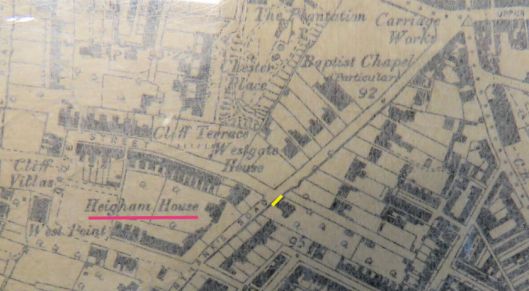
Heigham House (red) is bookended by today’s Clarendon and Grosvenor Roads with ‘the wall’ opposite (yellow). [6″ OS map 1887]

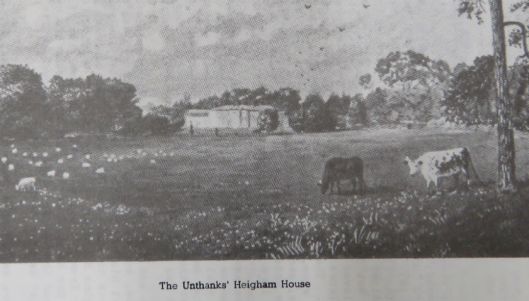
The OS map confirms that in 1887 there was indeed a Heigham House opposite the wall although by then the encroaching terraces left little room for the ‘parkland’ illustrated in Nixseaman’s book (below). So which version is correct?

Heigham House(1).jpg

Heigham House ca 1800 [1]

The search for the location of the Unthanks’ house continues with two further posts and a book that contains much material – and Unthank photos – not included in the blog posts. See:

https://colonelunthanksnorwich.com/2017/04/15/colonel-unthank-rides-again/

https://colonelunthanksnorwich.com/2017/07/15/the-end-of-the-unthank-mystery/

Cover Ping.png

Book available from Jarrolds book department and City Bookshop, Norwich. Price £10

©2017 Reggie Unthank

Sources

  1. Nixseaman, A.J. (1972). The Intwood Story.ISBN 0950274208, Norwich. (Available from the Heritage Centre, Norwich Library)
  2. Read the excellent article by Norwich City Council on St Giles Gate http://www.norwich.gov.uk/apps/citywalls/20/report.asp
  3. A History of Intwood and Keswick (1998), by Cringleford Historical Society. ISBN 0953011623. Held at The Heritage Centre, Norwich Library.
  4. Memories of Intwood and Keswick (2001) by Cringleford Historical Society. ISBN 0953011631.
  5. Holmes, Frances and Michael (2015). The Old Courts and Yards of Norwich. norwich-yards.co.uk
  6. Muthesius, Stefan. (1982). The English Terraced House. Yale University Press.
  7. O’Donoghue, Rosemary. (2014). Norwich, an Expanding City 1801-1900. Pub, Larks Press ISBN 9781904006718.
  8. Muthesius, Stefan. (1984). Norwich in the Nineteenth Century. Ed, C. Berringer. Chapter 4, pp94-117.
  9. www.norwich.gov.uk/Planning/documents/Heighamgrove.pdf – an excellent discussion of the Unthank/Heigham Estate.
  10. The Lentil. The Golden Triangle’s wittiest online magazine http://the-lentil.com
  11. heritage.norfolk.gov.uk

Thanks to: the staff of The Heritage Centre in Norwich Library and of the Norfolk Records Office for their cheerful help; Tom Tucker of The Lentil for drawing the Golden Triangle map; and Clare Everitt of Picture Norfolk www.picture.norfolk.gov.uk for permissions.

Pizza dough and lampshades

Tags

, , , ,

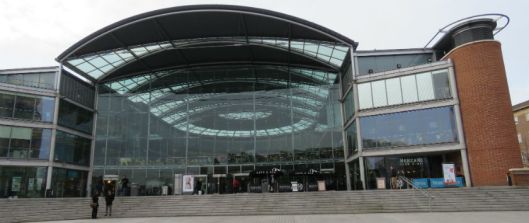
This week I was doing research on Colonel Unthank in Norwich Library’s Heritage Centre in The Forum – what a resource. And I came across something that I thought would make a quick post  before tackling my namesake.

The Forum Norwich.jpg

The Forum, Norwich

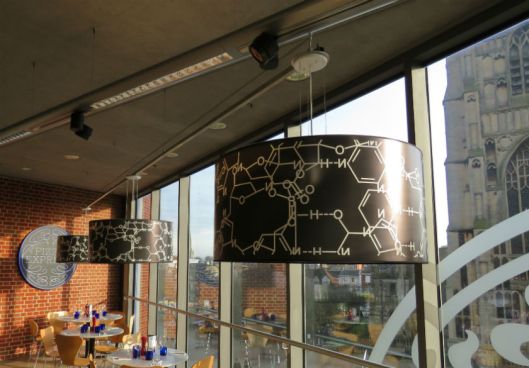
While eating a restorative pizza on the mezzanine I noticed the molecular models decorating the lampshades in Pizza Express  (other pizza outlets are available).
Pizza Express Pixlr.jpg

These molecular models represent the four DNA bases that make up the genetic code

Then, at the opposite end of the mezzanine I saw a photograph that explains the molecular theme.

Paul Nurse Pixlr.jpg

Sir Paul Nurse, Norwich-born Nobel Laureate

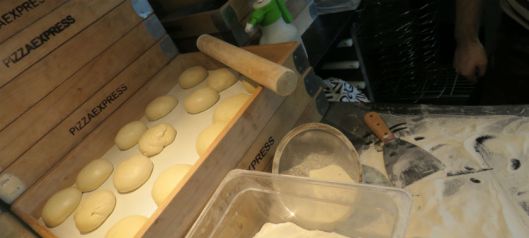
Apart from Norwich being Paul’s birthplace the connection must be about yeast and pizza dough, no?

Pizza dough.jpg

Baker’s yeast in action

The yeast used in pizza, and baking in general, is baker’s yeast. But Paul Nurse worked on a different kind of yeast, fission yeast, that divides in a slightly different way.

yeast4.jpg

Baker’s yeast grows by protruding a bud

Normally, a freshly-divided cell must grow to (at least) double its birthweight before an internal regulator allows it to divide again (double-up/halve/double-up/halve etc etc). Otherwise the result would be smaller and smaller cells that eventually disappear down their own navels. Paul was working on a mutant fission yeast that did produce abnormally small cells. In the Scottish lab’ in which he worked these small cells were called wee (wee2).

S pombe

Fission yeast divide in the middle instead of budding

Paul identified the gene responsible for the premature division in fission yeast. It turned out to be synonymous with a gene that Leland Hartwell in the USA had shown to control cell division in baker’s yeast. So, the two sorts of yeast may divide differently but they share the same mechanism for initiating division.

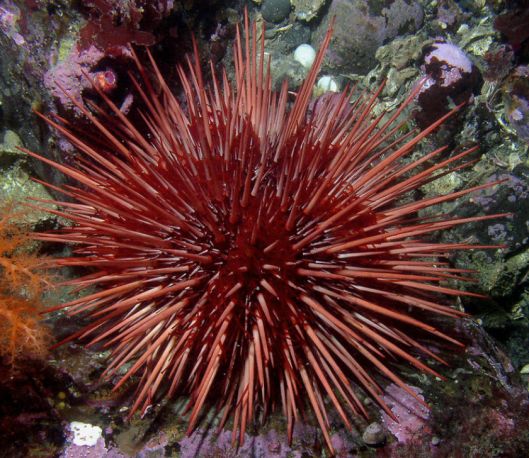
The third character in this story is Tim Hunt. Working on sea urchin eggs he saw that one particular protein accumulated steadily during the build-up to division but suddenly disappeared when all the cells divided. This cyclic protein – unsurprisingly called cyclin – turned out to bind to the regulatory protein identified by Nurse and Hartwell.

Strongylocentrotus_franciscanus Kirt L Onthank.jpg

Sea urchin (Photo: Kirt L Onthank)

These two proteins form part of the complex that ‘tells’ a cell when it is ready to divide. This complex is found in all living things from yeast to man and when faulty plays a part in cancer.

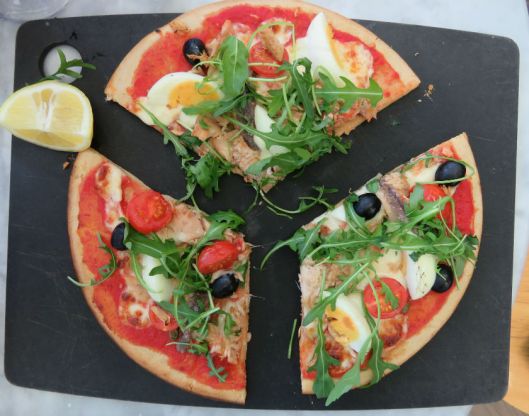
Pizza.jpg

Niçoise pizza on a gluten-free base

The 2001 Nobel Prize for Physiology or Medicine was shared three ways by Paul Nurse, Leland Hartwell and Tim Hunt.

Respect to Pizza Express for choosing such a brave theme

Twinned towers

Tags

, , , , , , ,

When I first came to Norwich I was delighted to find two pubs in the Arts and Crafts  style whose conical roofs reminded me of a castle I used to see regularly throughout my childhood in Wales.

The first public house was The Artichoke at the top of Magdalen Street. Built in local materials (red brick and flint) with tapering chimney and mullioned windows it is very much in the Arts and Crafts tradition. But perhaps its most distinctive features are the conical roofs capping two-storey semi-circular bays.

ArtichokePH_Pixlr.jpg

The Artichoke, Magdalen Street Norwich

In view of these Arts and Crafts signifiers it was surprising to find that The Artichoke was built well after the First World War. The pub was built in 1932 by local builder R G Carter [1] for the brewers Youngs, Crawshay and Youngs. The photograph below was taken by George Plunkett that year and it has not changed substantially since then.

Magdalen Rd Artichoke PH1932PlunkettPixlr.jpg

The Artichoke in 1932 (georgeplunkett.co.uk)

The other pub is The Gatehouse on Dereham Road built in 1934, again by R G Carter and although Carter’s archives show no record of the architect(s) it is highly likely the two pubs were designed by the same hand(s).

Gatehouse PH Pixlr.jpg

The Gatehouse, Norwich 2016

The Artichoke resembles its sister building in having a two-storey bay under a conical roof, a dominant tapering chimney and the use of local materials – although the flint, here, is restricted to a panel in which it alternates with concrete blocks.  There have been minor structural changes since George Plunkett captured  it in 1939 (e.g., loss of one of the  chimneys to the right). This photograph also illustrates the use of the cat-slide roof, sweeping down from ridgeline to groundfloor. This was a feature of some of Edwin Lutyens’ domestic architecture of the earlier Arts and Crafts period and underlines the mixture of styles employed here.

Gate House PH1939Plunkett Pixlr.jpg

The Gatehouse (georgeplunkett.co.uk)

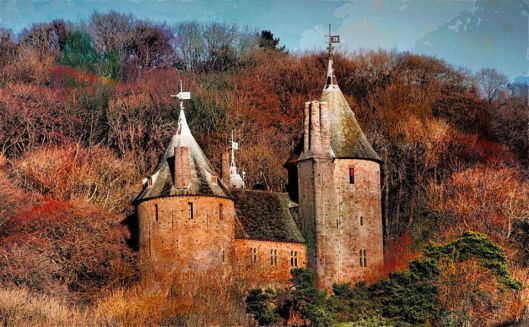
The Welsh castle in question – Castell Coch –  is, however, very much a product of the Victorian era and an outstanding example of the Gothic Revival. It was designed by the King of the Goths, William Burges, for the Third Marquess of Bute, John Crichton-Stuart [2].

castell coch rob carney Pixlr.jpg

Castell Coch (courtesy Rob Carney)

Built high on the side of a valley a few miles north of Cardiff, it was this castle that my sister and I craned our necks to see whenever we were driven to the city along the road below. We knew it as The Fairy Tale Castle – a description used by locals long before they’d seen the towers and turrets of Disney World.

Castle_Coch_from_A470Pixlr.jpg

Castell Coch from the A470 (Wikimedia Commons/RJMorgan)

In 1875 Burges built the red castle – Castell Coch – on the remains of a thirteenth century fort for Bute. Bute’s father had almost bankrupted the family in developing Cardiff docks but by the time John was born he  was referred to as ‘the richest baby in the world’, due to the wealth extracted from the family’s South Wales coal fields. Burges was a romantic, a dreamer who found his ideal client in Bute. Both men shared a deep passion for the medieval period and in Castell Coch Burges delivered Bute a Gothic fantasy, as he had done with the more extensive restoration of Cardiff Castle.  However, Bute never slept a night at Castell Coch.

Cardiff Castle Pixlr.jpg

Banqueting Room Cardiff Castle (cardiffcastle.com [3])

“a great brain has made this place. I don’t see how anyone can fail to be impressed by its weird beauty … awed into silence from the force of this Victorian dream of the Middle Ages.” (John Betjeman, 1952).

In designing Castell Coch, William Burges seems to have deliberately favoured the picturesque over historical accuracy: his towers were capped by conical roofs that were more typical of continental castles than of the 400 or so medieval castles dotted around Wales.

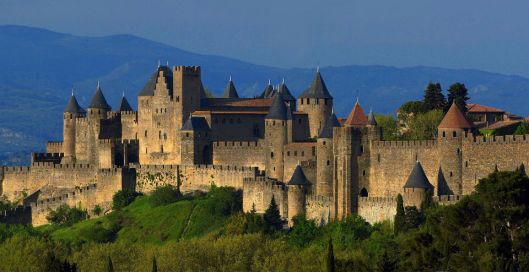
In doing this, Burges was following his passion for thirteenth century Gothic. In particular, he admired the French Gothic Revival and the works of a near contemporary Eugene Viollet-le-Duc [4], perhaps most widely known for his restoration of the medieval city of Carcassonne.

carcassonne Pixlr.jpg

Carcassonne (www.renfe-sncf.com)

Viollet-le-Duc was a controversial figure in that his works were imaginative recreations rather than faithful restorations but it was exactly this vein of medieval romanticism that Burges admired. “Billy” Burges’ own home, The Tower House (1875-81), in London’s Holland Park was a hymn to medievalism [5]. Like Castell Coch and Cardiff Castle it was furnished in medieval style, from the door-furniture to the  circular stair tower capped with a conical roof.

Over the years The Tower House has been home to Poet Laureate John Betjeman, actor Richard Harris (and singer of the strange but lovely ‘MacArthur Park’) and Jimmy Page of Led Zeppelin and ‘Circular Staircase to Heaven’ fame.

TowerHouse_RIBA_Pixlr.jpg

Burges’ Tower House, London (courtesy RIBA [6])

As a solution to capping circular towers it’s not surprising that conical roofs can be traced back to early medieval castle-building (not forgetting the defensive tower houses built in the Scottish Baronial style). The Gothic Revival brought back the conical tower at a time of anti-industrial romanticism but perhaps only the wealthy few could afford such architect-designed structures. CFA Voysey’s more domestic Arts and Crafts houses  allowed elements of these style to filter down to the middle classes into the beginning of the twentieth century but by the end of World War I the style had gone out of fashion. Hence the surprise at seeing such strong echoes in The Artichoke and The Gatehouse in the 1930s.

Stained Glass The Gatehouse Norwich.jpg

Norman influence in The Gatehouse PH, Norwich

Sources

  1. http://www.rgcarter-construction.co.uk/about/ [and RG Carter archives].
  2. Rosemary Hannah (2012).”The Grand Designer”. Pub Birlinn.
  3. A visit to the fabulous interior of Cardiff Castle is highly recommended (www.cardiffcastle.com) as is Castell Coch only five miles away (http://cadw.gov.wales/daysout/castell-coch/?lang=en).
  4. https://en.wikipedia.org/wiki/Eugène_Viollet-le-Duc
  5. https://en.wikipedia.org/wiki/The_Tower_House
  6. RIBApix at https://www.architecture.com/image-library/customers/login.html

I thank Jonathan Plunkett for access to the essential Norwich website:  www.georgeplunkett.co.uk. I am grateful to Mark Wilson and Alan Theobald for information on these two public houses.


Jeckyll and the sunflower motif

Tags

, ,

sunflower_2pixlr.jpg

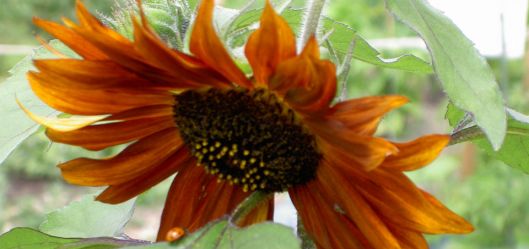
Martin Battersby wrote that the sunflower has no special association with Japanese art (1) yet, during the second half of the nineteenth century, it became the symbol of the Anglo-Japanese Aesthetic Movement.

Norfolk’s Thomas Jeckyll played a part in its popularization – his Japonaise designs  for fireplaces, produced by the Norwich foundry of Barnard Bishop and Barnards, helped connect the sunflower motif with other more recognisably Japanese emblems like cherry blossom, fan shapes and cranes. The sunflower crops up on illustrations, paintings, metalwork, china. One explanation for its popularity was “… the ease with which its simple flat shape could be wrought into a formal pattern…” (1).

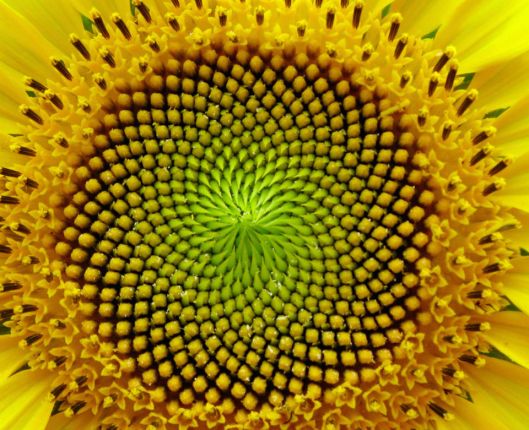
SunflowerSpirals_pixlr.jpg

Clockwise and anti-clockwise spirals

It may be beautiful but the sunflower’s flat shape is anything but simple. The pattern of seeds on the flower head is mathematically complex, comprised of clockwise and anti-clockwise spirals. The numbers of right-handed and left-handed spirals, which change as the flower grows, are adjacent numbers in the Fibonacci series; for example 55 and 89, or 8 and 13. Described by Leonardo Fibonacci in the thirteenth century, this series is  0, 1, 1, 2, 3, 5, 8, 13, 21 etc, where the next number is the sum of the previous two. Jeckyll, like all other artists (such as van Gogh in his later  series of sunflower paintings [1888]) had to devise a shorthand for representing such complexity. Fortunately, in working for Barnards, Jeckyll was able to exploit their fine casting in his experiments to translate the Fibonacci series into a visually pleasing effect.

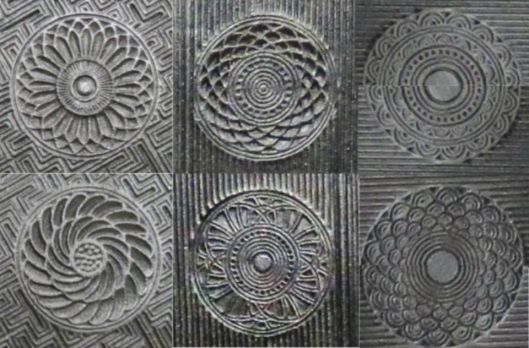
Difft SunflowersPixlr.jpg

Abstracted flower designs in which the contrary spirals of the sunflower are represented with varying degrees of success. On a single cast-iron fireplace Jeckyll used six different sunflower designs (the two motifs at right were semicircles that I mirror-imaged  to form whole circles). A Barnards fireplace at Norfolk Museums Service, Gressenhall.

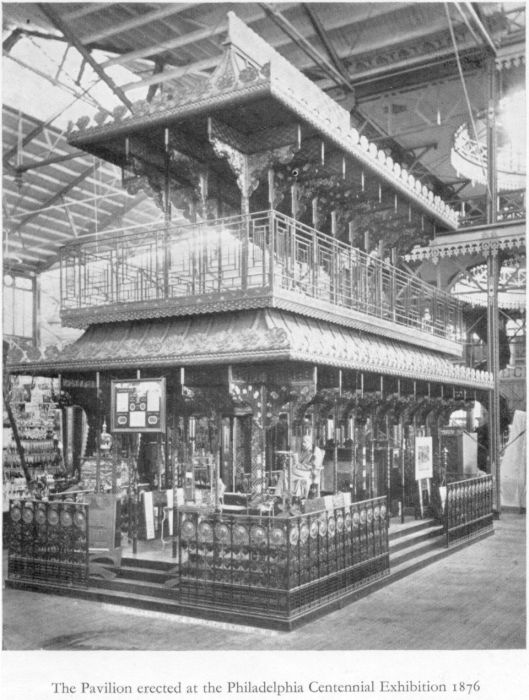
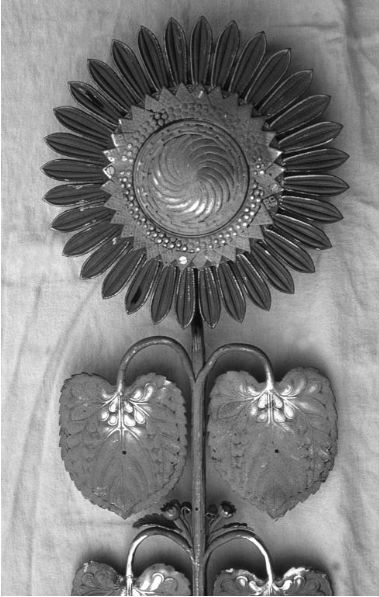
Jeckyll was certainly not the only one to use the sunflower motif in an Arts and Crafts context – William Morris had popularised it a generation earlier – but as a member of a London-based circle of connoisseurs of oriental art he was one of the first to apply it within the Anglo-Japanese Aesthetic Movement. One of his most famous designs was for Barnard Bishop and Barnards’ cast-iron Pavilion or Pagoda for the Philadelphia Centennial Exhibition, 1876. Seventy two sunflowers, three-foot-six inches high, formed the railings around the Pagoda (2).

PhiladelphiaPagodaPixlr.jpg

Jeckyll’s Pagoda exhibited in Philadelphia, surrounded by the golden sunflower railings (Courtesy Jonathan Plunkett [3])

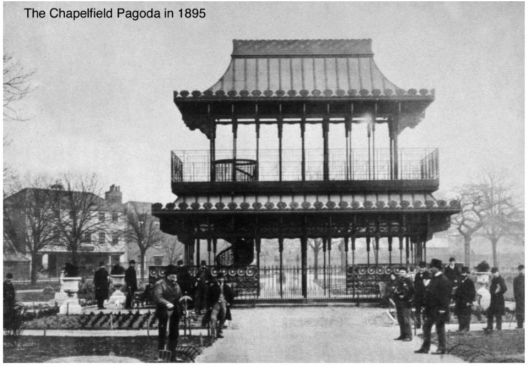
The Pagoda was bought ca. 1880 by the Norwich Corporation for £500 and erected in Chapelfield Gardens.

Chapelfield pagodaPixlr.jpg

The sunflower railings can just be seen at the base of the Pagoda installed in Chapelfield Gardens, Norwich. (Courtesy http://www.racns.co.uk [4])

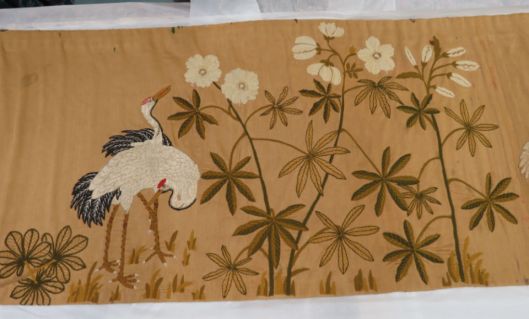
When exhibited, the ceilings and upper parts of the walls of the Pagoda were decorated with embroidered textiles in the Japanese style. But when the pagoda was dismantled some 70 years later these seem to have been cut for curtains; fortunately large fragments are conserved in the Costume and Textile Department at Norwich Castle Museum & Art Gallery (5).

JeckyllTextilePixlr.jpg

For the Pagoda, Jeckyll designed textile hangings embroidered with cranes and Japanese flowers (1876). (Accession number, NWHCM: 1968.240)

Below, an early colour photograph from the essential George Plunkett photographic archive of Norwich (3) shows the Pagoda in 1935, left of the bandstand.

Chapel Field bandstand and pagoda COLOUR [0738] 1935-08-21.jpg

The Chinese Pagoda (left) in 1935, apparently painted Corporation Green.(Courtesy of georgeplunkett.co.uk)

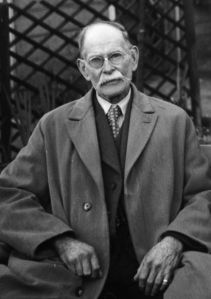
The photographer George Plunkett’s great-uncle, the wonderfully named Aquila Eke, was a son of a blacksmith. He also became a blacksmith at Barnard Bishop and Barnards’ Norfolk Iron Works and is said to have made much of the bas-relief work for the Pagoda (3).

aquila eke 21 June 1937reduced

Aquila Eke 1937.(Courtesy Jonathan Plunkett)

“At about the age of 10 [Aquila] ran away from home, finding his way to Norwich. (On arrival, he thought he had reached London!). He found his way into the blacksmith’s shop in the yard of the Royal Oak public house in St Augustine’s Street, where he was recognised, and promptly driven back to Drayton. However, he eventually came to Norwich to work, and joined the Norfolk Ironworks of Messrs Barnard, Bishop and Barnard, where [twelve years after running away] he assisted in the manufacture of the handsome wrought-iron pavilion which for so many years graced Chapel Field Gardens.”(From the Plunkett family archive, courtesy of Jonathan Plunkett).

In 1942 the Pagoda was damaged during the ‘Baedeker’ raids that bombed cities judged by the German travel guide to be of cultural and historic importance. Blast damage and general corrosion led to the dismantling of the structure in 1949. Some panels of the sunflower railings were salvaged and, after being used at the tennis courts of Heigham Park, Norwich, were refurbished in 2004 as the park’s entrance gates. During restoration, Sarah Cocke (4) remembers a mixture of old and new sunflowers mixed in cardboard boxes at Norwich City Works. Presumably, Sarah’s photograph below shows a new sunflower since it has a simplified single row of petals instead of a double row as in the original pieces.

SunflowerHeighamPark_racns.jpg

A ‘Heigham Park’ sunflower during restoration. Note that the highly complex double spirals are now reduced to one. (Courtesy Sarah Cocke)

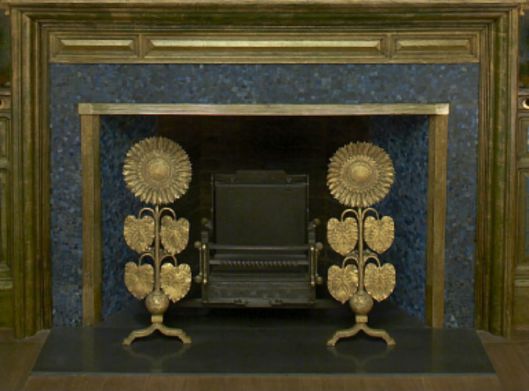
This was the same design that Jeckyll used for the andirons in the fireplace of the Peacock Room, one of Jeckyll’s few remaining vestiges after Whistler’s makeover (see previous post).

Freer Sunflowers closeup.jpg

Jeckyll’s sunflower andirons and grate – some of his few untouched contributions to the Peacock Room. (Courtesy Freer and Sackler Galleries, Washington, USA [6])

Sunflowers Freer galleryPixlr.jpg

Whistler’s painting above, Jeckyll’s sunflowers below (Freer and Sackler Galleries [6])


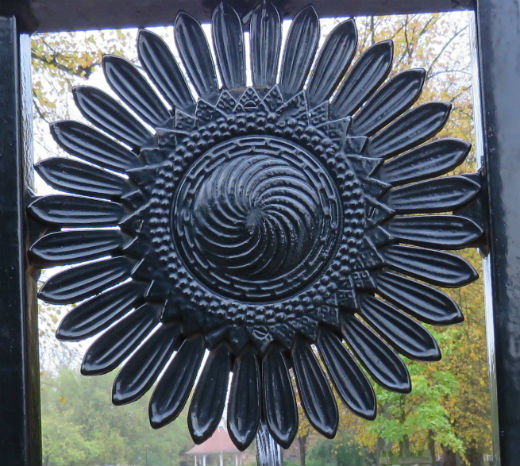
The most recent manifestation of Jeckyll’s sunflower design is in the newly-made gates to Chapelfield Gardens, where the originals had surrounded the Pagoda over 125 years ago.

chapelfield_sunflowersPixlr.jpg

Twenty-first century sunflower gates at the entrance to Chapelfield Gardens, Norwich

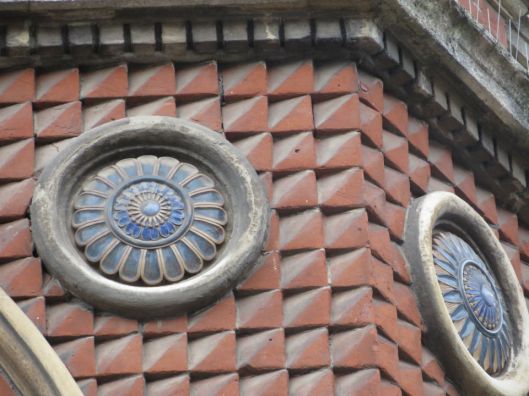
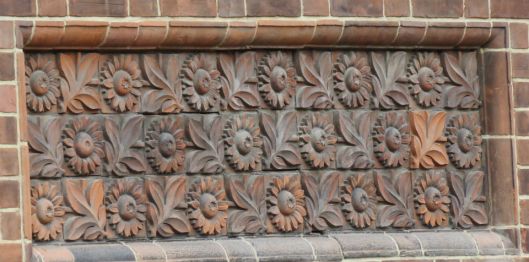
The flower motif is ubiquitous and can be found elsewhere in Norwich. The flatiron-shaped red brick and terracotta building (1880) at the junction of London and Castle streets was part of Edward Boardman’s London Street Improvement Scheme. On this building, around the top of the second storey, Boardman added a series of white terracotta roundels containing flowers with blue-glazed petals. Admittedly, these flowers are more daisy-like than sunflowers but so were some of Jeckyll’s own variations as he worked out ways of representing the sunflower – see, for example, one of his fireplaces in the third figure from top. Boardman would have been well aware of Jeckyll’s work for Barnards, whose showroom was just around the corner in Gentleman’s Walk.

BlueSunflower.jpg

Blue-glazed roundels.

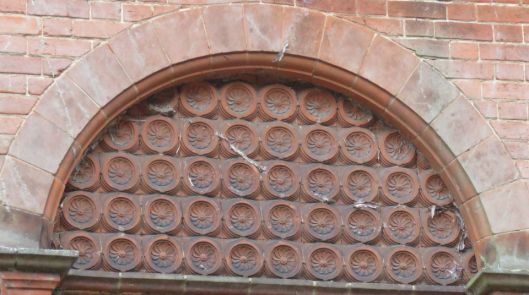
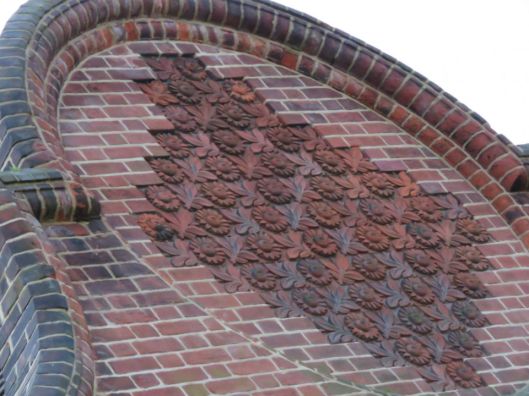
At some point, perhaps for ease of manufacture in materials incapable of showing such fine detail as iron, what might once have been an Aesthetic sunflower becomes a generic daisy. The house at number 19 Ipswich Road is profusely decorated with diapered panels of Aesthetic-influenced flowers above windows and on a gable.

19 ipswich rdPixlr.jpg

Repeated Aesthetic flower motifs in Ipswich Road, Norwich

At 50 All Saints Green is a restored (2015) former coach house and stables. It is highly decorative with two panels of terracotta flowers; one in the east end’s Dutch gable… 50AllSaintsGreenPixlr.jpg

… and the other above the front door (below).

sunflower panel.jpg

Although described as sunflowers the central apple-like structure sidesteps the complexity of Fibonacci spirals that Jeckyll had managed to convey in iron.


Sunflower_Chapelfield.jpg

Jeckyll sunflower, ‘new’ gates at Chapelfield Gardens, Norwich

Sources

1. Martin Battersby (1973). Essay on ‘Aesthetic Design’. pp 18-24 In, The Aesthetic Movement, Ed Charles Spencer. Academy Editions .

2. Susan Weber Soros and Catherine Arbuthnott (2003). Thomas Jeckyll, Architect and Designer, 1827-1881. The Bard Graduate Center for Studies in the Decorative Arts, Design, and Culture, New York. Pub, Yale University Press.

3. George Plunkett’s Photographs of Old Norwich http://www.georgeplunkett.co.uk/Website/ 

4. Recording Archive for Public Sculpture in Norfolk and Suffolk. http://www.racns.co.uk

5. The Costume and Textile Department at the Castle Study Centre, Norfolk Museums Service.  http://www.museums.norfolk.gov.uk/Visit_Us/Norwich_Castle_Study_Centre/index.htm

6. The Freer and Sackler Galleries, The Smithsonian’s Museums of Asian Art. Washington D.C., USA. http://www.asia.si.edu/exhibitions/current/peacockRoom/pano.asp

Thanks to Sarah Cocke of racns; Jonathan Plunkett of the Plunkett photographic site; Lisa Little, Samantha Johns and Shaz Hussain of the Norfolk Museums Service.


Two Bs or not two Bs? Norfolk’s Thomas Jeckyll

Tags

, , , ,

THE AESTHETIC MOVEMENT IN NORFOLK

Norfolk’s Thomas Jeckyll was a largely unsung hero of the nineteenth century Aesthetic Movement whose popularization had its roots in Norwich.

I first came across Thomas Jeckyll’s work when I bought the catalogue to a 1973 exhibition that had done much to bring together the work of this diffuse group: The Aesthetic Movement 1869-1890 (1).

aesthetic movement catalogue.jpg

Catalogue of 1973 exhibition, The Aesthetic Movement, edited by Charles Spencer

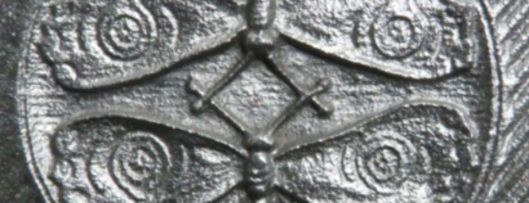
In the 1980s, my first house in Norwich had a wrought-iron gate bearing a small roundel embossed with two butterflies. I was told this was how Jeckyll stamped his designs for the Norwich foundry of Barnard and Bishop. These insects have been described as moths  but butterflies make more sense to me and tie Jeckyll in to the wider art movement. [A correspondent later suggested that the roundels on the wings signified peacock butterflies. This makes sense in the context of the Aesthetic Movement and even has resonances in Whistler’s later Peacock Room].

Jeckyll insignia.jpg

Jeckyll’s two-insect motif on a cast-iron fireplace..

Jeckyll was born in 1827 in Wymondham, a market town a few miles south of Norwich. His father was curate of the Abbey Church, Wymondham and church restoration was an important part of Jeckyll’s early work. He established an office in Norwich and his entire family moved to the city’s Unthank Road in 1854 (2). [I hope to write a post on the Unthank Estate].

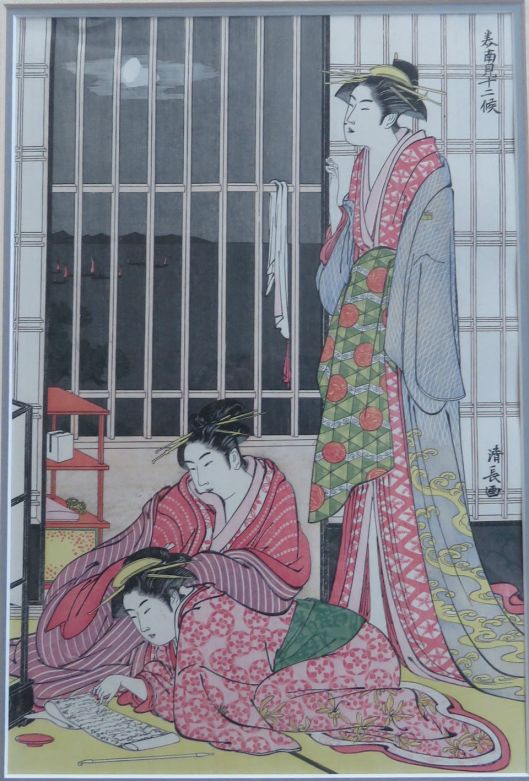
The opening up of Japan for trade to the west in the early 1850s had an enormous impact on European art: collectors fought over porcelain and James Whistler even tussled over a Japanese fan. There was great competition for the wood-block prints included in shipments of imported goods. Largely free of the western preoccupation with linear perspective these Japanese images came to inspire the ‘flattened’ poster art of western artists such as Toulouse Lautrec and Alphonse Mucha, while Gustav Klimt’s decorative effects can be traced to the coloured patterns and motifs on Japanese fabric.

kiyonaga.jpg

On Japanese fabrics the roundel was a key motif superimposed upon geometric backgrounds. Torii Kiyonaga 1752-1815.

This avant-garde passion for things oriental filtered into popular culture as the Anglo-Japanese Aesthetic Movement. While The Arts and Crafts Movement had become, under William Morris’ influence, an exclusive enterprise based on handmade goods and opposition to mechanization, The Aesthetic Movement became an expression of middle-class taste for Japonaise objects produced on an industrial scale. Household objects, such as china and pottery, were embellished with roundels, cherry blossom, cranes, fan shapes and other geometric patterns of the kind seen on Japanese fabrics and prints

Aesthetic Jug Pixlr4.jpg

A travelling salesman’s ‘flat’, showing Aesthetic Movement decoration of cherry blossom, fan shapes and roundels

Aesthetic bowl Pixlr.jpg

Victorian soup dish (actually, my porridge bowl) decorated with ‘Aesthetic’ motifs of sunflowers and cherry blossom.

One of Jeckyll’s first successes for Barnard Bishop and Barnards was his design for the Norwich Gates, shown in the International Exhibition, London 1862. The gates were then presented by the people of Norwich and Norfolk to the Prince of Wales (later, King Edward VII) as a wedding present and can still be seen at the queen’s country estate at Sandringham.

Smaller but more dramatically Aesthetic gates – showing repeated use of the fan shape – were designed for Sprowston Hall (now Sprowston Manor Hotel) just north of Norwich.

gates sprowston manor.jpg

The gates for Sprowston Manor are one of Jeckyll’s best realised Japanese designs. Some of the gold-painted roundels contain Jeckyll’s insignia (below).

jeckyll emblem sprowston gates_2.jpg

In addition to such individual pieces, Jeckyll’s designs reached the mass market in the form of cast-iron fireplaces in the Japanese style. Again, roundels are the predominant motif, the piece below showing various depictions of the sunflower’s mathematically-complex seed heads.

Jeckyll fireplace.jpg

Barnard Bishop and Barnards fireplace designed by Thomas Jeckyll. Note his symbol in the roundel top left. Courtesy of Norfolk Museums Service.

The insects imprinted within Jeckyll’s roundels are sometimes described as moths but they clearly have bulbs at the ends of their antennae as butterflies do but which moths – with feathery antennae – do not. The two initials B of the butterflies would have celebrated Jeckyll’s role as designer for Barnard and Bishop, as the firm was known when he was first associated with them.

butterfly antennae.jpg

The bulbs at the ends of these insects’ antennae are characteristic of butterflies.

Jeckyll worked with Charles Barnard of Barnard and Bishop from 1850 but when Barnard’s two sons joined the company in 1859 the firm used a four-bee motif as seen in the roundel on the fireplace below. The firm became Barnard Bishop and Barnards – note the ‘Barnards’, plural.

Jeckyll fireplace2.jpg

Jekyll-designed fireplace marked with the four-bee motif used by Barnard Bishop and Barnards. Courtesy of Norfolk Museums Service.

Barnards 4 bee emblem.jpg

Close-up of the four-bee emblem from the fireplace above

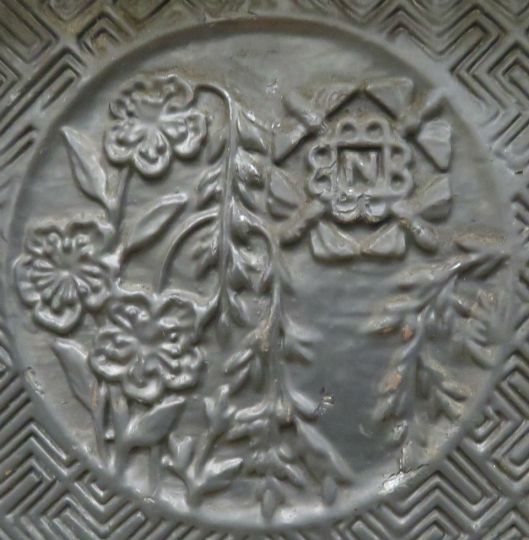
On a recent visit to the Costume and Textile Study Centre, Shirehall, Norwich (3), I was shown a working fireplace that had one time been boarded up in a store room. Its top left roundel contains four bees in a square, inside that are four letter Bs and at the centre a capital N, possibly for Norwich.

Barnards 4B symbol.jpg

A variation on the four-bee motif for Barnard Bishop and Barnards:  four insects, four capital Bs and a letter N.

Barnard fireplace.jpg

Registered design for a Jeckyll fireplace. The close-up of the four-bee symbol in the preceding image can just be seen in the top left roundel.

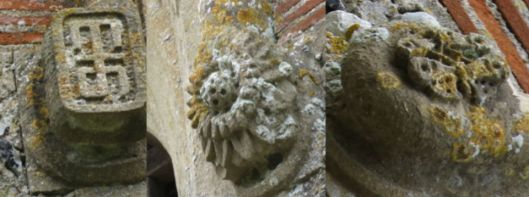
Although the four-bee motif relates to the enlarged ‘Barnards’ group, the two-butterfly symbol does not seem to have been appropriated by the earlier pairing of Barnard and Bishop and was clearly reserved for Jeckyll himself. Recently, I visited Saint Peter’s church Ketteringham, a few miles south of Norwich. Jeckyll is known to have restored the upper part of the tower in the early 1870s for the Boileau family of Ketteringham Hall. The churchwarden pointed out Jeckyll’s oriental-style monogram carved on one of the stone bosses terminating the eyebrows over the towers’ Gothic arches (below left). This monogram was also used in terracotta panels on the Lodge of Framingham Manor for which Jeckyll was the architect (2).The central image shows another defining symbol of The Aesthetic Movement – the sunflower – while the right-hand image shows his symbol of two-butterflies with interlocking antennae.

3 Jeckyll motifs.jpg

Three of Jeckyll’s symbols on stone bosses decorating the tower of Ketteringham Church, Norfolk: his initials, a sunflower and two butterflies

This demonstrates that Jeckyll used his two-butterfly motif independently of his metalwork with the Barnards; it also shows that he was using it more than ten years after Barnard and Bishop had expanded to four Bs.

Jeckyll’s family were Jeckells and Thomas changed his name, perhaps as an affectation, much as his Norfolk-born friend Frederick Sandys had elevated himself from Sands (2). Sandys’ paintings in the Pre-Raphaelite style can be seen in Norwich Castle Museum (4). It was Sandys who introduced Jeckyll to  a group of London aesthetes including George du Maurier (author of Trilby), the poet Algernon Swinburne, the artists Whistler and the Pre-Raphaelite, Dante Gabriel Rosetti.

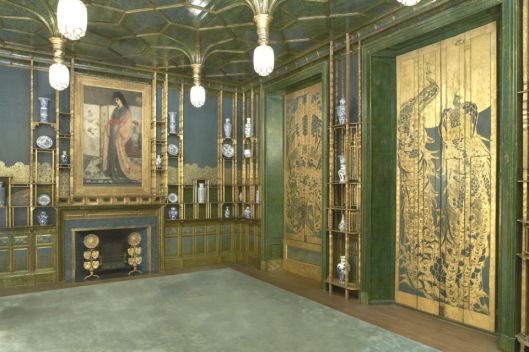
Jeckyll was employed by wealthy collector Frederick Leyland to design a room with extensive shelving  to display his collection of Chinese porcelain. Jeckyll re-fashioned the dining room in an eclectic style in keeping with the current Aesthetic  manner (2). It was lined with embossed leather thought to have come from Catton Hall, in Old Catton just outside Norwich. Another of Jeckyll’s signature motifs, the sunflower, was present in the form of two gilded andirons in the fireplace above which hung  Whistler’s appropriately entitled painting,  The Princess from the Land of Porcelain (5, 6).

Peacock Room 2.jpg

The Peacock Room painted by Whistler with Jeckyll’s sunflower andirons in the fireplace. The Freer Gallery of Art, Washington, USA.

Since his early interactions with the Boileau family at Ketteringham Hall, Jeckyll had shown signs of unreliability. While decorating Leyland’s rooms his behaviour became increasingly erratic (7, 2) due to what is now recognised as severe manic-depression. In his absence Whistler took over the decoration. To achieve one of the high points of the Aesthetic Movement, ‘Harmony in Blue and Gold: the Peacock Room’, Whistler  overpainted Jeckyll’s leather-clad walls, shelving and even his sideboard. While the  result was undoubtedly splendid it effectively overwrote Jeckyll’s contribution to art history.

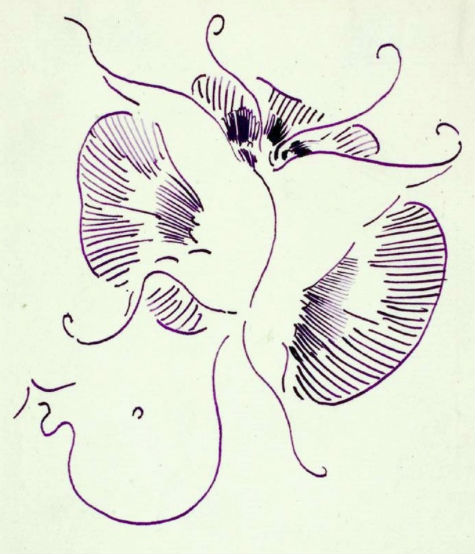
The press referred to this as Whistler’s room, a half-truth that Whistler himself seems to have been slow to correct, causing Jeckyll’s loyal friend Sandys to confront the American artist.  Whistler did, however, appear to have a begrudging admiration for Jeckyll’s work and his own famous, more ethereal, butterfly signature has been traced to the influence of Jeckyll’s earlier motif (6).

Whistler's butterfly signature.jpg

Whistler’s butterfly signature

Towards the end of his life Jeckyll spent time in Heigham Hall, a private asylum. heigham hall asylum.jpg

He returned to the family home in Park Lane, Norwich,  but Jeckyll’s father was also exhibiting extreme mania at this time so the family transferred Thomas to the Bethel Hospital, Norwich, where he eventually died in 1881.

Victorian attitudes to mental illness may have contributed to the lack of recognition due to Jeckyll but later scholarship helped to right this wrong (1, 2, 7). What is clear is that the Anglo-Japanese designs for Barnard Bishop and Barnards are indisputably Jeckyll’s and that the widespread sale of goods bearing his butterflies, roundels and sunflowers did much to bring the Aesthetic Movement to a broader public.

Sources

This post has relied heavily on the scholarship of Susan Weber Soros and Catherine Arbuthnott (2). I thank Shaz Hussain of the Norfolk Museums Service, Gressenhall, Norfolk for showing me the Jeckyll fireplaces in storage at Gressenhall, and Lisa Little for pointing out another Jeckyll fireplace in situ at the Costume and Textile Study Centre, Shirehall, Norwich. I am grateful to churchwarden Mary Parker for teaching me so much about Jeckyll’s work at Ketteringham.

Sources

1. The Aesthetic Movement (1973). Ed, Charles Spencer. Academy Editions London.

2. Soros, Susan Weber and Arbuthnott, Catherine. Thomas Jeckyll: Architect and Designer, 1827-1881. The Bard Graduate Centre for Studies in the Decorative Arts, Design and Culture, New York in association with Yale University Press, 2003.

3.The Costume and Textile Department, Castle Study Centre, Norfolk Museums Service.  http://www.museums.norfolk.gov.uk/Visit_Us/Norwich_Castle_Study_Centre/index.htm

4.http://www.museums.norfolk.gov.uk/Whats_On/Virtual_Exhibitions/Frederick_Sandys_and_the_Pre-Raphaelites/Sandys_and_the_Pre-Raphaelites/NCC081281

5. http://www.asia.si.edu/exhibitions/online/peacock/2.htm.

6. For a highly-recommended interactive tour of The Peacock Room download this free app for iPad and iPhone: http://www.asia.si.edu/apps/

7. Merrill, Linda. The Peacock Room: A Cultural Biography. Washington, D.C.: Freer Gallery of Art in association with Yale University Press, 1998.

Also, do visit Norfolk Museums Service Collections website: http://norfolkmuseumscollections.org


Norfolk’s stained glass angels

Tags

Angels’ Ears

The first exhibition I saw in The Sainsbury Centre for Visual Arts, in the 1980s, was Treasures of Norfolk Churches. The most beautiful piece was a head of an angel painted on glass and I had the poster of this fifteenth century angel on my office wall for many years.

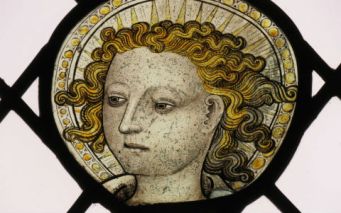
Later, my wife and I were paying homage to Robert Marsham who recorded how nature changes over the seasons and so started the science of phenology in the eighteenth century. We traced him to St Margaret’s church in Stratton Strawless (poor soil, poor wheat, little straw) (1) where there was a small display of his work alongside the imposing memorials to his ancestors. Most of the remaining medieval glass was in the upper traceries of the windows but there, in the otherwise clear main light of the north aisle window, was the angel from the poster (visit the excellent: norfolkstainedglass.co.uk (2)).

SSangelPixlr.jpg

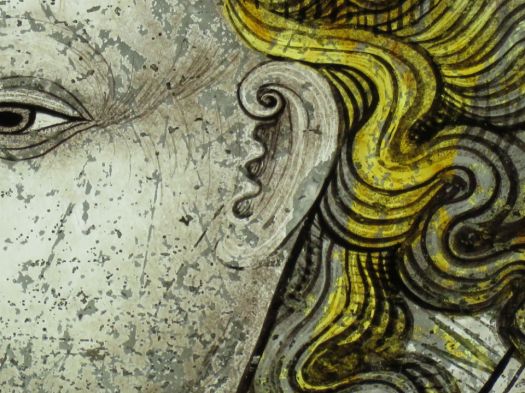
Over many years of staring at this poster on a daily basis I had noted some peculiarities. First was the angel’s curly hair with a distinctive double S curl in the centre of the hairline; the second was the peculiar double tragus – the flap in front of the ear. Normally, this is a single-pointed prominence covering the opening to the ear. Abnormally, an accessory tragus can form as a smaller tag  but the ear of the Stratton Strawless angel shows a more equal bi-lobing giving it a pie-crust appearance. A friend who spent time as a paediatric dermatologist never encountered a double tragus, indicative of it rarity.

Ear_PixlrA.jpg

In another chance encounter I visited The Burrell Collection in Glasgow (3) and saw a very similar head in a 15th century stained glass panel attributed to The Norwich School (see also ref 4). Comparison with the Stratton Strawless angel shows they share the double tragus, the double S curl and evidently visited the same hair stylist. The noses are drawn with identical strokes of the brush, as are the philtrums (the double-lined channel between nose and mouth). But there is an overall cartoon-like quality to the Burrell saint that is missing from the softer Strawless angel. Whereas the Burrell saint has expression lines drawn at the corner of the mouth the more wistful appeal of the Strawless angel derives from the smoky shading at the edge of the mouth, giving the face a quizzical look somewhat reminiscent of the Mona Lisa.

BurrellPixlrHalf.jpg

Head of St John. St Peter Mancroft glass from The Burrell Collection Glasgow. Image reversed for comparison. Reproduced courtesy  of Glasgow Museums.

SSangelPixlrHalf.jpg

Stratton Strawless angel. Note the double tragus in the ears of this and the figure above.

From the same family then but not identical twins. At this distance it is not easy to identify the artist but there are clues.

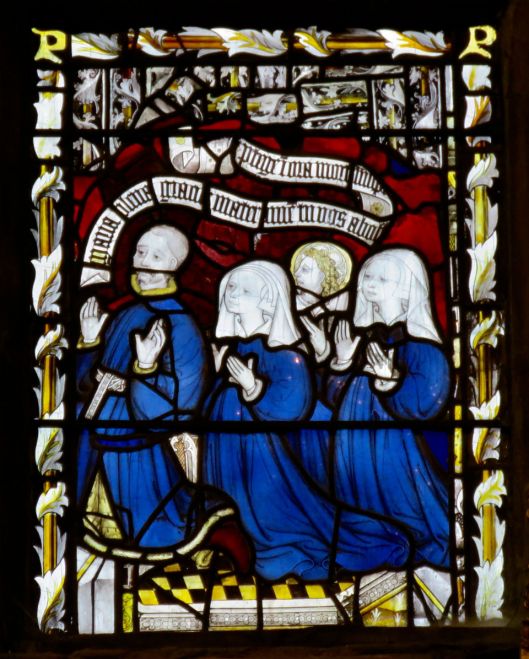
The Burrell glass (3) is attributed to the St Peter Mancroft church, Norwich. In 1450-55 Robert Toppes, a rich wool merchant, donated painted glass panels to this, Norwich’s ‘most prestigious’ parish church (4). An unknown proportion of the glass must have been destroyed by  iconoclasts during the mid sixteenth and seventeenth centuries and the explosion of 90 barrels of gunpowder at the Royalist Committee House in nearby Bethel Street didn’t help. In 1647, during the Civil War, this ‘Great Blow’  killed or injured a hundred people (4,5). Apart from the panel now in The Burrell Collection, Glasgow, and two in Norfolk’s Felbrigg Hall (one of which is on loan in the Mancroft treasury) the rest of the surviving glass was gathered together in the east window in an apparently random fashion (4,6). Robert Toppes himself is depicted in the donor panel (below) along with female members of his family. The head of a curly-haired saint or angel replaces a lost third female head.

ToppesPixlr.jpg

Robert Toppes and family in the donor panel of the east window of St Peter Mancroft, Norwich. The head of a blond saint/angel replaces one family member. Close inspection shows that Toppes’ ear is also painted with a double tragus.

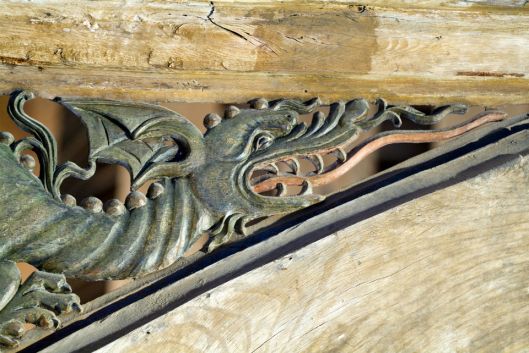
Toppes (1405-1467) was probably Norwich’s wealthiest tradesman at the height of the city’s trading power, demonstrating the rise of the merchant class. He became mayor and was member of parliament four times. He built his own trading hall in King Street, adjacent to the River Wensum that was used to transport his fine cloths and wool for trade with the continent. This hall, then called Splytts, is now known as Dragon Hall after the carved dragon exposed amongst the roof timbers during restoration.

DragonPixlrFinal.jpg

Dragon discovered in the roof timbers of Dragon Hall, King Street, Norwich. Courtesy of The Writers’ Centre

Records show that Norwich had been a regional centre for glass painting since at least the thirteenth century (7). The Toppes window was made by the prominent workshop of John Wighton (6,8) who was alderman when Toppes was mayor and whose workshop is likely to have been close to Toppes’ trading hall, Splytts. During his mayoralty Toppes paid for the windows of the Guildhall’s council chamber to be glazed by Wighton and on a tour of the Guildhall (highly recommended) it is possible to see generic similarities between figures in this and the Toppes window in St Peter Mancroft.

GuildhallPixlr.jpg

Stained glass window in Norwich Guildhall, painted by the Wighton workshop and funded by the mayor, Robert Toppes. Note Toppes’ coat of arms between the two angels.

For the Toppes window, David King in a magisterial book devoted to just this one window, identifies the styles of at least three painters (6, 7). In addition to Wighton himself, he suggests that the Master of the Passion window may have been his apprentice William Moundford who came from Moontfort in Utrecht, underlining the close links between Norfolk and the Low Countries.  William’s wife Helen was – perhaps surprisingly considering the date – also a glazier in Wighton’s studio and she is thought to have made a contribution to the Toppes window. Their son John was also apprenticed to Wighton in 1446 and became head of the workshop in 1458.

St Peter Mancroft GlassPixlr.jpg

Panels from St Peter Mancroft’s ‘Toppes’ window. All visible ears display the double tragus.

On a recent visit to The Metropolitan Museum, New York, I saw fifteenth century stained glass attributed to Gloucestershire (9), in which the apostles also had the double tragus, although this bunch of ruffians  looked nothing like the angelic Stratton Strawless head. So by itself this facial feature cannot be considered diagnostic of a particular artist or school. Indeed, angels painted on the wooden panels of the beautiful rood screen of St Michael, Barton Turf, Norfolk have the double tragus, showing that this trait was not confined to glass painting.

Barton Turf angel Pixlr.jpg

Angel painted on rood screen of St Michael Barton Turf. The angel’s ear shows the double tragus.

By comparing more than one facial trait it should be possible to further define the Strawless glass painter. A tour around Norfolk, based on the brilliant Hungate glass trails (10), reveals other saints and angels by the Wighton workshop and by using imaging software it was possible to overlay their images onto the Strawless angel. Below, these reunited fragments of an angel’s head from Warham St Mary share the double tragus and double-S curl with the Stratton Strawless angel.

warham angel pixlr.jpg

Head of angel, Warham St Mary’s Norfolk

The transparency of this image was increased and the face overlaid onto the Strawless angel.

Warham Strawless overlay pixlr.jpg

Overlaying the heads of the Strawless and Warham angels

The positions of the nose, ear and mouth of the two angels coincide  pretty well as do the eyes, despite the lead strip across the Warham figure.  Only the Warham angel’s more prominent jaw is significantly out.

Another angel with an enigmatic smile, and which rivals the beauty of the Strawless head, can be seen at All Saints Church, East Barsham, Norfolk. This musician wears ‘feather tights’ as worn in medieval mystery plays.

east barsham angel Pixlr.jpg

Angel, All Saints East Barsham, Norfolk

Below, overlaying the semi-transparent heads of the Strawless and East Barsham angels reveals an exact coincidence between the alignment of ears (with double tragus), the angle of the nose, position of the pupils, size and shape of the mouth as well as the overall shape of the face, even the scratched shading inside the upturned collar.

E Barsham Strawless angels Pixlr.jpg

Overlay of the East Barsham and Stratton Strawless angels

The exactness of this coalignment strongly suggests that the two heads originated from the same workshop. However, different members of the shop may have used the same template or cartoon at different times yet produced identifiably different results, as with the various artists of John Wighton’s workshop thought to have painted the Toppes window. And remember that not all those figures by the Wighton workshop had the double tragus. It seems probable, therefore, that the Strawless and East Barsham (and Bale) heads are by the same artist.

So who was that artist? After more than 500 years there is little to go on (see 8). David King,  the eminent authority on Norfolk stained glass mentions  that in 1473 John Marsham left a bequest in his will for the glazing of Stratton Strawless north window (11). There is no guarantee that the Strawless angel was part of the bequest but if it were this would date the angel to the 1470s. In this case John Wighton died too early to have painted the angel’s head (1458). There is record of William Mundford’s will in 1457 so he, too, may have preceded the painting of the angel. However, his son John, who became head of the Wighton workshop, died in 1481 and could have painted the piece. What does seem clear is that the cartoon on which the Stratton Strawless angel was based originated in Norwich’s Wighton workshop and was adapted by its various artists over several decades.

©2015 Reggie Unthank

Sources 

  1. norfolkchurches.co.uk
  2. norfolkstainedglass.co.uk
  3. The Burrell Collection, Glasgow. Asset number 45.92_01
  4. Matthew, R. (2013) Robert Toppes: Medieval Mercer of Norwich. Pub, The Norfolk and Norwich Heritage Trust.
  5. http://www.heritagecity.org/research-centre/social-innovation/norwich-in-the-civil-war.html
  6. King, D. J. (2006) The Stained Glass of St Peter Mancroft, Norwich, CVMA (GB), V, Oxford.
  7. Woodforde, C. (1950) The Norwich School of Glass-Painting in the Fifteenth Century. Pub, Oxford University Press.
  8. King, D. (2004). Glass Painting. In, Medieval Norwich eds C. Rawcliffe and R.Wilson. Pub, Hambledon and London. pp121-136.
  9. http://www.metmuseum.org/collection/the-collection-online/search/463580?rpp=30&pg=2&ft=gloucestershire&pos=53
  10. http://www.hungate.org.uk
  11. King, D.J. (1974)Stained Glass Tours Around Norfolk Churches. Pub, The Norfolk Society.