Angels in tights

Tags

, , , , , , , , , , , ,

Angels aren’t as common as they used to be. Five hundred years ago, before the Reformation, church was where most people would see artistic representations. The subject matter was strictly religious with angels playing important parts. Angels were ubiquitous and could be seen painted on rood screens, or as wooden roof angels, on wall paintings, painted glass and carved in stone. The way that angels were represented in these religious contexts may, however, have borrowed something from less strictly religious mystery plays.
Ringland1.jpg

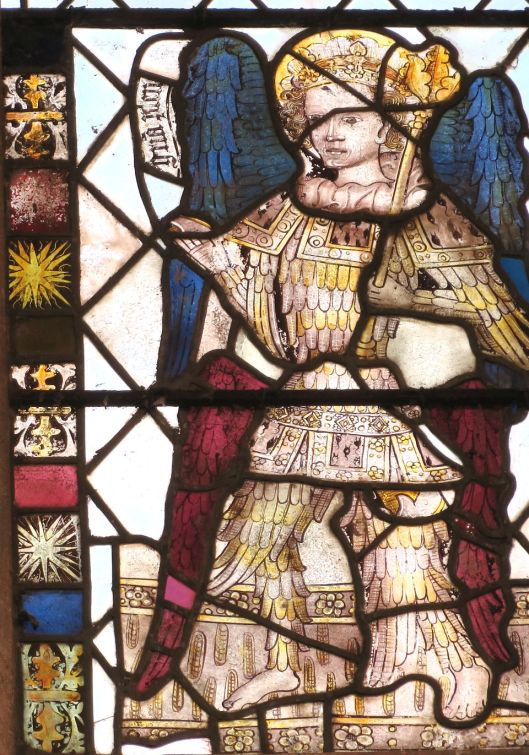
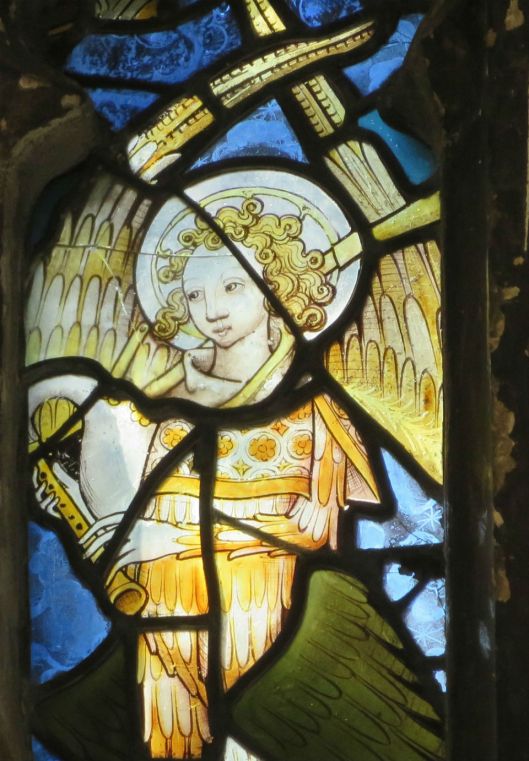
Archangel Gabriel wears a feather suit. C15th Norwich School glass, from St Peter’s Ringland. 

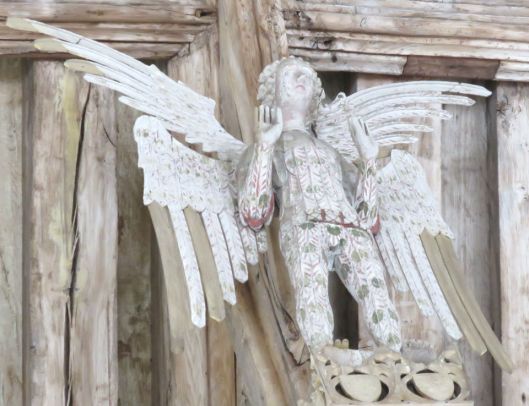
In medieval mystery plays the angels would wear – in addition to wings – feathers that covered the body, ending neatly at neck and ankle. These costumes are variously described as ‘feather tights'[1] or feather-covered ‘pyjama suits’[2]. The roof angel below is covered with only few ‘feathers’ but this probably reflects the case that such body suits may have been covered with scale-like flaps of cloth or leather to represent feathers [1]. The feather suits worn by actors would have provided a model for the depiction of angels in church art, and vice versa.
Cawston.jpg

Roof angel, St Agnes Cawston, Norfolk, adorned in relatively few large flaps painted as feathers. The Cawston angels are unique in standing upright on the hammer beams. Charles Rennie Mackintosh was fascinated by them (below).

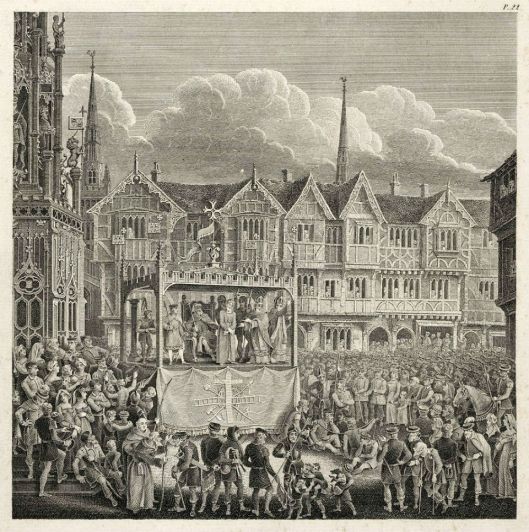
In the early C13th, Pope Innocent III became so concerned about the growing popularity of clergy in these mystery plays that he banned them from appearing. The dramas were taken over by town guilds who courted popularity by dispensing with Latin and adding comic scenes [3]. Such performances were known to have taken place at York, Coventry and Norwich. From Norwich, one play survived: this was performed by the Grocer’s Guild and named Paradyse [3] or The Fall of Adam and Eve [4]. The text of the Norwich Stonemasons’ play, ‘Cain and Abel’ is lost [4]. The Norwich guilds are likely to have mounted their parts of the cycle in a pageant, which involved elaborate ‘pageant wagons’ [2], staged on the early summer feast of Corpus Christi [5]. This C19th engraving of the Coventry mystery pageant gives an idea of what such events looked like.
Coventry-mystery-pageant-thomas-sharp-david-gee-1825.jpg

Coventry Mystery Pageant, engraved by David Gee (1793-1872). Source: Beinecke Library

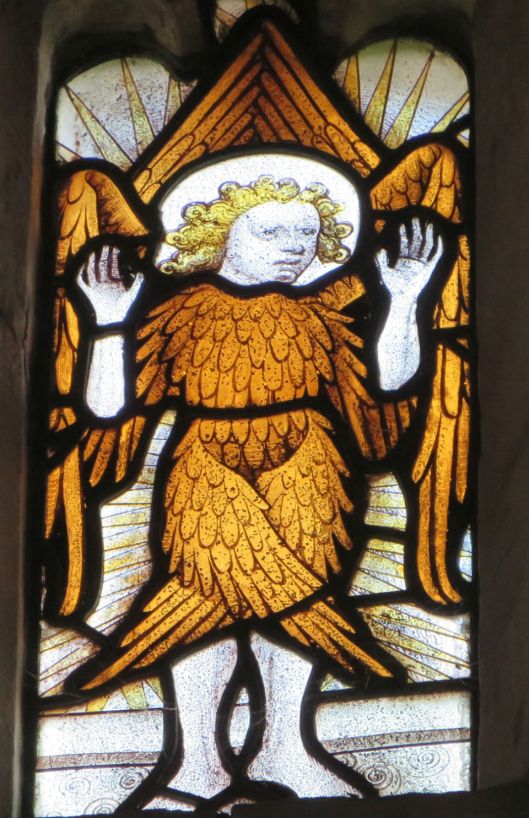
There were nine orders of angels, ranked in order of importance [6]. Chief were the seraphim, with three pairs of wings (often depicted in red): one pair for shielding their eyes  from God, one pair for flying and the third pair for covering their feet in respect. However, some say the latter were for covering their genitals, representing base instincts, and this is how they can appear in medieval images.
KetteringhamAngel.jpg

Six-winged angel at St Peter, Ketteringham, Norfolk. Norwich School painted glass late C15th

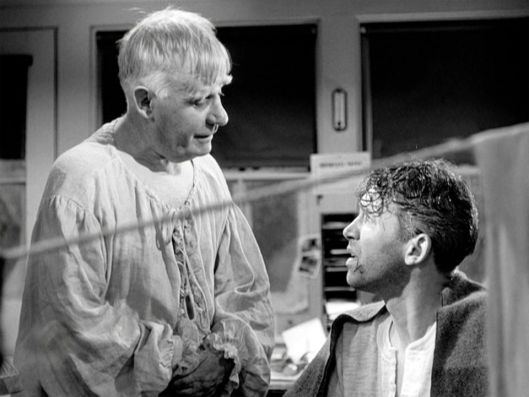
Cherubim had four wings, usually depicted in blue. Then, after Thrones, Dominions, Virtues, Powers and Principalities we come to the more familiar Archangels who transmitted messages from God as Gabriel is doing in the first image above. Last were Angels – intermediaries between heaven and earth. Clarence was James Stewart’s guardian angel in “It’s a Wonderful Life”.
Its a wonderful life RKO.jpg

Clarence Odbody (Angel Second Class). From “It’s a Wonderful Life” RKO 1946

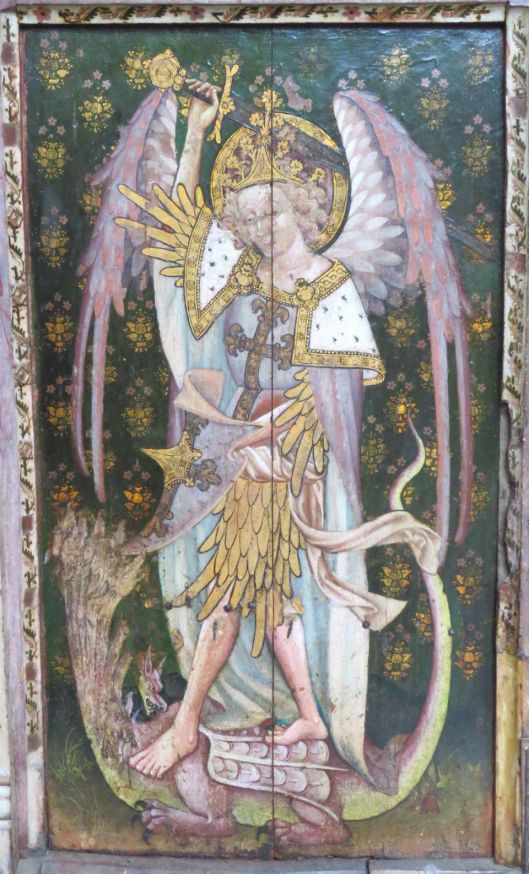
Some of the most beautiful medieval images of feathered angels in the country can be seen in Norfolk’s rood screens. Two stunning examples are at Ranworth and Barton Turf. Below, one of the Archangels, the “debonair and fantastical” [7] Michael, slays a many-headed dragon. The dragon probably represents Satan, who – according to Milton in Paradise Lost – was wounded by Michael in personal combat [6A].
StMichaelRanworth1.jpg

Archangel St Michael from the church of St Helen, Ranworth, Norfolk. (C15th).

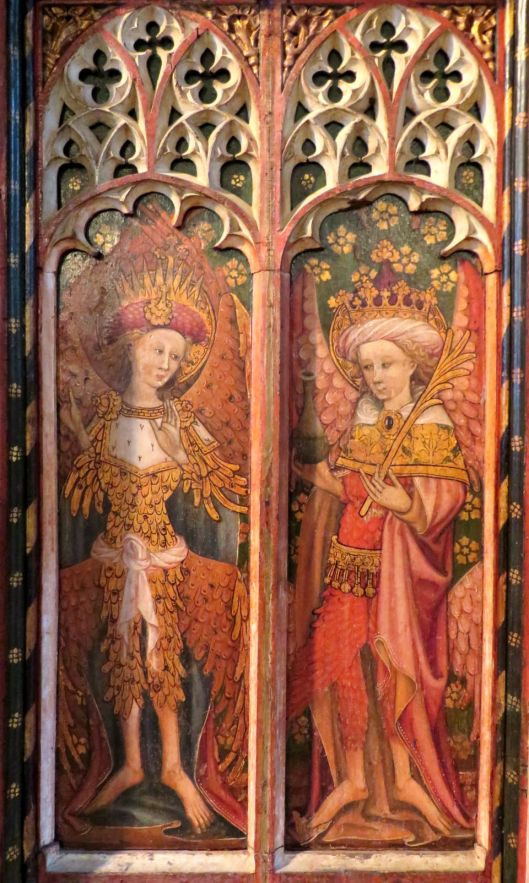
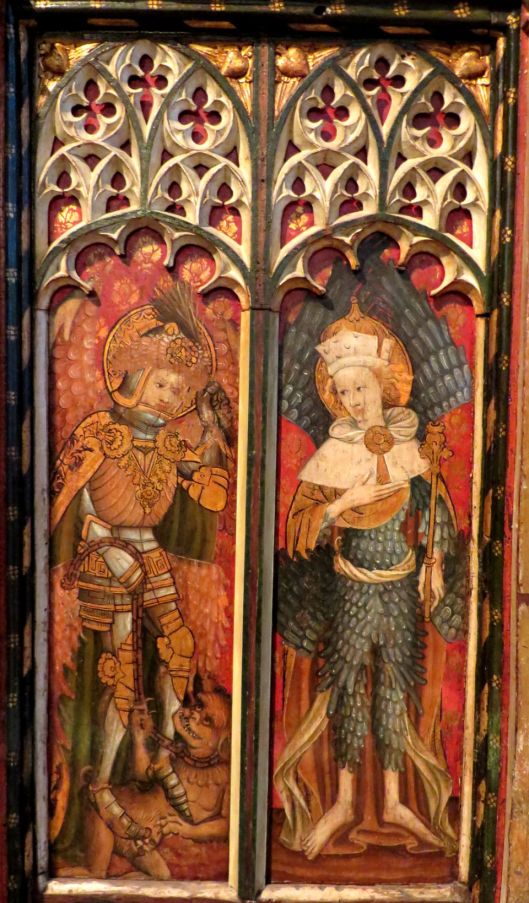
While most of the 12 screen panels in Ranworth represent saints, the equally beautiful rood screen at Barton Turf offers a rare depiction of The  Angel Hierarchy. The painting can be dated to the late C15th based on the detailing on the armour [7].
BartonTurfA.jpg

Cherubim (left) have gold feathers, two pairs of wings and are typically covered with eyes. To the right is one of the Principalities. At St Michael and All Angels, Barton Turf, Norfolk
RaphaelVirtuesA.jpg

Left, Archangel Raphael – the leader of the Powers (usually depicted in their armour) – with a chained demon beneath his foot. The face on the devil’s belly denotes  base appetites. Right, one of the Virtues. 
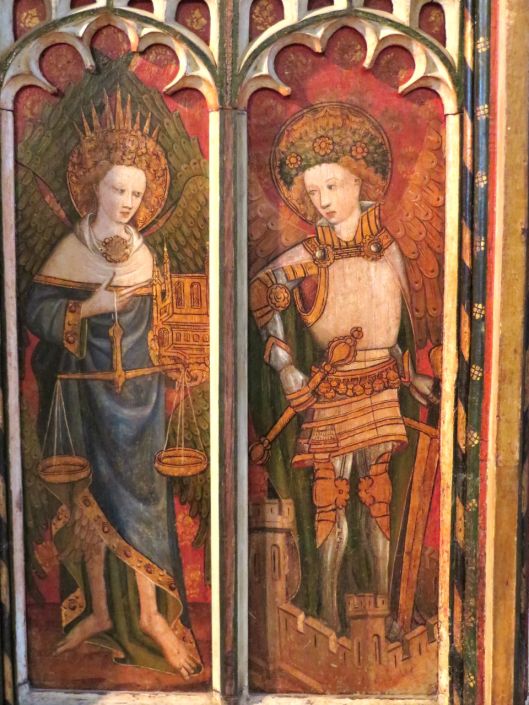
Thrones n Archangel.jpg

Left: one of the Thrones holding scales, presumably for weighing souls. (This Throne has six wings normally used to depict Seraphim [6]). Right: an Archangel in late C15th plate armour. Note the fashionable late C15th turban.
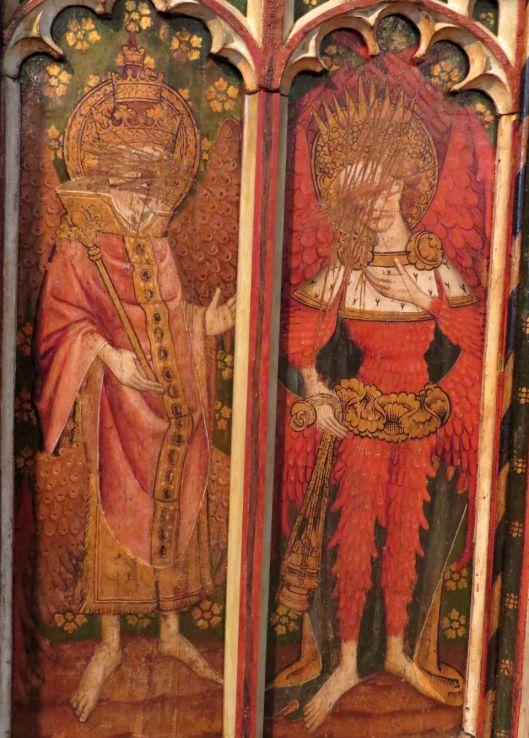
During the Reformation then the Civil War the iconoclasts, who were most active in East Anglia, destroyed countless idolatrous and superstitious images so it is surprising that so much of the Barton Turf masterpiece survives intact. Only two of the panels were defaced.

BartonTurfAngelA.jpg

The Dominion (left) and Seraphim (right) were probably defaced because of their papist tiara and incense-containing censer, respectively.

Curiously, the feathered angels swinging censers in the spandrels of the west doorway at Salle [8]– less than 20 miles from Barton Turf – were untouched by the iconoclasts.

SalleCensing2.jpg

St Peter and St Paul, Salle, Norfolk

Angels were commonly depicted playing musical instruments. A favourite is this beautiful painting of an angel playing a harp at All Saints East Barsham. The glass was probably painted in the latter part of the C15th by the Norwich workshop of John Wighton [9] (see my first blog post on Norfolk’s Stained Glass Angels).
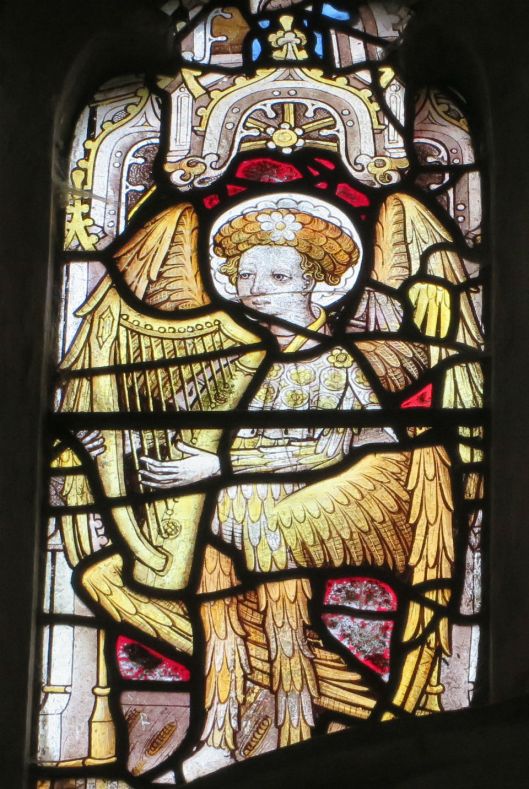
BarshamHarp.jpg

The harpist wears a fashionable turban. The ‘ears of barley’ at the bottom are typical of the Norwich School’s way of depicting wood grain.

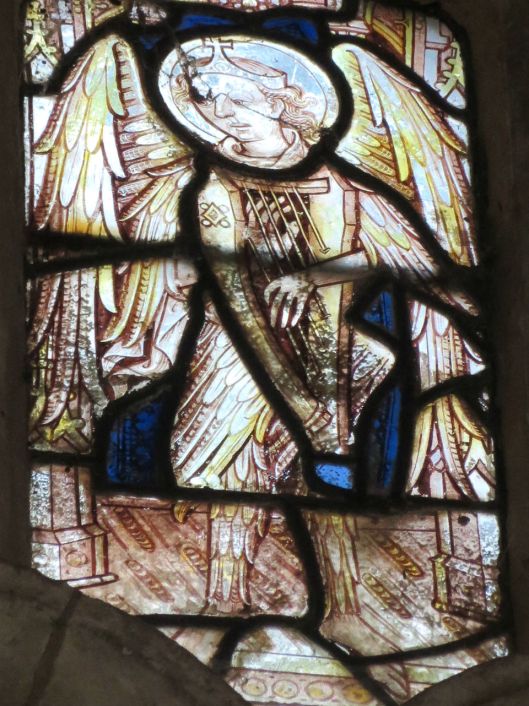
Another harp player at St Peter and St Paul, Salle.SalleAngelHarp.jpg
At St Mary’s North Tuddenham this angel plays the lute…NthTuddLute1.jpg

… and at St Peter Hungate, Norwich – bagpipes HungateBagpipes.jpg
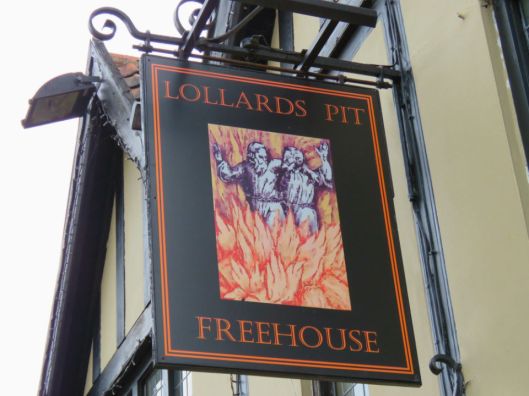
One of the glories of East Anglia is the large number of angel roofs, 84% of which are found in this region [13]. David Rimmer has examined two explanations for this. The first focuses on the Lollard heresy. (The name derives from their mumbling at prayer [from Middle Dutch lollaert = mutter]). Lollards were followers of John Wycliffe who – over a hundred years before the Protestant Reformation – objected to the pomp, imagery and idolatry of the Catholic Church. Their first martyr, who was burnt at the stake in London 1401, had been priest at St Margaret’s King’s Lynn. Lynn’s church of St Nicholas was the site of East Anglia’s first angel roof (1405-9) [13] suggesting that the large number of angels in East Anglia could be a counterblast to the Lollardism that was rife throughout this region.  In Norwich, men and women were burnt in Lollards Pit, a chalk pit once used for digging the foundations of the cathedral.
Lollard Pit pub Norwich.jpg

Lollards’ Pit pub near Bishop Bridge, Norwich

Another hypothesis involves the Royal Carpenter Hugh Herland who had created the first angel roof at Westminster Hall in 1398. Herland and his craftsmen came to make the new harbour at Great Yarmouth and it is argued that his influence spread throughout the region (although the first datable angel roof was in Kings Lynn [then Bishops Lynn] rather than Great Yarmouth).

Norwich has five* angel roofs: St Mary Coslany, St Michael at Plea, St Peter Hungate, St Giles and St Peter Mancroft [13]. (*A reader later informed me that St Swithins, which houses Norwich Arts Centre on St Benedicts Street, also has an angel roof hidden in the black-painted interior). St Peter Mancroft Norwich has a particularly fine mid C15th angel roof, said by Michael Rimmer to be “virtuoso medieval carpentry” [13]. The Perpendicular fan vaulting in wood masks hammerbeams whose free ends are capped by angels.

StPeterMancroftAngels.jpg

St Peter Mancroft, Norwich

Cawston, north of Norwich, has one of the finest angel roofs. As well as the demi-angels with spread wings, forming a frieze around the wall plate, man-size angels stand vertically at the ends of each hammer beam as if ready to dive.

Cawston angels.jpg

Single hammer beam roof at St Agnes Cawston

Thrust from the heavy roof tends to splay the walls outwards. Opposite walls can be held together by tie braces that span the width of the church but in hammerbeam roofs, the force is deflected downwards onto the jutting hammerbeams beams that only project partway into the volume. Cawston has a single row of these hammerbeams. Below, Knapton has double hammerbeams, allowing an ‘amazing’ span of 70 feet [7]. Double-deckered angels at the ends of these beams, together with two rows on the wall plate, result in a total of 138 angels.  KnaptonRoof.jpg
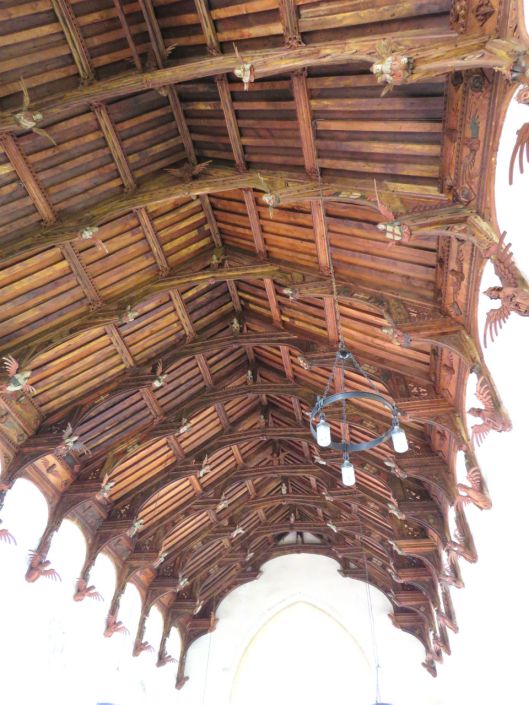
The roof was added to C14th Knapton church in 1503. This probably dates the earliest angels [7] although some clearly derive from later restorations – the lower rank from the 1930s [10]. KnaptonAngel.jpg
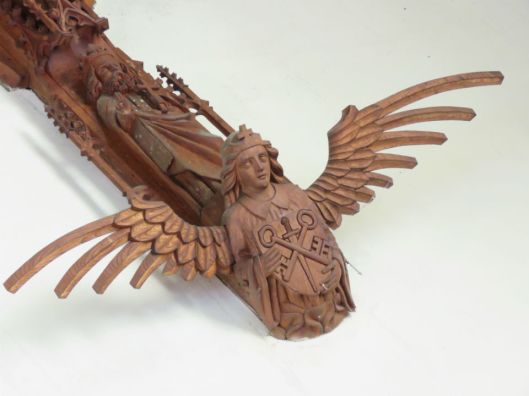
One of the lower Knapton angels, dating from the restoration of the 1930s Charles Rennie Mackintosh is associated with East Anglia by the pencil and watercolour drawings he made when he and wife Margaret stayed in Walberswick, Suffolk, in 1914. But he had previously visited Knapton, Norfolk, in 1896/7.

Napton Roof McIntosh.jpg

Charles Rennie Mackintosh, Knapton roof angels. Creative Commons. Source: Glasgow School of Art Archives and Collections 1897 [Ref11]
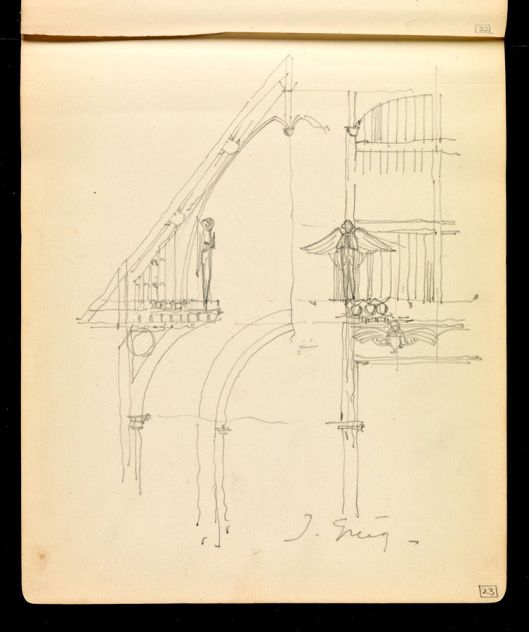
According to the Hunterian Gallery’s archive in Glasgow, Mackintosh had toured Norfolk with fellow architects Alfred(?) Greig and John Stewart, ‘possibly’ in 1896.  This is Greig’s sketch of a Cawston angel standing at the end of a hammerbeam.

MackintoshCawston.jpg

Pencil drawing.  Roof truss St Agnes Cawston 1896? (c) The Hunterian Museum Art Gallery, University of Glasgow 2016.[ Ref  14]
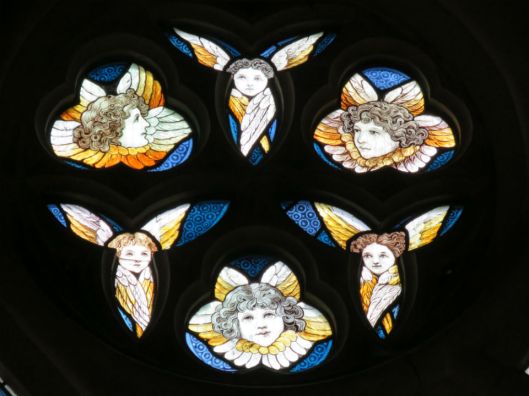
Booton St Michael was enthusiastically but eccentrically revived in Victorian Gothic Revival style by Reverend Whitwell Elwin, a local man who claimed to be a descendant of the North American Indian princess Pocahontas [12]. Completed in 1891, his updating of the medieval church gets a mixed reception from various commentators: Simon Jenkins thought the interior was “blighted by the customary Victorian frigidity” although architect Edwin Lutyens concluded it was “very naughty but built in the right spirit” [12]. But Lutyens had a vested interest since he married one of the ‘Blessed Girls’ – the seemingly numerous young beauties whose portraits appear in the tracery glass [12, 13].

BootonAngels.jpg

Most agree that the stained glass and roof angels made up for other misjudgements. The local master carpenter James Minns carved this hovering roof angel at Booton [13]. BootonAngel.jpg
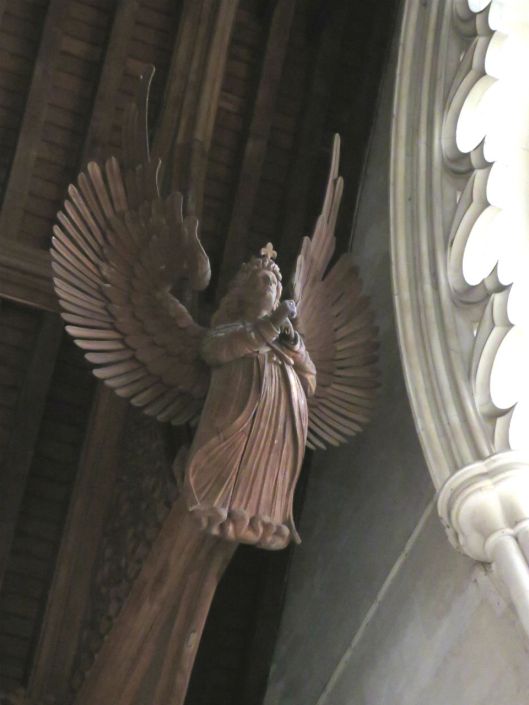
James Minns is also credited with designing the bull’s head emblem for Colman’s mustard [13].
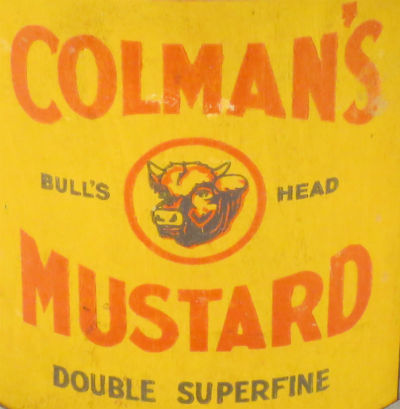
ColmansMustard_1.jpg

Left to the end: how Jeremiah James Colman made his money [15]

** STOP PRESS. WHO WAS JAMES MINNS? **

Just as I was finishing this article, Costessey resident Peter Mann responded to a previous blog article on Gunton’s brickworks by naming all the workers (below) at the Costessey brickyard.  Excitingly, he identified the arrowed figure as James Minns with John Minns seated on his right. Both were labelled as “Carvers of Norwich”, consistent with census returns giving their occupations as ‘carver’ (or, once for James, ‘sculptor’).  The entry for Minns [16] on the Mapping of Sculpture website gives his full name as James Benjamin Shingles Minns (ca 1828-1904). James was sufficiently confident of his skill to submit (successfully) a carved wooden panel of ‘A Happy Family’ to the 1897 Summer Exhibition of the Royal Academy; he had also carved the mantelpiece and panelling for Thomas Jeckyll’s commission for the Old Library at Carrow Abbey (1860-1) [17]. The presence of this highly skilled sculptor and his son at the Costessey Brickyard strongly suggests that they carved the moulds for the ornate ‘fancy’ bricks and panels for which Guntons were locally renowned. From his independent status as ‘Carver’ it seems possible that “James Minns of Heigham” [17] might have been freelance rather than a full-time employee, especially since his address was ca. five miles away from the Costessey Brickyard. Minns@Guntons.jpg
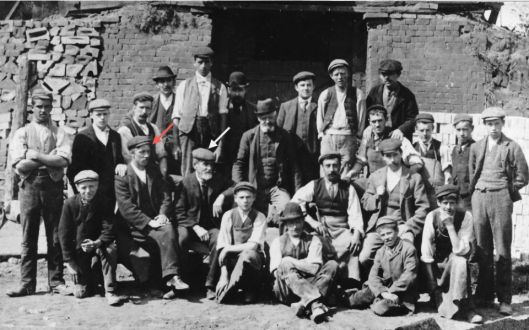
Employees of the Guntons Brickyard Costessey. James Minns is arrowed (white) with his son John, arrowed red. Pre-1904. (c) Ernest Gage Collection at Costessey Town Council
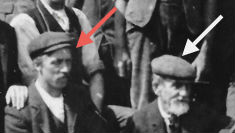
Minns_Heads.jpg

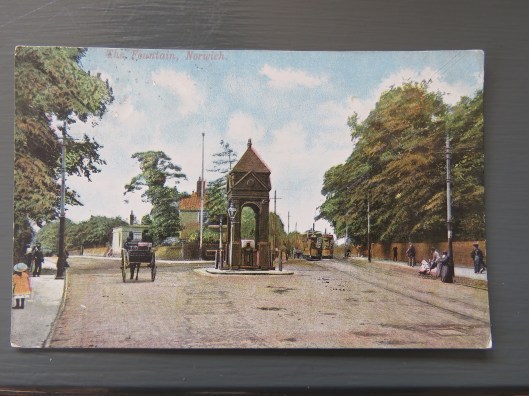
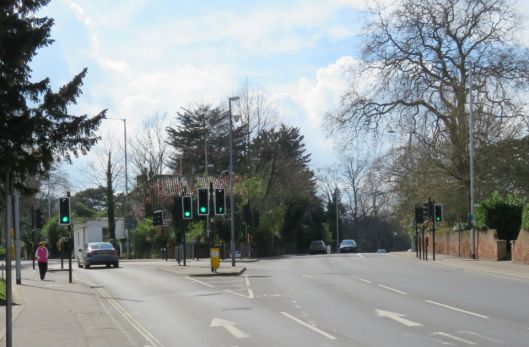
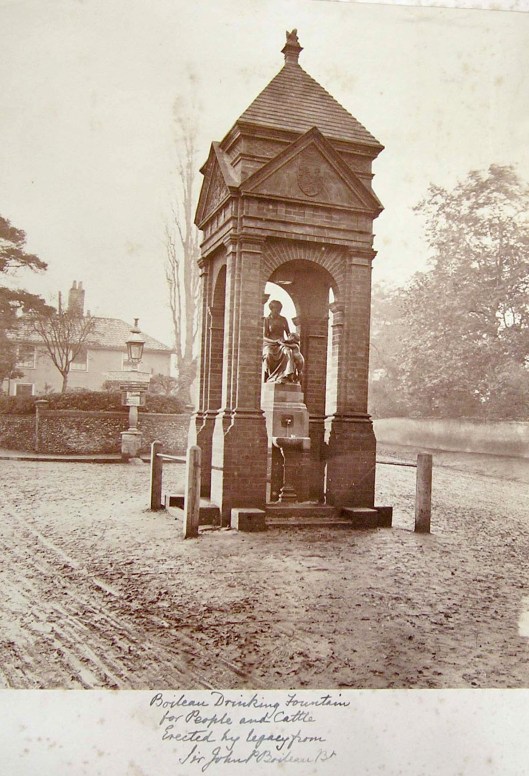
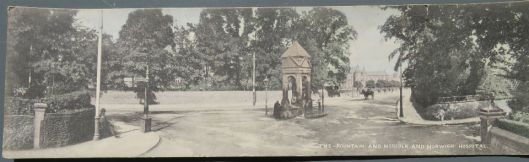
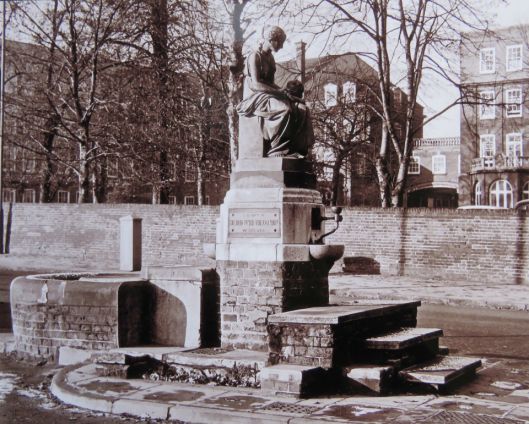
Norwich is a small city and its many lines of history are interwoven. A previous blog focused on the Boileau Memorial Fountain once sited at the junction of Newmarket and Ipswich Roads. James Minns collaborated again with architect Thomas Jeckyll by carving this coat of arms in the tympanum of the fountain [17].

MinnsBoileauPlaque.jpg

Minns of Heigham” [17] carved this plaque for the Boileau Fountain formerly at the Newmarket/Ipswich Road junction. (C) Norfolk Library and Information Service: Picture Norfolk

Back at Booton and another angel – the statue of St Michael above the porch … Richard Cocke [18] has suggested that Minns could have sculpted the model for Archangel Michael.

StMichaelBooton.jpg

Church of St Michael Booton. A rather stern St Michael sheaths his sword, with a bemused Jabberwockian dragon at his feet. Attributed to sculptor James Minns.

Sources

  1. https://en.wikipedia.org/wiki/Feather_tights
  2. http://collections.vam.ac.uk/item/O7802/panel-norwich-school/
  3.  http://www.newworldencyclopedia.org/entry/Mystery_play
  4. http://gildencraft.blogspot.co.uk/2016/04/the-norwich-stonemasons-play-by-gail.html
  5. http://www.english.cam.ac.uk/medieval/mystery_plays.php
  6. https://en.wikipedia.org/wiki/Christian_angelology Ref 6A: https://en.wikipedia.org/wiki/Michael_(archangel)#Art_and_literature
  7. Mortlock, D.P. and Roberts, C.V. (1981). The Popular Guide to Norfolk Churches; I. North-East Norfolk. Pub: Acorn Editions, Fakenham.
  8. http://www.norfolkchurches.co.uk/salle/salle.htm
  9. King, David. (2004). Glass Painting. In, Medieval Norwich eds C. Rawcliffe and R.Wilson. Pub, Hambledon and London. pp121-136.
  10. http://www.norfolkchurches.co.uk/knapton/knapton.htm
  11. http://www.gsaarchives.net/archon/?p=collections/findingaid&id=459&rootcontentid=10386
  12. Jenkins, Simon(2000). England’s Thousand Best Churches. Pub: Penguin.
  13. http://www.angelroofs.com/images-2
  14. http://www.huntsearch.gla.ac.uk/cgi-bin/foxweb/huntsearch_Mackintosh/DetailedResults.fwx?SearchTerm=53014/11&reqMethod=Link
  15. https://en.wikipedia.org/wiki/Jeremiah_James_Colman
  16. http://sculpture.gla.ac.uk/view/person.php?id=ann_1283258555
  17. Soros, Susan Weber and Arbuthnott, Catherine (2003). Thomas Jeckyll: Architect and Designer, 1827-1881. Pub: BGC, Yale.
  18. http://www.racns.co.uk/sculptures.asp?action=getsurvey&id=1065

Thanks to Peter Mann for identifying James Minns; Brian Gage for giving permission to reproduce an image from the Ernest Gage Collection at Costessey Town Council; Paul Cooper for providing the new photograph of the Guntons workers; Jocelyn Grant of the Glasgow School of Art for assistance with Mackintosh’s (K)Napton angels; Michael Rimmer of angelroofs.com for his help with the Norwich angels; and Clare Everitt of Picture Norfolk.

Four brilliant sites

Norwich’s pre-loved buildings

Tags

, , , , , ,

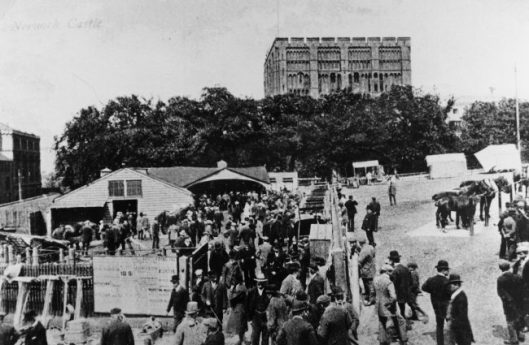
Who, at this Victorian horse market outside Norwich Castle, would have predicted that motor vehicles would displace horses from the city’s streets or that a shopping mall with space for over 1000 cars would be excavated where they once stood? This post is about once-vibrant buildings, such as stables, corn halls, weaving  sheds and leather boot and shoe manufactories, that outlived their original purpose and had to be reinvented in order to survive.

Norwich horse market (C) NCC.jpg

Norwich horse market on site of former cattle market ca 1900. (c) Norfolk County Council

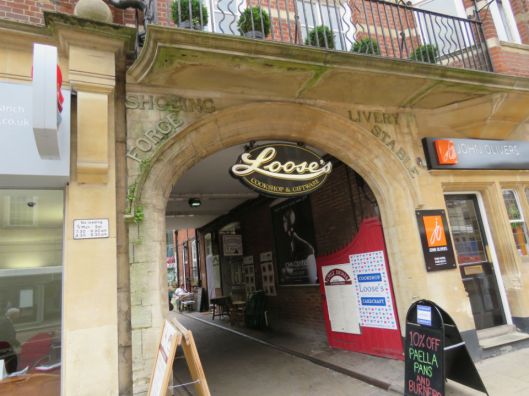
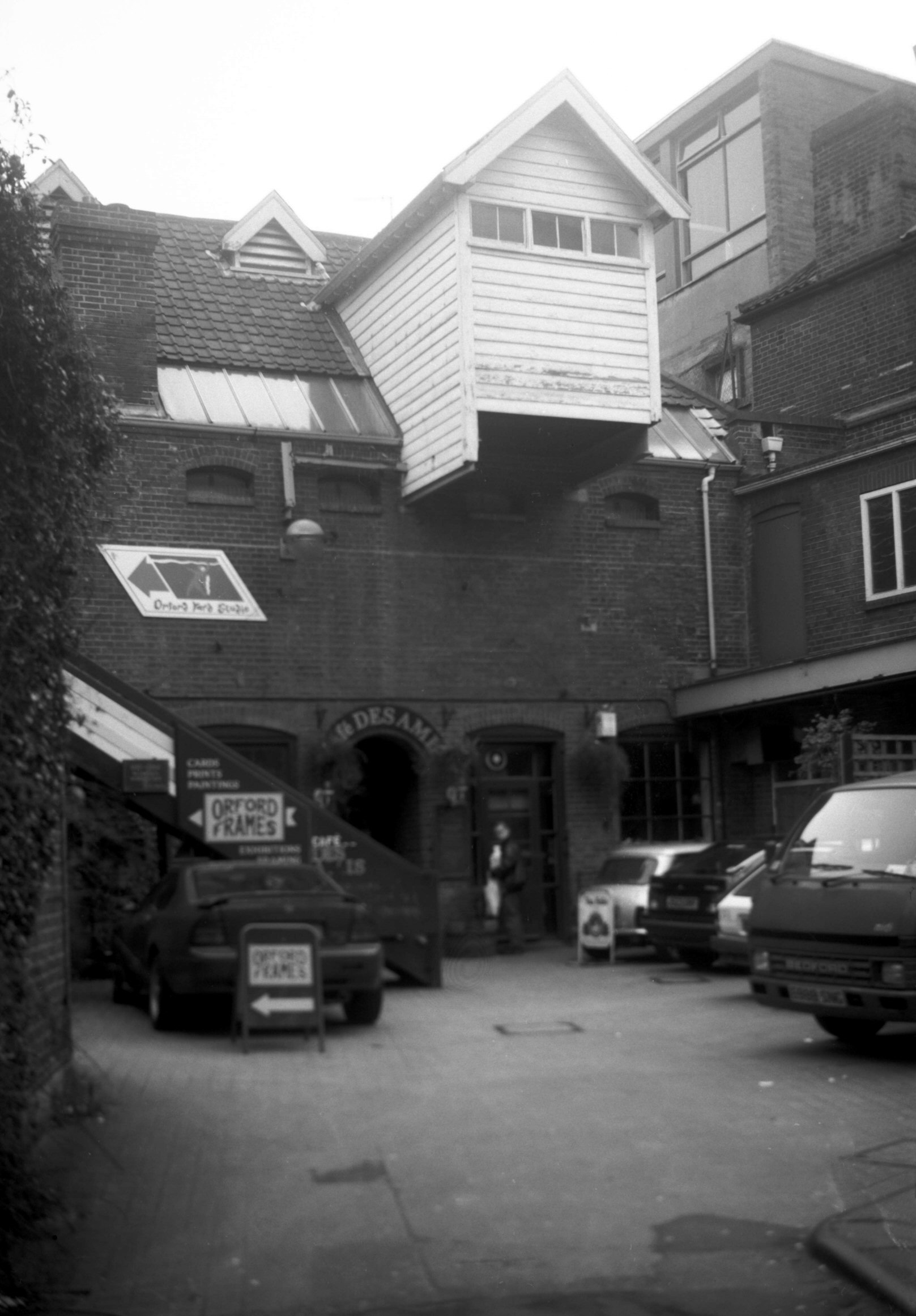
It is still possible to catch glimpses of life in the horse-drawn era.The words above this arch (shoeing, forge, livery, stable) in Orford Yard off Red Lion Street are a reminder of John Pollock’s veterinary surgery and livery stables. The date on the building’s Dutch gable gives the date of this Edward Boardman building as 1902. Boardman turns out to be a major figure in this post.Looses Norwich.jpg The yard now accommodates Loose’s Cookshop and Chez Denis cafe and brasserie. Until 1998 the owner of Chez Denis had a previous business here, Cafe des Amis, the name of which can just be made out above the central arch in the photograph below.

Red Lion St Orford Yard former stables [7536] 1998-03-10.jpg

Former stables 1998, Orford Yard (c) georgeplunkett.co.uk

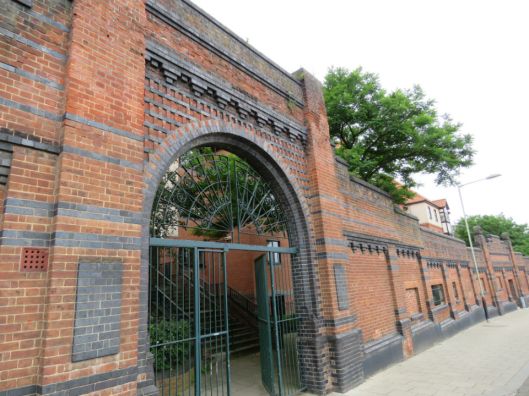
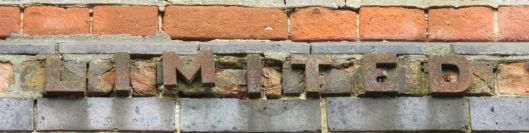
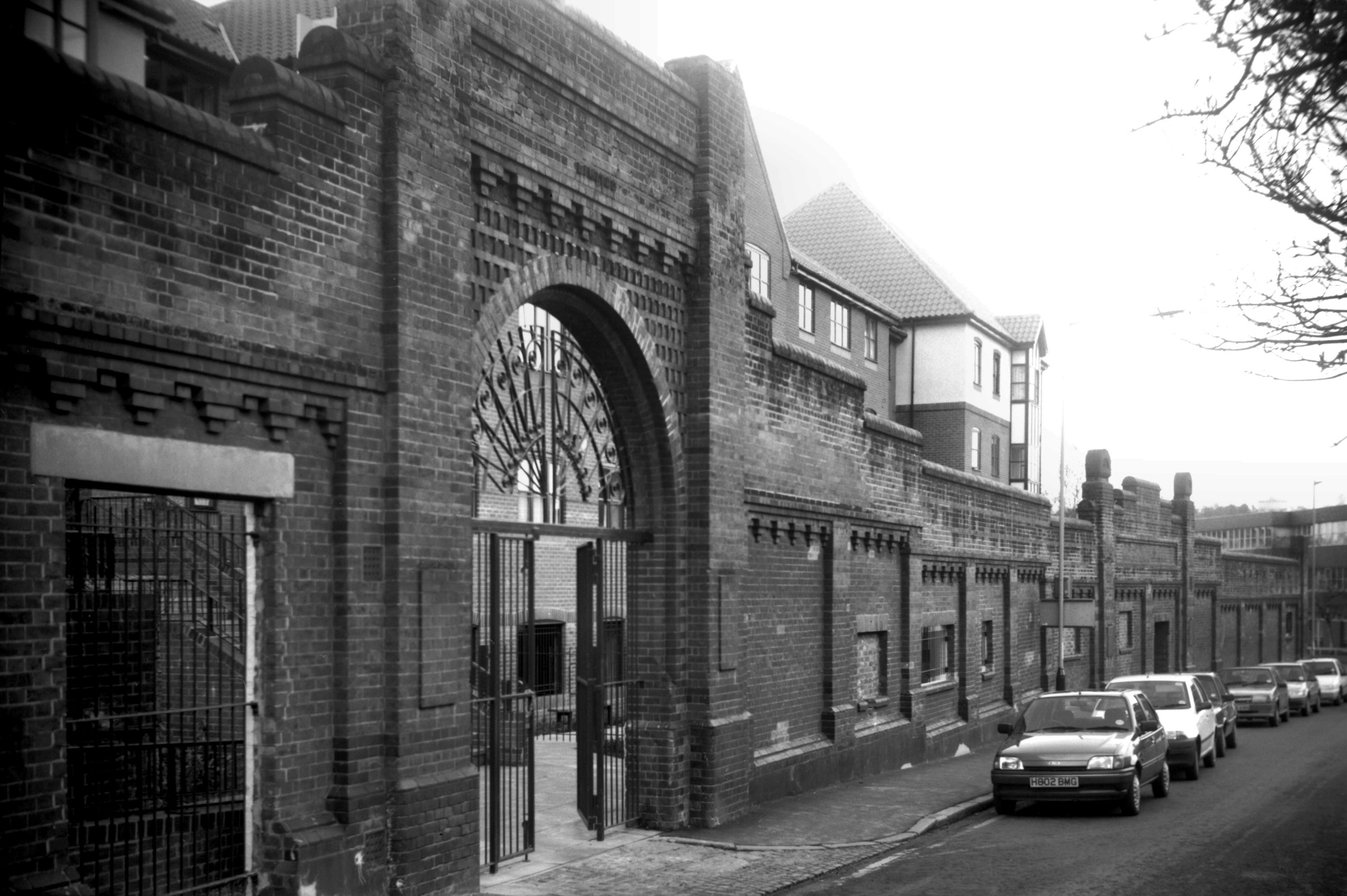
By 1840 Norwich’s weaving industry had been in decline for some years. Its hand-loom weavers were unable to compete with the steam-powered mills of the north whose better transport and production of popular cotton goods affected the sale of Norfolk’s more traditional worsteds [1]. As a consequence the shoe industry, which had been active for centuries, assumed a more dominant role. In the middle of the C20th there were about thirty boot and shoe manufacturers in Norwich that, together with allied trades, employed over 10,000 people. Now there is only one major shoe-maker, Van-Dal. This wall is all that remains of the Co-op Shoe Factory in Mountergate, and was only allowed to remain “as a baffle against traffic noise for Parmentergate Court” [2]. Coop factory.jpg

Limited.jpg

Above the gate,  the last vestige of ‘Norwich Cooperative Industrial Society Limited’?

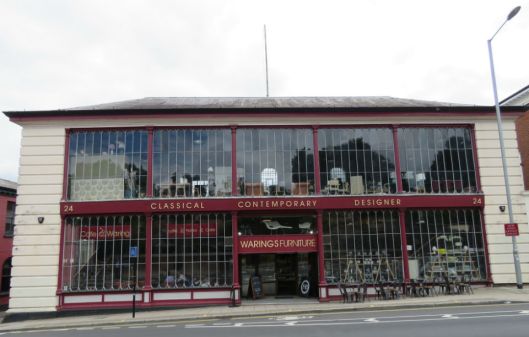
While the grander C19th public buildings tended to adhere to the binary choice between  Classical or (particularly in the north of England) Gothic styles, the popularity of Joseph Paxton’s Crystal Palace of the 1851 Great Exhibition introduced a further option. Cast-iron was cheap and strong and, being able to support large expanses of glass on thin glazing bars, opened up new possibilities in which brick and stone were no longer the major players. In 1863, Holmes and Sons – who manufactured and sold agricultural machinery – built this showroom on Rose Lane. Now it is known as Crystal House and home to Warings furniture store.

warings.jpg

The elegant facade of Crystal House (1863) – a great favourite of mine. 

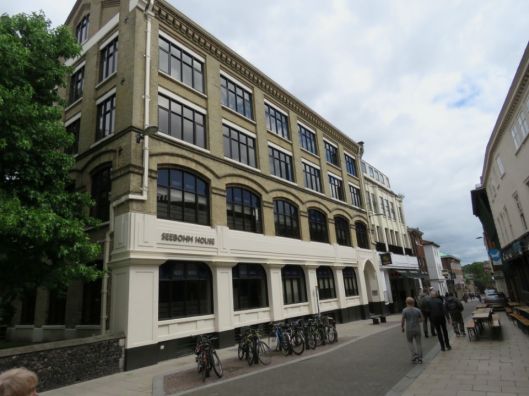
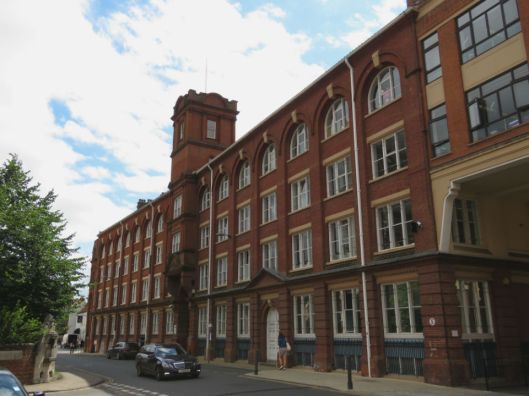
Haldinstein’s began making shoes in the early C19th and up until the early 1960s their Boot and Shoe Manufactory occupied seven blocks of buildings between Queen Street and Princes Street [1, 1a]. In the 1930s the firm went into partnership with the Swiss shoe company Bally but by the time shoe production stopped in 1999 only Bally remained [1]. The building at 2-4 Queen Street was renamed Seebohm House and now contains several businesses. The factory is dated ‘1872’ on the rain heads and, like Edward Boardman’s Colegate shoe factory of the same period (1876, see further below), is distinctly ‘modern’ and quite unlike Gothic Revival buildings of that period. However, the building does not appear to have been listed as one of Boardman’s despite his offices being only a few yards further down Queen Street in Old Bank of England Court.

Bally.jpg

The last remnant of the Haldinstein and Bally factory at 2-4 Queen Street 

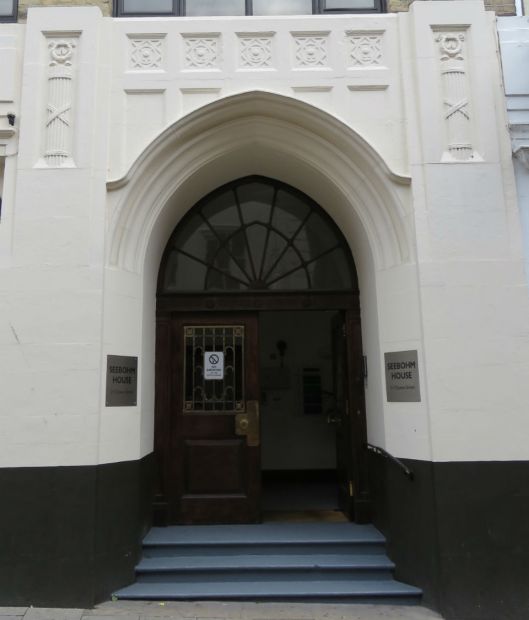
While the upper floors appear to look forward to C20th modernism – rejecting Neo-Gothic and Classical motifs – the appearance of the Gothic arch at the entrance is confusing and backward looking. The door grille, on the other hand, appears to anticipate the  Art Deco period.  Seebohm House2.jpg

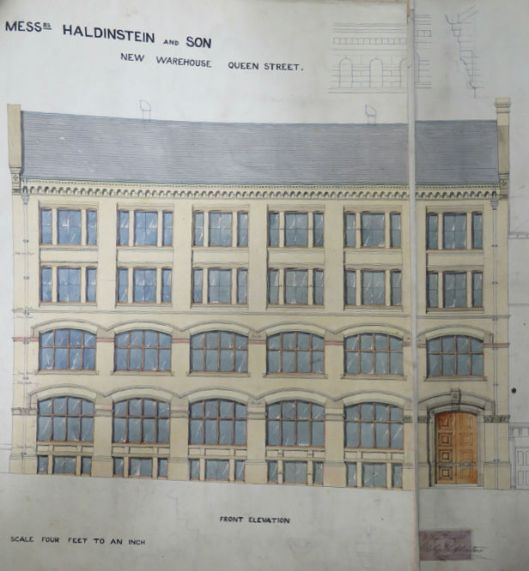
Clarification lies in the Norfolk Record Office whose files reveal that Boardman did design the Haldinstein building. His original plan shows that the doorway shared the same  shallow (and decidedly non-Gothic) arch as the ground and first floor windows. The files also contain other plans by the Boardman practice, dated June 18th 1946, for “Proposed Alteration to Ground Floor”. These relate to a reorganisation of rooms but since this was the year that  George Haldinstein sold his 51% share to Bally [1] it strongly suggests that the Gothic entrance was a post-war addition as was the ground floor’s patterned stucco .

Haldinstein_Bldg3.jpg

Boardman’s plan for Haldinstein’s Queen Street factory, with Philip Haldinstein’s signature over the sixpenny stamp. Note the original door and its surround. (c) Norfolk Record Office BR35/2/23/10/1-43

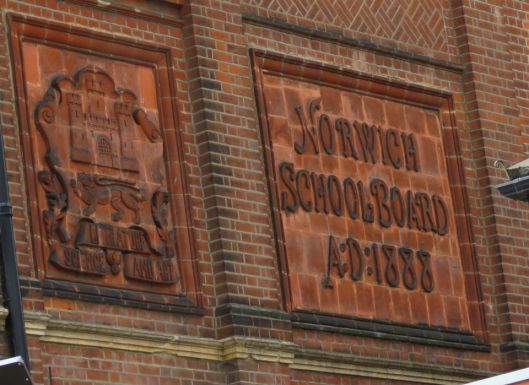
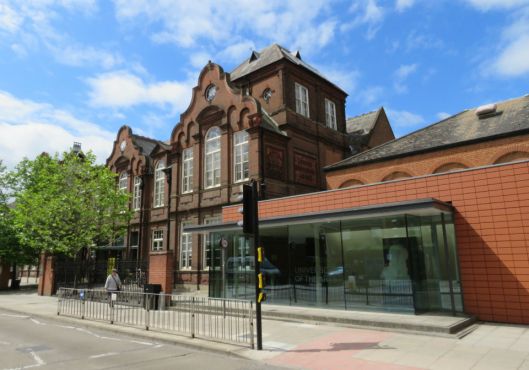
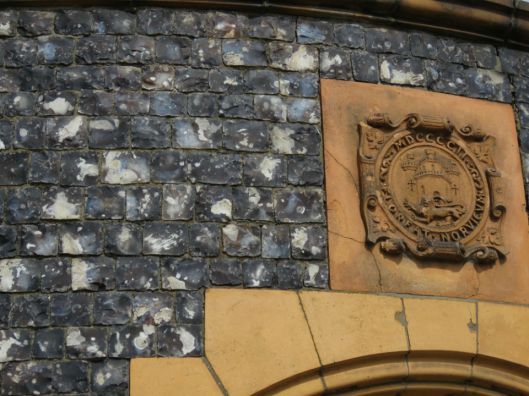
In 1870, Foster’s Elementary Education Act decreed that towns would build Board Schools in which the teaching of religion was to be strictly regulated [3]. Funded by the local rates these were amongst the first public institutions to be open to both sexes. Thousands of such schools were built throughout the country. For Norwich’s own Board School in Duke Street,  JH Brown designed a Higher Grade School that was opened in 1888. It was built by J Youngs and Sons (now a part of the RG Carter Group).

Duke St School plaque_1.jpg

The Norwich Board School in Duke Street with the city’s coat of arms to the left, surmounting “Literature, Science and Art”.

Probably following London’s influential board schools the Duke Street school was built in the contemporary and  progressive Queen Anne Revival style (see previous post). The school therefore has the Flemish, high-gabled silhouette with small-paned upper lights and tall casement windows typical of many of this country’s schools [3]. Recently, the building was extensively refurbished by the Norwich University of the Arts – not a major leap from its original purpose but a reflection of current trends in higher education.Duke St School.jpg

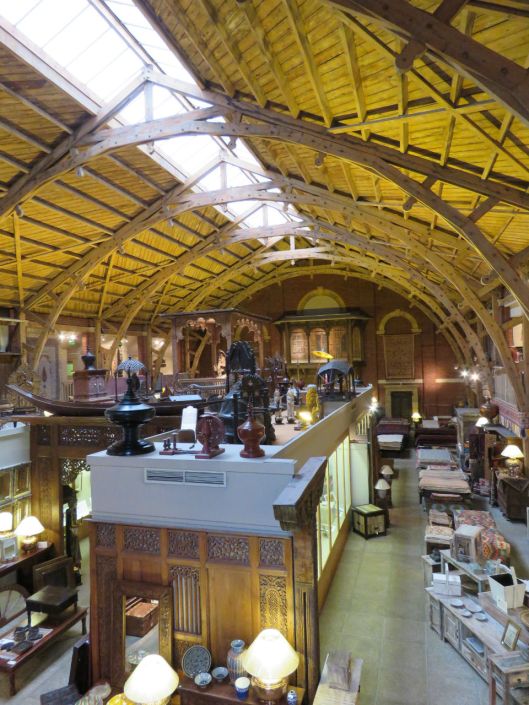
Counterbalancing the image of the Victorians’ high moral purpose is the former skating rink in Bethel Street, where fun could be had by gaslight. Built as a roller-skating rink in 1876 it was then used for ten years (1882-1892) by the Salvation Army as their Citadel (see previous blog). The Citadel was entered from St Giles Street via the iron gates adjacent to the Army’s present building that was once Mortimer’s Hotel. I remember the skating rink towards the end of its 100 year occupancy by Lacey and Lincoln, builders’ merchants, before it was refurbished by the present owners in the 1980s. Now, Country and Eastern  (below) is a spectacular eastern bazaar that – reflecting the owners’ interest in oriental culture – also contains a small museum of South Asian arts and crafts.

country and eastern.jpg

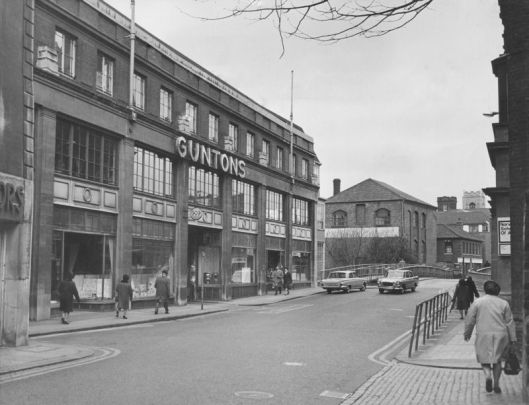
This factory-like building in St George’s Street was constructed in 1914 as premises for Guntons builders’ and plumbers’ merchants. At one time it was owned by Gunton and Havers – the latter being a relative of the actor Nigel Havers. Now the Gunton Building is another addition to the Norwich’s expanding University of the Arts.Guntons Building.jpg

c13129 nch gunton havers 1967.jpg

The Gunton & Havers building in St Georges Street, Norwich 25th March 1967 (c) Archant/EDP Library

St Giles House (41-45 St Giles Street) – one of George Skipper’s big, Baroque and slightly overblown buildings – should dominate the street but it is set parallel to the road and difficult for the passerby to see face-on. It was built in 1904-6 for the Norwich and London Accident Insurance Association just after the opening of another of Skipper’s projects, Surrey House, for rivals Norwich Union: in fact, it has been described as “the Norwich Union in miniature” [4]. Its first rebirth was as a telephone exchange and is sometimes referred to as Telephone House. George Plunkett described it as “Municipal offices until 1938. Education and Treasurer’s departments.” Now it is a luxury hotel, St Giles House.St Giles Hotel.jpg

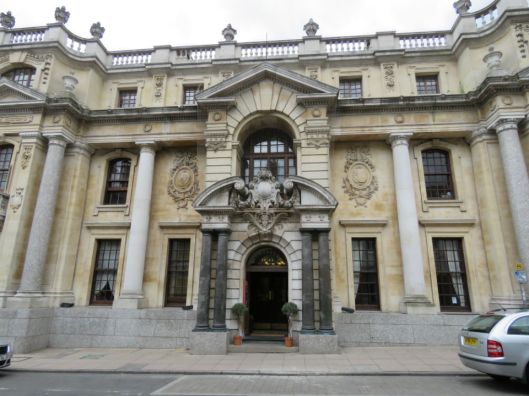
In 1770-5, the Norfolk and Norwich Hospital was built just outside St Stephen’s Gate by the architect William Ivory. However, the facade of the old hospital that we see today was the result of Edward Boardman’s makeover a century later. His pedimented Dutch gables and rather municipal clock tower do make it look like a town hall [4]. In 2001 a new hospital was built in the suburb of Colney and the old hospital was converted to apartments.NN hospital.jpg

Another building designed by Boardman architects (father EB and son ETB) was for the Norwich Electric Light Company. In 1892 they converted the old Duke’s Palace Ironworks to a site where coal-fired boilers generated electricity that, by 1913, lit over 1750 street lamps around the city. Only 13 years later, superseded by the power station at Thorpe, the over-worked Duke Street site was converted to offices [5]. Now the offices are used by car-sharing company Liftshare.Duke St electric offices2.jpg

The offices of the electricity works are dated 1913. Norwich City’s coat of arms is above the door.

Duke St 4 Electricity works floodlit [1633] 1937-05-13.jpg

Decorations on the floodlit electricity works celebrating the coronation of George VI (1937) (c) George Plunkett

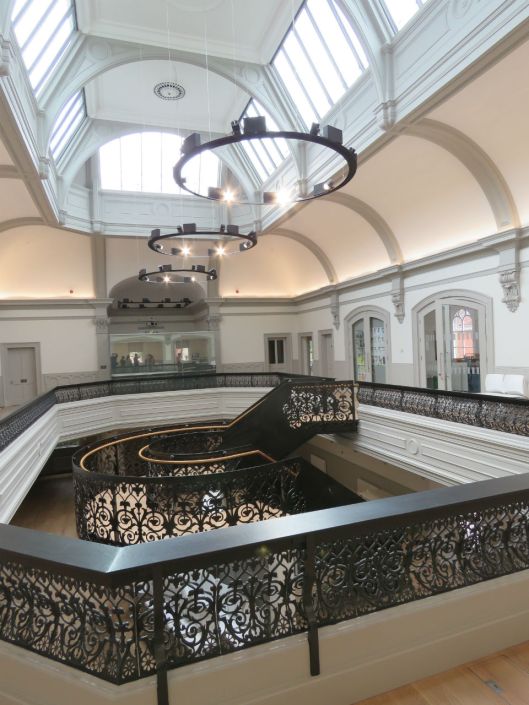
Prolific Boardman had more effect on the appearance of Norwich than perhaps any other architect. His name lives on in Boardman House – the Church Rooms he designed along with the Congregational Chapel in 1879. In 2015 this building in Princes Street was imaginatively refurbished by Norwich University of the Arts to house the School of Architecture.Church Rooms.jpg

inside church rooms.jpg

Boardman House, interior. 2016.

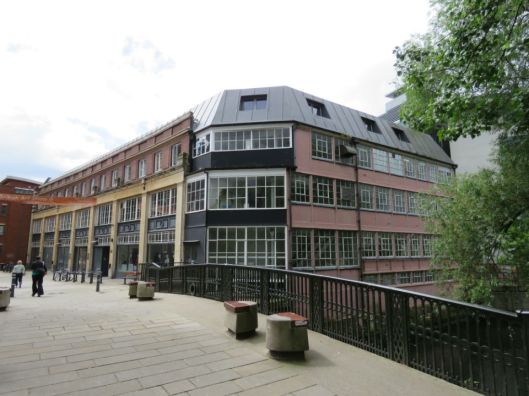
In the latter part of the C19th Edward Boardman spearheaded Norwich’s expansion, from church rooms to factories – the very diversity of his projects underlining “his aesthetic flexibility”[6]. Howlett and White’s shoe factory (later the Norvic Shoe Co Ltd) became the largest in Britain and between 1876 and 1909 Boardman & Son designed various additions for the expanding enterprise [1]. By the 1930s Norvic occupied virtually all of the land from the river to Colegate and from Duke Street to St George’s Street. But in 1981 the business was in receivership after being asset-stripped of its shops after a takeover in the 1970s [1]. Now the former factory contains offices, apartments, The Last Winebar (a punning reference to its previous incarnation) and, since 2014, The Jane Austen Free School.

Norvic.jpg

Part of Howlett & White’s ‘Norvic’ shoe factory. Edward Boardman designed right of the tower in 1876 and left in 1895.

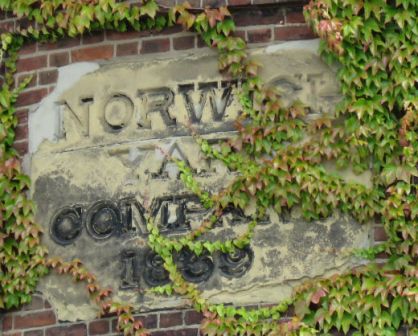
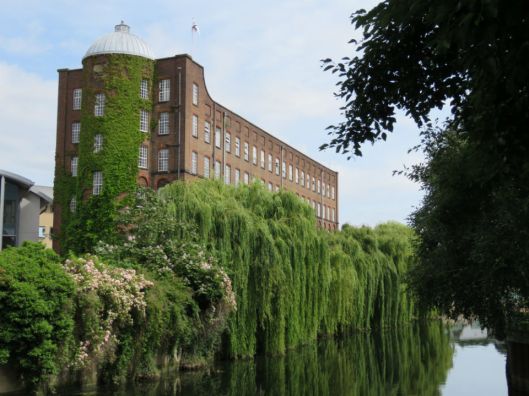
In the face of competition from mills in the north of England, the mayor Samuel Bignold (son of the founder of Norwich Union) tried to bolster Norwich’s textile trade by establishing the Norwich Yarn Company. The company’s plaque – dated 1839 – can just be seen below the dome of St James’ Mill,  built on the site of a C13th Carmelite monastery.  Norwich Yarn Co.jpg

Ian Nairn of The Observer, who could be fierce in his architectural reviews, loved this building and called it “the noblest of all English Industrial Revolution Mills” [4]. Its engine-powered looms were not, however, sufficient to avert the threat to Norwich weaving. St James’ Mill was subsequently used by the chocolate manufacturers Caley’s and, until a few years ago, as Jarrold’s Printing Works. Currently, the mill houses private offices. Visit the John Jarrold Printing Museum,which is situated in a riverside building behind St James Mill.Jarrolds Mill.jpg

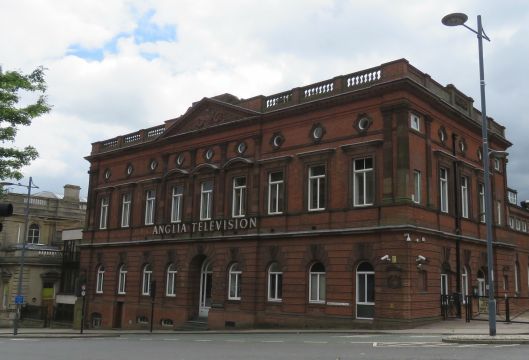
As a county town Norwich benefitted considerably from the agricultural wealth of the surrounding countryside for which it was the trading centre. In 1882 this was recognised in the inauguration of the Norfolk and Norwich Agricultural Hall, designed for once by an architect other than Edward Boardman: JB Pearce. The opening ceremony was performed by the Prince of Wales (later Edward VII) as Patron of the wonderfully named Norfolk and Norwich Fat Cattle Show Association [7]. It is not recorded what the cattlemen thought of Oscar Wilde’s lecture on “The House Beautiful”given at the Hall some two years later. The building now houses Anglia TV’s offices and studios.Agriclrl Hall.jpg

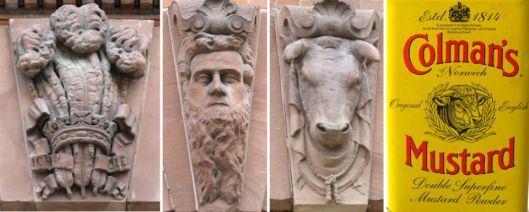
Pearce’s sombre public building is made of local red brick faced with a deep red and alien Cumberland sandstone [4]. Further decoration is provided by moulded Cosseyware (see previous post) from Guntons’  brickyard in nearby Costessey. The keystones above the ground floor doors and windows  are decorated with heads or emblems. The Prince of Wales feathers refer not only to the prince himself but to the adjoining Prince of Wales road that connects Thorpe railway station with the former cattle market on Castle Hill. One of several heads is shown below; it is evidently a portrait but the identities of these agricultural worthies are no longer known. The reference to the bull’s head seems more straightforward but since JJ Colman was Vice-Chairman of the Agricultural Hall Company might this also allude to what had been Colman’s trademark since 1855? [8].heads_use.jpg

Sources

  1. Holmes, Frances and Holmes, Michael (2013). The Story of the Norwich Boot and Shoe Trade. Pub: Norwich Heritage Projects http://www.norwich-heritage.co.uk  Ref 1a: Burgess, Edward and Wilfred (1904). Men Who Have Made Norwich. 
  2. http://www.georgeplunkett.co.uk/Norwich/Industrial%20Architecture/Mountergate%20Coop%20shoe%20factory%20wall%20[7530]%201998-03-01.jpg
  3. Girouard, Marc (1984). Sweetness and Light: “Queen Anne” Movement, 1860-1900. Yale University Press.
  4. Pevsner, Nikolaus and Wilson, Bill (1997). The Buildings of England. Norfolk 1. Yale University Press.
  5. http://www.heritage.norfolk.gov.uk/record-details?MNF61834-Duke’s-Palace-Ironworks-and-Norwich-Electric-Lighting-Company&Index=53786&RecordCount=56542&SessionID=071f84aa-3266-4621-85cc-d97a40c30c46
  6. http://hbsmrgateway2.esdm.co.uk/norfolk/DataFiles/Docs/AssocDoc6824.pdf
  7. http://www.heritagecity.org/research-centre/industrial-innovation/agricultural-hall.htm
  8. http://www.mustardshopnorwich.co.uk/history-of-colmans-pgid15.html

Thanks. For permission to reproduce images I thank Jonathan Plunkett from the Plunkett archive; to Clare Everitt of Picture Norfolk  and to Siofra Connor of the Archant/EDP Library. I am also grateful to  Frances Holmes, Philip Tolley and Diana Smith for their assistance.


Flint buildings

Tags

, ,

“Very flat, Norfolk”. (Noel Coward. Private Lives)

“No place in England was further away from good building stone”. (Stefan Muthesius [1])

“The geology of Norfolk in eastern England largely consists of … sedimentary rocks of marine origin…” [2]

These three statements are, of course, related. Much of Norfolk is based on chalk derived from the skeletons of countless marine organisms that rained down upon the seabed some 60-95 million years ago when the sea level was much higher. In places, these layers of chalk are 300 metres (1000 feet) deep [3]. Quarry stone is therefore hard to find.

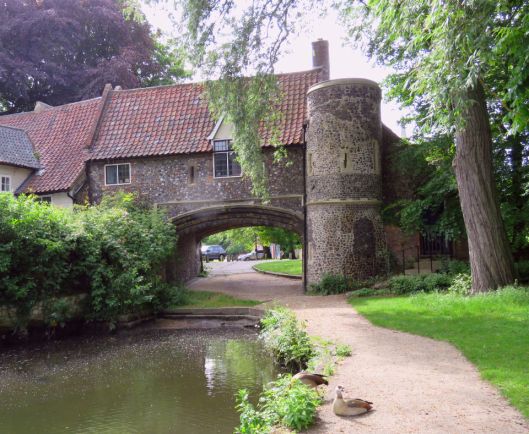
To build Norwich Cathedral the Normans brought in limestone from Caen in Normandy. Pulls Ferry (below), which was built later, is the medieval watergate that marks the route by which the stone was diverted from the River Wensum to the building site. However, despite this logistical triumph the core of the cathedral was still based on flint for the ashlar limestone is just a facing [2A].

Pulls Ferry Norwich_A.jpg

Pulls Ferry, Norwich, which marks the entrance by which building stone was shipped into the cathedral precincts

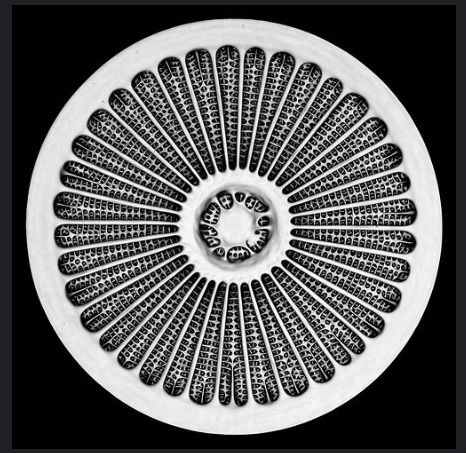
Flint and chalk are found together. Skeletons of some marine organisms provided the calcium carbonate that formed the chalk strata: others  – like this diatom – provided the silicon dioxide (silica) from which the nodules of flint were formed. I estimate this diatom to be ca. 15-20 millionths of a metre in diameter, giving some idea of the staggering number of organisms required just to make one flint nodule, let alone the blizzard of marine life needed to deposit 300 metre layers of chalk.

Arachnoidiscus Zeiss.jpg

Arachnoidiscus sp.– a diatom (c) Zeiss Microscopy

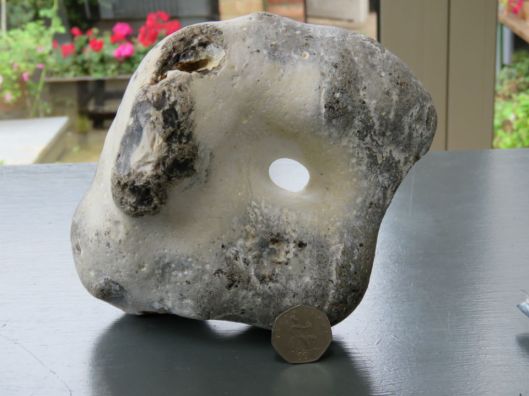
It is thought that holes formed by sea creatures burrowing through the gelatinous ooze at the bottom of the seabed provided the right sort of chemical environment for dissolved silicon – released from exoskeletons – to recrystallise, growing the irregular flint nodules around the holes [4].

flint.jpg

A hole through a flint nodule – a probable reminder of the burrow made by a Cretacean sea creature.

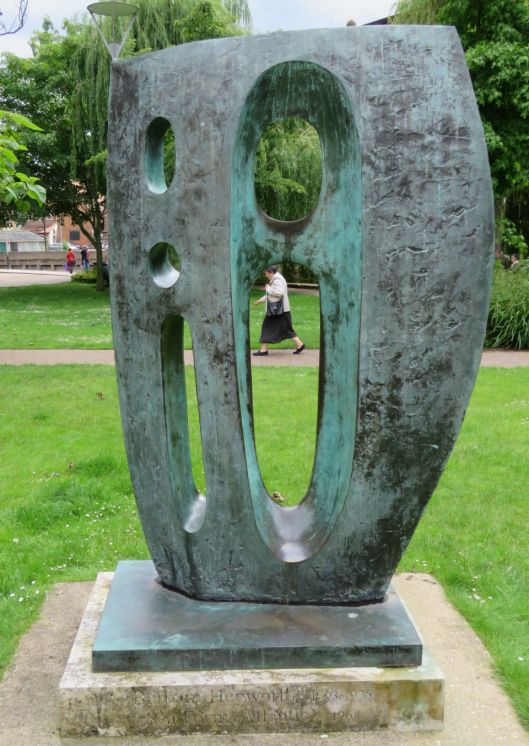
In a wonderful piece of inorganic chemistry in action, this metamorphosis of sludge on the seabed produced flint nodules. Their ‘organic’ shapes fascinated C20th artists – as did the holes. In the 1930s, Ben Nicholson, Henry Moore and Barbara Hepworth holidayed at Happisburgh on the Norfolk coast [5]. In 1931, apparently based on the Happisburgh flints, Barbara Hepworth created  one of the first sculptures with a hole through it for non-representational purposes (Pierced Form. Lost in the war). And Henry Moore’s sculptures are famously “lumpy and bumpy and sometimes have holes right through them.”

Hepworth statue Norwich.jpg

Barbara Hepworth. Sea Form (Atlantic) 1964 at St George’s Green (outside Norwich Playhouse)

One idea why there are so many round-towered flint churches in East Anglia is that the lack of stone to make the quoins or cornerstones meant it was easier (and cheaper) to build circular towers from knobbly flints set in mortar [6] . Another idea is that the Anglo-Saxons introduced round towers as protection against the Danes but this seems to have been discredited by the finding that many towers are post-Norman Conquest [7]. Geology does seem to provide the answer for while continental invaders spread far further than Norfolk only five round tower churches escaped the confines of the East Anglian chalklands compared to the 126 made in Norfolk [6].

Norwich had one church for every week of the year and one pub for every day.

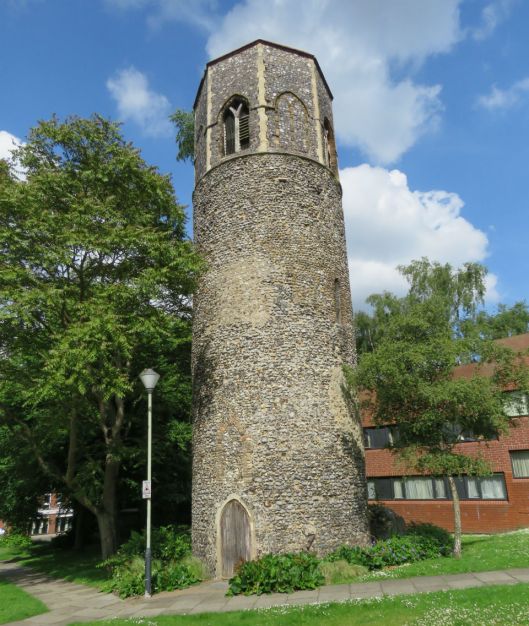
The actual number of churches appears to have been about 57, of which 31 are still in existence. I haven’t yet visited all the medieval churches but would guess that virtually all are built of flint – even the stone-clad St Peter Mancroft contains flint. However, not many of Norwich’s churches are round-towered. One was St Benedict’s church but this was bombed in the Baedecker raids of 1942 and only the tower, which is made of unknapped flint, survives.

St Benedicts Norwich.jpg

Only the tower of St Benedict’s church remained after the bombing of 1942.

St Benedict's south side from church alley [0140] 1934-06-28

St Benedict’s Church in 1934. (c) georgeplunkett.co.uk

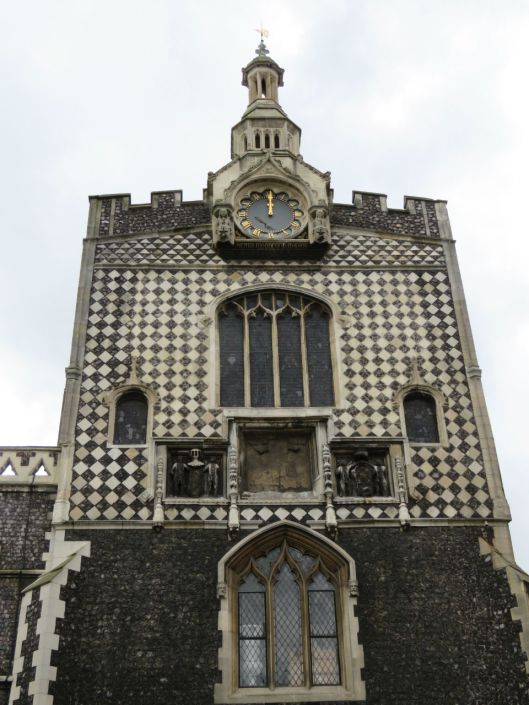
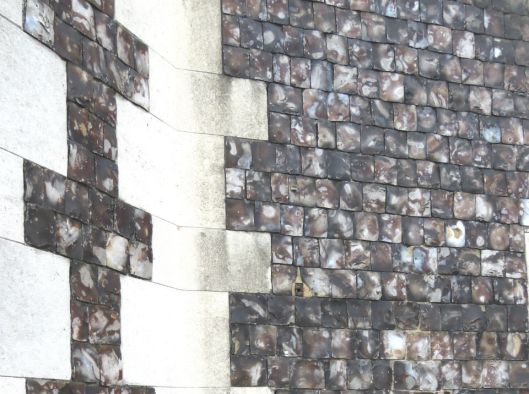
Well shaped flints occur on Norwich’s Guildhall, which is “the largest surviving medieval civic building in the country after London“[7]. It was built as a result of a royal charter of 1404 that gave the city the right of self-government. The east end (below) –  rebuilt in the C16th with a clock turret added in the C19th  – is a glorious example of diaper flushwork, where alternating diamonds of dark flint and light limestone form a smooth (i.e., ‘flush’) surface. The black and white chequerboard pattern may be a reference to the Guildhall’s use as an exchequer [8] in which a squared cloth was used for counting money.

guildhall norwich.jpg

East end of Norwich Guildhall C15th

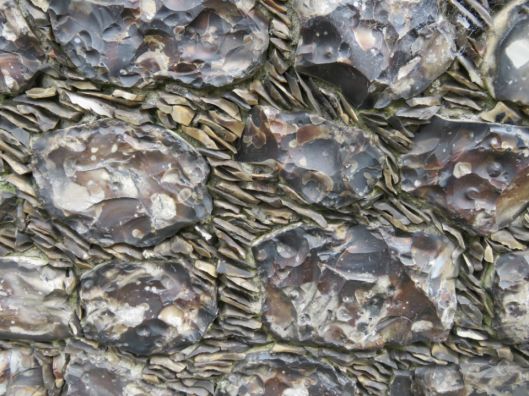
In places, the Guildhall walls contain unshaped stones surrounded by shims of flint – a byproduct of knapping. Pushing flakes into the spaces around the flints – or galetting – filled the gaps and protected the exposed mortar. The selection of flints that would leave large gaps seems to have been deliberate since it allowed swirls of galetting to become a decorative feature in its own right.

galleting flint.jpg

‘Decorative’ galetting on the Guildhall

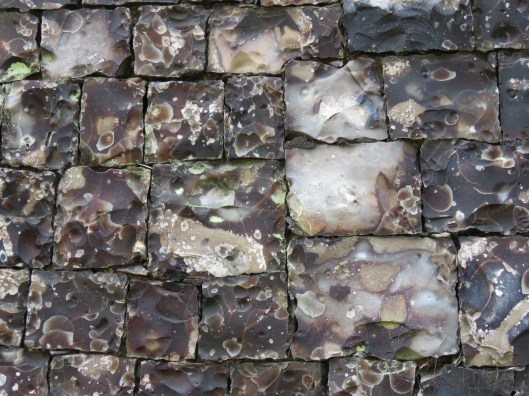
By contrast, parts of the east wall have been expertly squared up. Not only was the external face of these flints made smooth but four other sides were also square-knapped with such skill that the flints could be laid in regular courses without the need for galetting or, indeed, any visible mortar.

flint guildhall.jpg

Coursed flints on the east wall of the Guildhall

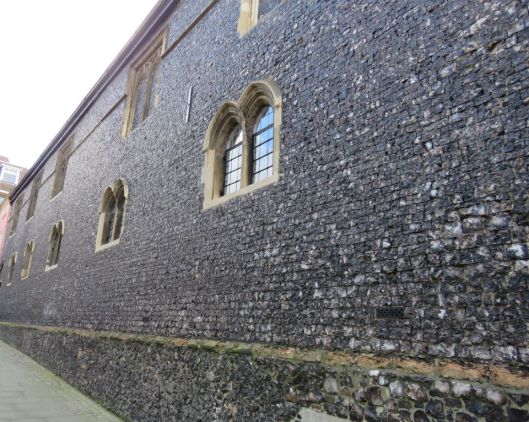
Another civic building famous for the quality of its square-knapped wall is the Bridewell, which was built about 1370 as a private house and became a prison for minor offenders  nearly 200 years later. It was named after St Bride’s Well, the first such institution in London.

Bridewell Norwich.jpg

North wall of the Bridewell, Norwich

The north wall of the Norwich Bridewell has claim to being “the finest specimen of faced flint work in the country” [9]. But the knappers seem to have been less constrained here by a requirement for perfect squareness. The square-knapping is not as precise as on parts of the Guildhall and the flints are of variable size. But this honesty with which a difficult material has been handled contributes to the beauty of the wall.Bridewell 2.jpgFlushwork  was a speciality of Norfolk and Suffolk and was at its most inventive during the Perpendicular Period (1330-1530) [7, 10]. St Michael (often contracted to St Miles) Coslany is a famously exuberant example.  The artist John Sell Cotman claimed that the flushwork on the south side was “one of the finest examples of flint work in the kingdom” [11]. Parts of the church were rebuilt in the C19th. Here on the east end, restored in the 1880s, the flushwork mimics the tracery in the Perpendicular-style window next to it. This fits the general rule that representational designs were made in stone with flint in-fills while non-representational examples were in flint on a stone background [10].
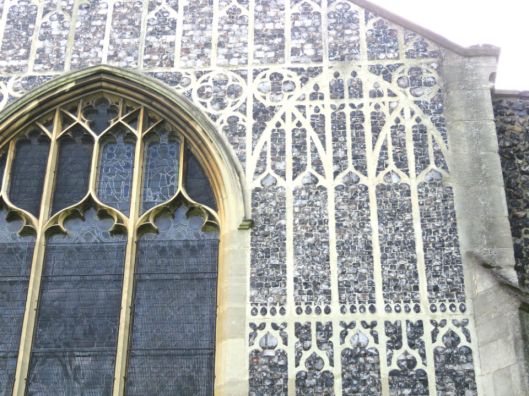
St Miles Coslany.jpg

Replica window motif at St Michael (Miles) Coslany

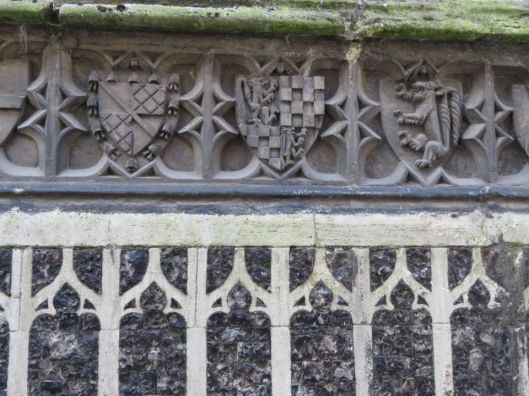
The church of St Andrew in St Andrew’s Street, Norwich, was completely rebuilt in 1506. It also has tracery flushwork but just as fascinating is the re-set frieze of shields beneath the chancel window  – the only survivor from the previous church [12].  These can be easily examined as you trudge up St Andrew’s Hill after leaving Cinema City. Kent and Stephenson [11] devoted an entire chapter to this frieze. Three of the thirteen shields (below) represent: the arms of Bishop Dispenser; Richard Fitzalan the Earl of Arundel; and possibly Thomas Mowbray who was later to become Duke of Norfolk.

st andrews flushwork.jpg

Tracery flush work beneath the chancel window of St Andrews. Above this is a frieze of shields inherited from the previous church.

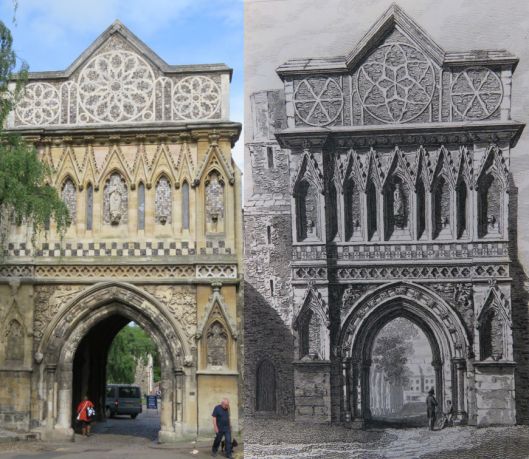
According to Stephen Hart [7] “the earliest positively datable example” of flushwork is on St Ethelbert’s gate of Norwich Cathedral (1316). The date is known with some certainty because of the events surrounding its construction. In 1272, conflicts between the cathedral and the citizens led to the torching of the Anglo-Saxon church of St Ethelbert together with the main gate to the monastery. Thirteen citizens were killed in the riots and thirty  rioters were hanged [13]. (The man fighting a dragon in the spandrels above the gate may refer to this conflict – see 13A). The king decreed that the citizens should rebuild St Ethelbert’s gate. In 1815 this C14th gateway was restored by William Wilkins  [7, 11] but although he generally followed the original pattern of three circular motifs Wilkins made significant changes to the flushwork. These circles are referred to as replica ‘rose windows’ [7] or ‘flushwork wheels’ [13A].

ethelbert old n new.jpg

R Cattermole’s engraving of St Ethelbert’s Gate to Norwich Cathedral (right) [14] shows that Wilkins’ 1815 restoration modified the pattern of the flushwork on the parapet. (Courtesy of Norfolk Heritage Centre. Norfolk County Council Library & Information Service).

Another decorative technique, proudwork, was in contrast to the flatness of flushwork [7]. St Gregory’s provides a rare example in Norwich. In this case, the ashlar in tracery design stands proud of the flint.

St Gregorys Norwich.jpg

Proudwork on the single-stage parapet of St Gregory’s church tower

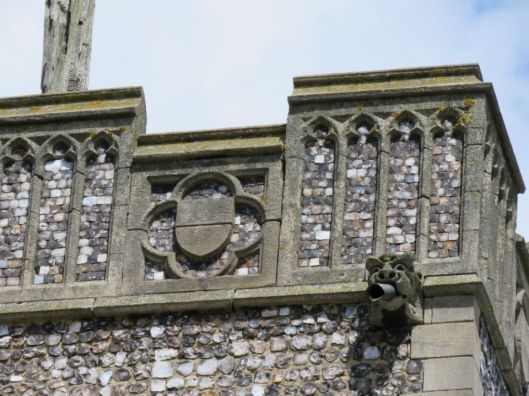
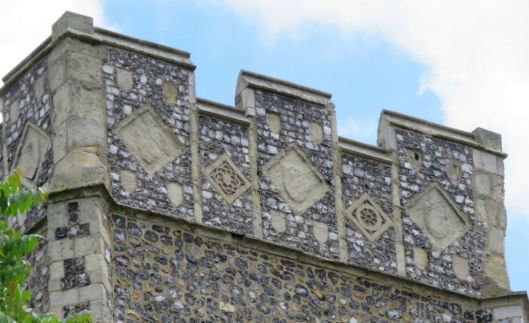
It should not be surprising that Norwich, as a major centre of East Anglian flint-building, had its own brand of flushwork. In the Norwich style [7], vertical stone strips divided the flintwork beneath parapet crenellations into zones into which stone motifs were inset. This can be seen on the tower of St Clement’s Church in Colegate (near Fye Bridge), on which lozenges are decorated with blank shields indicating that God is shielding the building. The smaller lozenges appear to be recent restorations.

St Clements Norwich.jpg

St Clement’s Colegate

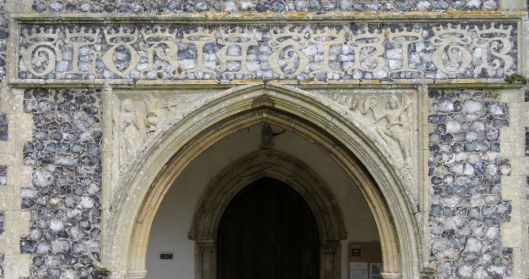
In serial flushwork, letters or motifs are repeated in a frieze. A good example can be found  at All Saints, East Tuddenham – a few miles west of Norwich. Above the porch is the inscription in Lombardic script (Italian lettering of the early Middle Ages): GLORIATIBITR  (Gloria Tibi Trinitas, or ‘Glory be to you Oh Trinity’ [15]). The letters are crowned when referring to god, saints and martyrs but never donors [16].

East Tuddenham.jpg

Serial flushwork at East Tuddenham made of crowned Lombardic lettering

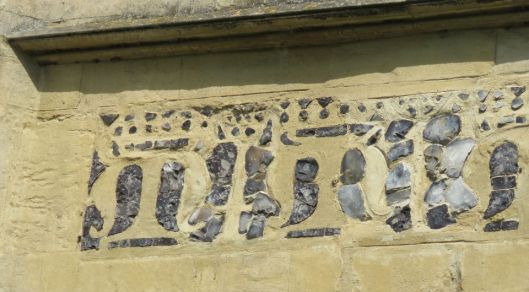
Seen here on the porch of St Michael at Plea (below) the Norwich workshop gave St Michael a crowned M as well as a crowned sword. The crowned sword can be seen following the first M but “over-zealous pointing” seems to have obliterated subsequent swords [16].

St Michael at Plea Norwich.jpg

St Michael at Plea, Norwich. Crowned ‘M’ and (one) sword in serial flushwork above porch.

In 1671 the diarist John Evelyn wrote that Sir Thomas Browne of Norwich had told him that “they had lost the art of squaring the flints, in which they so much once excell’d, and of which the churches, best houses, and walls, are built...”[11]. The quality of the Victorian restoration at the east end of St Miles Coslany provided one example that the art of square knapping had not been lost; this  men’s lavatory of 1892 is another – an example of a different kind of flushwork.

Toilet Blackfriars.jpg

Men’s lavatory, St Andrew’s Plain, no longer in use

close-up toilet.jpg

Square-knapped flint, dated 1892

Sources

  1. Muthesius, Stefan. (1984). Norwich in the Nineteenth Century. Ed, C. Berringer. Chapter 4, pp94-117.
  2. https://en.wikipedia.org/wiki/Geology_of_Norfolk                                                              [Ref 2Ahttp://nhbg.org.uk/getmedia/952a6b94-eced-411a-bb63-b508d00f6220/Newsletter-No-23-web.aspx].
  3. http://www.discoveringfossils.co.uk/flint_formation_fossils.htm
  4. http://www.northfolk.org.uk/_cretaceous%20leaflet.pdf
  5. http://www.museums.norfolk.gov.uk/view/NCC081889. This links to excellent notes by Nicholas Thornton on an exhibition held in Norwich Castle Museum and Art Gallery, in 2009: Moore/Hepworth/Nicholson. A nest of gentle artists in the 1930s. 
  6. Round Tower Churches Society. http://www.roundtowers.org.uk/about-round-tower-churches/
  7. Hart, Stephen. 2000. Flint Architecture of East Anglia. Giles de la Mare Pub Ltd. 
  8. https://en.wikipedia.org/wiki/Norwich_Guildhall
  9. http://www.heritage.norfolk.gov.uk/record-details?MNF607-Norwich-Bridewell-Museum-Bridewell-Alley&Index=603&RecordCount=56881&SessionID=81a31ae1-509a-4c77-9cbe-4c9325a00b0d
  10. Talbot, Margaret. 2004. Medieval Flushwork of East Anglia and its Symbolism. Poppyland Publishing.
  11. Kent, Arnold and Stephenson, Andrew. (1948). Norwich Inheritance. Pub: Jarrold and Sons Ltd., Norwich.
  12. http://www.cvma.ac.uk/publications/digital/norfolk/sites/norwichstandrew/history.html
  13. https://norwichchurches.files.wordpress.com/2016/06/st-ethelberts-chapel-and-the-riots-of-1272.pdf.  [Ref 13A Summers, Dominic John (2011) Norfolk Church Towers of the Later Middle Ages. PhD UEA].
  14. Britton, John (1816). The History and Antiquities of the See and Cathedral of Norwich. Pub: Longman et al. London.
  15. http://www.norfolkchurches.co.uk/easttuddenham/easttuddenham.htm
  16. Blatchly, John and Northeast, Peter (2005). Decoding Flint Flushwork on Suffolk and Norfolk Churches.

Thanks to Jonathan Plunkett for permission to use an image from the George Plunkett archive http://www.georgeplunkett.co.uk. I also thank the Norfolk Heritage Centre for their help.

Entrances and Exits (Doors II)

Tags

, , , ,

In the previous post I covered Kent and Stephenson’s [1] selection of twenty Tudor-to-Georgian doorways still standing after the war (1948). In walking around Norwich I photographed many more doorways; here is my own selection of twenty (plus one from Great Yarmouth).

In 1871 Thomas Jeckyll, a leading light in the Japanese-influenced Aesthetic Movement, designed an extension for High House, Thorpe St Andrew. The brackets supporting the canopy were carved in a loose Jacobean Revival style [2] but perhaps of greater interest to Jeckyllites are the terracotta panels above the door – probably of Cosseyware from Gunton’s Brickyard in nearby Costessey (covered in a recent post).  The rectangular panel contains the initials of client Thomas Birkbeck while Jeckyll’s own initials are transformed in a Chinese-inspired roundel to the right.

High HouseThorpe_A.jpg

No 1 High House, Thorpe St Andrew, Norwich

This house below was designed in Queen Anne Revival style around the turn of the C19th/20th.  Like other Arts and Crafts houses in the city built in the QAR style this house has characteristic smaller panes at the tops of the windows. However, this house is distinguished by the quality of its doorway with hooded canopy carried on carved brackets and slim columns.

34NewmarketRd_A.jpg

34 St Stephens Road, Norwich

Until recently, the magnificent shop front in Upper St Giles belonged to an unmodernised chemist’s. It dwarfs the small Georgian-style doorway to the side whose mystery is enhanced by the purple paintwork  (Purpleheart 188 by Little Greene).

UpperStGiles_A.jpg

76A Upper St Giles, Norwich

The frontage for the Salvation Army on St Giles Street may appear to be hewn from granite but in reality is composed of Coade Stone – a weather-proof ceramic invented by Eleanor Coade (b 1733). The rusticated appearance is produced by cut-back joints and the worm-like tracks on the vermiculated surface (vermiculi = little worms; vermicelli = tastes like little worms). The head on the keystone is thought to be “classically-inspired”; suggestions include Bacchus or perhaps a Greek philosopher.

SalvnArmyStGiles_A.jpg

Salvation Army. 36 St Giles Street, Norwich

The frontage of the Citadel was originally built in 1892 as Mortimer’s Hotel. Around 1900 it was known as the Opera House Hotel probably because it was used by performers from the Grand Opera House opposite (now the site of St Giles car park).

St Giles' St 34 former Mortimer's Hotel [5278] 1969-08-16.jpg

34-36 St Giles Street, Norwich (c) George Plunkett Archive Photographed 1969. The gates beneath the white-painted single bay to the left were the entrance to their Citadel before the Salvation Army also bought the five-bayed Mortimer’s Hotel .

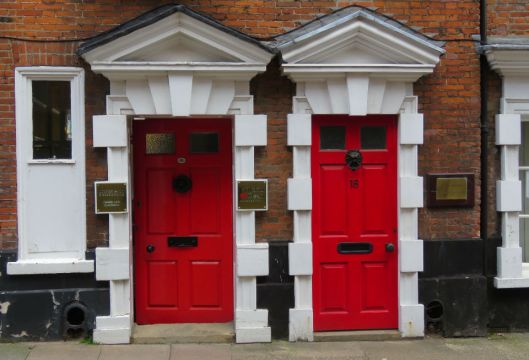
Princes Street is full of gems. At first glance Numbers 16 and 18 appear to be identical twins but 18 is slimmer. The alternating blocks on the architrave to the sides of the doors, and the blockiness of the wedge-shaped voussoirs and keystone above, are typical of the so-called Gibbs surround.

Hungate_B.jpg

16-18 Princes Street, Norwich.

This fine, painted house is at the bottom of Cow Hill at the junction with Pottergate. The Georgian doorway, with its simple triangular pediment supported on scrolled brackets, is – in Norfolk dialect – seriously ‘on the huh‘. Of course, this is part of its considerable charm.

Pottergate_A.jpg

95 Pottergate

Number 168 King Street is part of a row of C17 houses that formerly contained the Ship Inn. Above the partly blocked alleyway is a lintel on which is carved ‘Princes In’. It is thought this was re-cycled from the inn of that name that once stood in Princes Street, off Tombland.

KingSt_A.jpg

168 King Street

The building below was once the home of John Harvey who, over the late 18th/early 19th centuries, became Sheriff, Mayor and High Sheriff. Norwich was famed for its shawl weaving, which is said to have been introduced to the city by Harvey in 1791. The rear of the building has a fine central bay whose three floors are rhythmically related. The ‘blind’ arch of the three-part Venetian door on the ground floor is mirrored in the Venetian window above (where the arched central light is typically the taller of three), and is topped by the semi-circular Diocletian window on the third floor.

HarveyHouseStGiles_A.jpg

Gladstone House (rear), 28 St Giles Street

The rear doorway of Gladstone House (above) is – with the exception of the Venetian lights – relatively plain, with scrolled Ionic capitals supporting an open pediment. The Georgian front door, opening onto St Giles Street, is more imposing (below). The open base of the triangular pediment allows the intrusion of a nine-petalled fanlight of identical design to the one illustrated in the previous post for Thomas Ivory’s 13 All Saints’ Green. The break in the base of the open pediment leaves two floating parts to the cornice, which are carried on consoles; these console cornices are, in turn, supported by two fluted and banded columns, the whole being more decorative than the door to the rear.

GladstoneHseStGilesFront_A.jpg

Gladstone House (front), 28 St Giles Street

IvoryFanlight2.jpg

13 All Saints’ Green. Identical to the fanlight on Gladstone House

In about 1330, John Page built a hall house in King Street; one hundred years later the wool merchant Robert Toppes remodelled it to make the entire first floor his trading hall [3]. Then it was known as Splytts, now we know it as Dragon Hall. Toppes became a man of influence in the city. To ensure his spiritual wellbeing, or perhaps to celebrate his status as mayor and member of parliament, Toppes sponsored the stained glass ‘Toppes Window’ in the east end of St Peter Mancroft. My first post showed Toppes and female members of his family depicted in the donor panel of this medieval masterpiece. Part of Toppes’ C15th remodelling of Page’s house involved adding an “expensive stone surround” to the C14th ogee doorway [3], explaining the ‘door-within-a-door’ below.

DragonHall_A.jpg

Dragon Hall, Norwich

The fanlight at 25 St George’s Street is a reminder of times when the word ‘cosie’ could be used unironically. The lettering, sentiment and use of stained glass suggest a date in the early part of the C20th.

CosieCafe_A.jpg

25 St George’s Street, Norwich

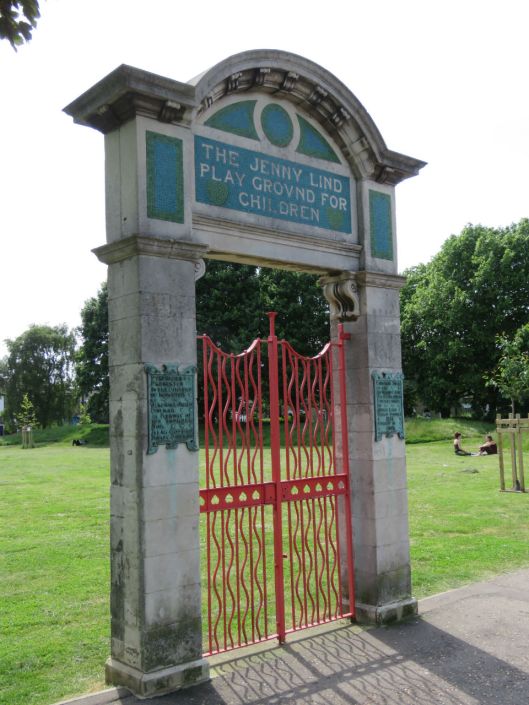
Jenny Lind (‘The Swedish Nightingale’) was enormously popular in the mid C19th. The profits from three concerts she gave in Norwich helped provide for an infirmary for sick children. The original playground in Pottergate was bombed in the Second World War while children were in the bomb shelter yards away. In 1972 the 70-year-old gate was moved to a new playground in Union Street near the Norfolk and Norwich Hospital. The owner  of the nearby Littlehaven Coffee Co remembers being one of a line of children recovering in bed after having their adenoids taken out in the Jenny Lind Wing. But the re-siting of the hospital from Newmarket Road to Colney in 2001 left the gateway marooned.  Still, it is a fine monument. The classically-influenced stone arch is decorated with blue and green mosaic; the Art Nouveau gates, complete with ‘spade’ cut-outs, were made by Boulton and Paul of Norwich – another target of German bombs.

JennyLindPlygrnd_A.jpg

Jenny Lind gateway 2016

Jenny Lind Pottergate.jpg

The Jenny Lind gate when in Pottergate 1902-1972. ©Picture Norfolk

Another commemorative arch is at the entrance to the James Stuart Garden at Recorder Road/St Faith’s Lane, off the bottom of Prince of Wales Road. The gardens were laid out by the Norwich architect Edward Boardman in 1922 in memory of James Stuart, Privy Councillor, of Carrow Abbey (d 1913). It would have been built sooner but for the First World War.  The coat of arms on the fascia of the memorial gate is that of the Stewart clan; the Scottish connection is underlined by the thistle in the left-hand spandrel, echoed by the English rose on the opposite side. The renaissance style and use of botanical swags suggest this to be a late example of the English Domestic Revival style.

JamesStuartGarden_A.jpg

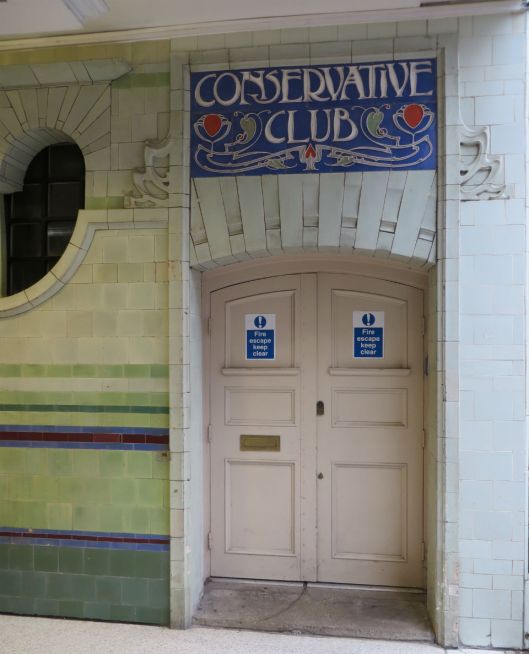
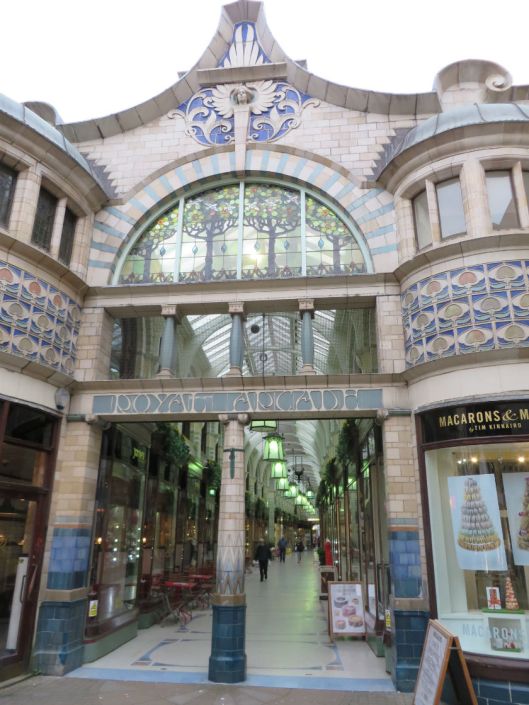
Politics aside, this is one of my favourite doorways, not for the door itself – which is unexceptional – but for the Art Nouveau surround which elides into the magnificent Royal Arcade around the corner, designed by George Skipper. The Parian Ware tiles were designed by W J Neatby at Doulton’s Lambeth Pottery.

Neatby ConClubNorwich_A.jpg

Royal Arcade, Norwich

Despite stumbling around Norwich for many years I had never come across Crown Road, behind the Agricultural Hall, off Market Avenue. The proximity to the former cereal-trading hall seems to account for the name – Cereal House – emblazoned on the door itself and, hammering home the point, the sculpture of three wheat-sheaves above the door. This sculpture, apparently cast in bronze, is notable but appears at the expense of the heavily-carved Georgian doorcase that was still present in the 1960s (see further below).

CerealHouse_A.jpg

Cereal House, 33-34 Crown Road

Crown Rd 34 Georgian doorway 1962-09-08.jpg

34 Crown Road 1962 ©georgeplunkett.co.uk

Number 2 Cathedral Close was built by Thornagh Gurdon who wrote a history of Norwich Castle. The house is set inside the cathedral precincts on Almary Green. The ‘Mary’ part of this name is nothing to do with the mother of Jesus but is a corruption of Almonry for this was the green where the almoner once doled out bread and alms. The entrance to this mid-C18th house is imposing since you have to ascend the stone staircase required to rise above the basement. Given the size of the doorway overall the scrolled Ionic columns are rather slim, set against a rusticated surround. According to Pevsner and Wilson [4] the rounded segmental pediment is “a rarity in Norwich” – ‘segmental’ referring to a slice of a circle narrower than the radius.

CathedralClose_x.jpg

No 2 Cathedral Close, Norwich

Numbers 2 and 3 Cow Hill were built in the late C17th as a single range beneath six gables [4]. The architectural detailing and decoration are unified, except for the key  features of the front elevation – the doors. The differences in door style are relatively minor (e.g., one has fluted columns, the other fluted pilasters) but it is the size of No 3’s doorway that stands out. Yes, it is further down the hill, requiring extra steps up to the threshold but then the doorway shoots up beyond its neighbour so that the triangular pediment breaches the string course.  From the base of the first step to the apex of the pediment the door is less than half the total height.

2_3Cow Hill_latest.jpg

Numbers 2 and 3 Cow Hill, Norwich

Samson and Hercules House in Tombland is thought to have been built in 1657 [4] on the site of an earlier building made for Sir John Fastolf (the presumed inspiration for Shakespeare’s Falstaff).  The Georgian-style porch is supported by the two heroes, Samson (left) and Hercules (right). Samson holds the jawbone of an ass in one hand and in the other a small animal, which looks like a lamb or a kid although closer inspection reveals a bushy tail that could not have belonged to either. The animal is a fox and alludes to the biblical story that Samson caught 300 foxes (probably jackals) and tied their tails together in pairs so that they could trail a burning torch between them (Judges 15:4). Those of us concerned about advertising a lobster restaurant by painting historical figures lobster red can extract some consolation from knowing that the figures are replicas – the original C17th figures having been replaced in 1999. Even so …

samson and hercules_A.jpg

Samson and Hercules House, Tombland, Norwich

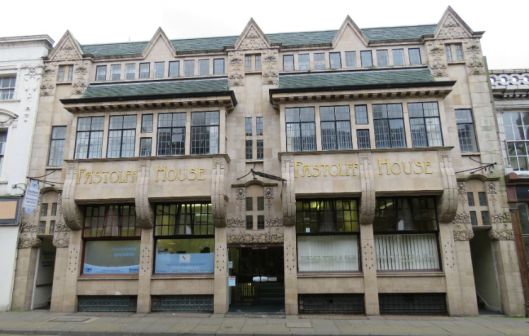
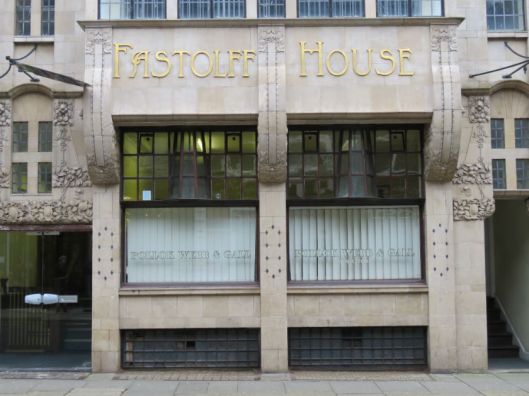
Showing one Falstaffian house provides the excuse for showing another – a favourite of mine. In a previous blog I mentioned Fastolff House in Great Yarmouth, a striking art nouveau building designed by the local architect ‘Concrete’ Cockrill. The patina’ed bronze door does look like the entrance to a mausoleum.

Fastolffs House_A.jpg

Fastolff House, Regent Street, Great Yarmouth

Norwich is so rich in historic buildings that I could have selected many other ancient doorways. Most are prized and well-maintained but a significant number are unloved. For example, 41 All Saints’ Green is a large five-bayed merchant’s house built in the late C18th [4]. In 2010 the Norwich Evening News reported that this building had been empty for some time since last used as a dental practice. It is still empty and the fine Doric doorcase is showing signs of neglect. In 2016 the building appears on the Norwich City Council’s Heritage at Risk Register.  The Norwich Preservation Trust, who have a fine record of intervention in such cases, is also keeping a watchful eye.

41 All Saints Green.jpg

41 All Saints’ Green, Norwich

Number 33 Bethel Street has one of the city’s finest Georgian doorways with an impressive Doric entablature containing martial arms on the frieze. Unfortunately, there appear to be no plans to restore this building, which is described on the council’s at-risk register as “Poor condition. Long-term vacant building”. Shame!

BethelStreet.jpg

 33 Bethel Street, Norwich

Next post: Flint buildings (Sign up for free email alerts)

Sources

  1. Kent, Arnold and Stephenson, Andrew (1948). Norwich Inheritance. Pub: Jarrold and Sons Ltd., Norwich
  2. Susan Weber Soros and Catherine Arbuthnott (2003). Thomas Jeckyll, Architect and Designer, 1827-1881. The Bard Graduate Center for Studies in the Decorative Arts, Design, and Culture, New York. Pub: Yale University Press.
  3.  Matthews, Richard.(2013). Robert Toppes. Medieval Mercer of Norwich. Pub: The Norfolk and Norwich Heritage Trust.
  4. Pevsner, Nikloaus and Wilson, Bill (1997 ). The Buildings of England. Norfolk I: Norwich and North-East.Pub: Yale University Press.

I thank Jonathan Plunkett for permission to reproduce three images from the George Plunkett archive.  I am also grateful to  Clare Everitt for permission to reproduce the image from Picture Norfolk. Thanks, also, to Richard Matthew for information about the Dragon Hall doorway.

Early doors: Tudor to Georgian

Tags

, , , ,

“Fine medieval, Tudor and Georgian doorways once abounded in Norwich, but they are rapidly disappearing.“(Kent & Stephenson, 1948).

In 1948, Kent and Stephenson published a book of photographs of ancient buildings celebrating our ‘Norwich Inheritance’ [1]. Close to the Second World War it was surprising that they didn’t dwell on losses to enemy bombing. Instead, they wanted to record what remained, to show how easy and elegant Norwich once looked and perhaps might look again. But they seemed to have had little confidence in post-war renewal, suspecting that there was a, “danger of throwing away this heritage … for a commercial conglomeration of humdrum mediocrity”. You be the judge.

Kent and Stephenson worried that little would remain in 50 years time. Almost 70 years later, I thought I would try to find the 20 doors illustrated in their section on ‘The Doorways of Norwich’.

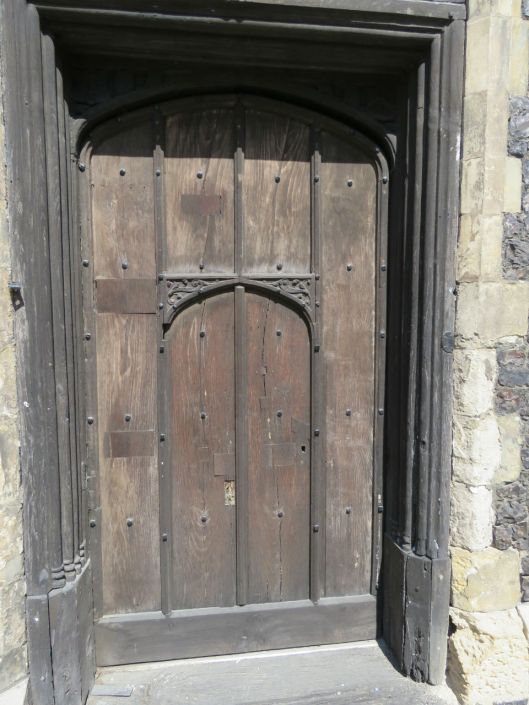
1. The Old Bridewell Entrance, St Andrew’s Hill.  This four-plank door, with joints covered by fillets, is a replacement for the 5/6-plank door illustrated by Kent and Stephenson [1].  The head of the Tudor door with carved spandrels survives; the Gothic grille is hanging on but needs repair. George Plunkett [2] said it was the oldest of its kind in the city, dating it to ca. 1490 (early Tudor). The history of the Gothic arch is of a gradual flattening, from the steeply pointed lancet windows of the Early English style to the Perpendicular/Tudor phase where the four-centred arch produced a flatter profile.

Old Bridewell Entrance Norwich.jpg

The Old Bridewell Entrance, St Andrew’s Hill. The Tudor arch is still noticeably pointed in this early doorway but gets flatter throughout this period. 

No 2. Bacon’s House 31 Colegate (now numbered 35).  This house was built for Henry Bacon, a wealthy worsted merchant who was mayor and sheriff in the mid 1500s. The several rectangles of newer wood set into the Tudor door replaced the letterboxes and other door furniture described by Kent and Stephenson as ‘a disfigurement’. There is a separate ‘wicket’ door within this door with its own spandrels.

Bacons House Norwich.jpg

Henry Bacon’s House, Colegate.

No 3. Bayfield’s Court, Stump Cross.  This Tudor doorway is no longer in existence, a possible victim of the 1960s inner link road and flyover that aimed (and missed by a country mile) to have minimal impact on medieval Magdalen Street. Thankfully, in 1935 George Plunkett recorded this Tudor doorway with its carved spandrels bearing the date and owner’s name (not Bayfield who was a C19th owner).

Magdalen St Bayfield's Yard Tudor archway [0515] 1935-05-05.jpg

Bayfield Court (demolished) [George Plunkett archive, 1935]

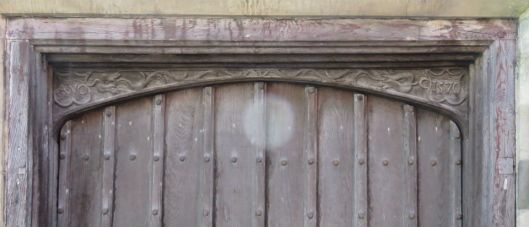
No 4. Shaw’s Yard, Colegate. Shaw’s Yard is described by Kent and Stephenson [1] as being “by the side of the Labour Exchange”, but the building is no longer used for that purpose. The date (1570) in the right-hand spandrel is said to mark the second mayoralty of John Aldrich. In George Plunkett’s post-war survey of more than 150 old doorways [2], he calls this Shave’s (not Shaw’s) Yard.

Shaws Yard Colegate Norwich.jpg

Shaw’s or (Shave’s Yard), Colegate.

No 5. 29 Magdalen Street.  Twenty nine Magdalen Street was the house of Thomas Shipdham whose initials may be those in the right-hand spandrel. He was a rich mercer who became sheriff then, in 1631, the mayor. Although the date of 1612 in the left-hand spandrel places it outside the Tudor dynasty (1485-1603) this well-preserved doorway is clearly in the Tudor style.

29 Magdalen St.jpg

 29 Magdalen Street

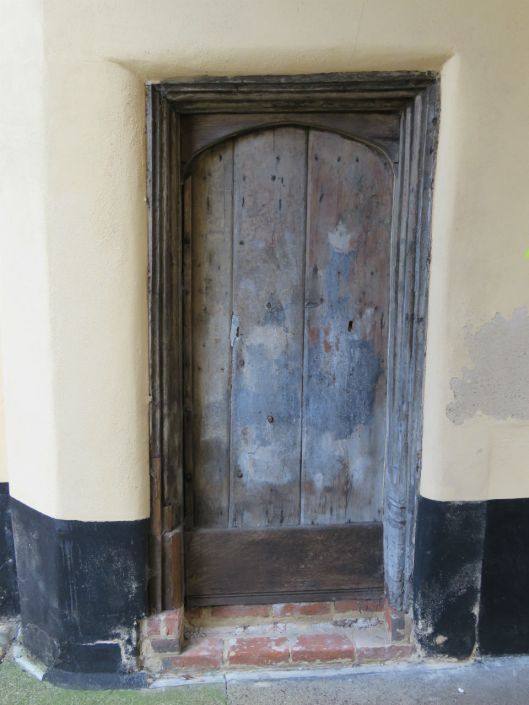
No 6. Tudor doorway at Thorpe Lodge, Thorpe Road.  This is no longer in existence. Instead, here is a medieval doorway that would not have been known by Kent and Stephenson for it was only uncovered about 2010 when repairing the render at the side of Roaches Yard off Elm Hill.   The frame of the simple three-plank door has a Tudor four-centred arch with plain spandrels.

Roaches Court.jpg

Roaches Court, to the side of No 36 Elm Hill.

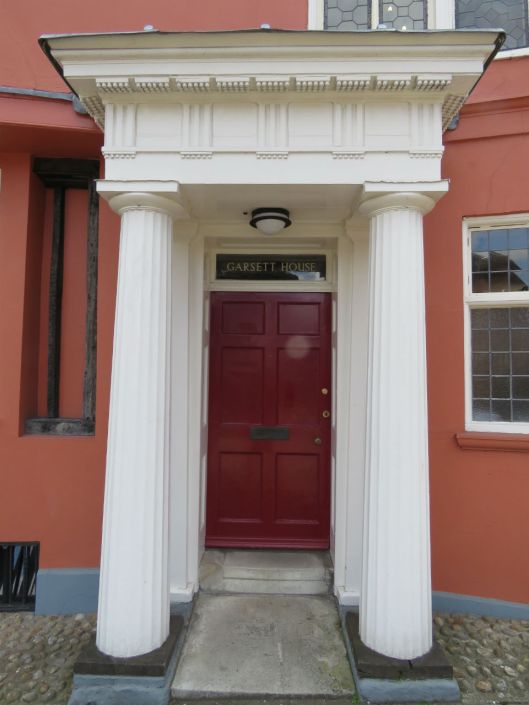
No 7. Garsett House, St. Andrew’s Plain.  The preceding Tudor style (1485-1603) had its roots in the Gothic but by the middle of the C18th Georgian architecture was heavily influenced by Neoclassicism. In this revival of interest in ancient Greek and Roman architecture, proportion and symmetry were central as was the ‘order’ or style of column used. Most of the following Norwich doorways were based on the  Greek Doric order – the simplest order characterised by fluted (sometimes plain) columns topped with a plain capital. Another typical Doric feature was the cricket-wicket-like triglyph (III) that decorated the frieze or middle layer of the horizontal entablature. This can be seen at Garsett House, which was the first Georgian doorway described by Kent and Stephenson [1].  The medieval timber-framed house was modernised by adding this Classical portico. Above the six-panelled door is a rectangular transom light to illuminate the otherwise gloomy entrance hall.  As the C18th progressed this style of light tended to be superseded by the semi-circular fanlight.

garsett house.jpg

Garsett House 

No 8. 17 Pottergate. Unfluted columns support a large and rusticated (projecting) keystone entablature. This stone doorway was said in 1948 [1] to be “in poor condition and suffering from a rash of bells”: the rash is gone.

17 Pottergate Norwich.jpg

17 Pottergate

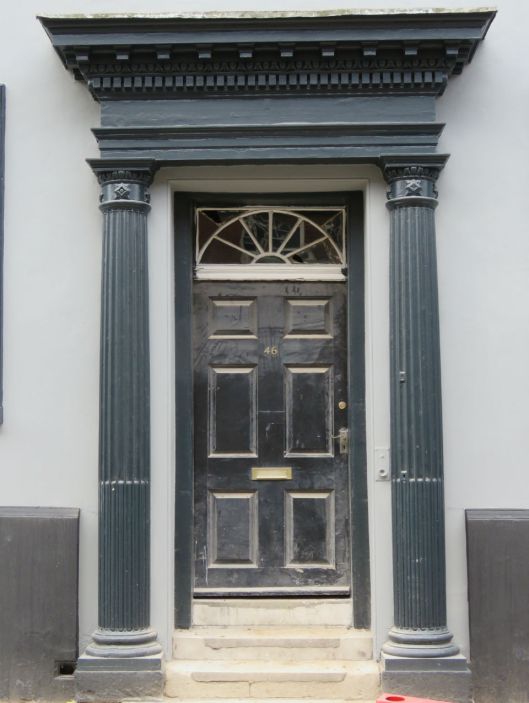
No 9. 46 St Giles. St Giles Street is Norwich’s finest Georgian street filled with the houses of the rich mercantile class. This Georgian doorway at No 46 is being renovated in 2016. The door furniture has not survived but the six-panelled door, fanlight and fluted columns appear to be as they were in 1948. Situated above the transom is a sun-ray fanlight. Fanlights added height to the doorway but the increase in overall size tended to be counteracted by their delicacy when finely cast in metal. Here, the horizontal entablature increases height further – as do the three doorsteps – but in adding width (and grandeur) the fluted columns restore proportion.

46 St Giles.jpg

46 St Giles’ Street

No 10. 48 St Giles.  The Reverend Robert Parr built the house in 1792 [1]. In May 2016, number 48 St Giles is shrouded in scaffolding but at least this wonderful portico survived the war and the post-war renewal. In 1948 Kent and Stephenson complained that the decorated Doric frieze was obscured by a badly placed YMCA sign [1]: today, despite the netting and scaffold poles, the entablature and fanlight are at least visible.

48 St Giles Norwich_A.jpg

48 St Giles’ Street

No 11. Harvey’s House, 18 Colegate.  Thomas Harvey (1710-1772), merchant,  Mayor and Sheriff of Norwich, was born in this house. The doorway has fluted Ionic pillars capped by the angled scrolls or volutes that are characteristic of this order. George Plunkett [2] remembered coming across a note stating that a number of pillared doorways in Norwich were based on designs by Thomas Ivory – the city’s pre-eminent Georgian architect. Plunkett could find no supporting evidence but hoped that the best of the doorways were inspired by  Ivory. Here he specifically named the next two doorways, 18 Colegate and 44 Magdalen Street. In these examples there is no fanlight. Instead, the solution for allowing light into a dark entrance hall was to glaze the top panels of the door itself, although this may have been done later. The door may be a replacement but considering the importance of this doorway the door furniture and signage are quite out of keeping. This probably explains the pained look on the keystone’s face above.

Harveys House Colegate.jpg

Harvey’s House 18 Colegate

No 12. 44 Magdalen Street. This is the other of George Plunkett’s two ‘best’ Norwich doorways.

44 Magdalen St.jpg

44 Magdalen Street. 

Magdalen Street, one of Norwich’s most celebrated medieval-to-Georgian streets largely survived the war but not the peace. The decision to bisect it with a flyover did not, as was anticipated, save the street but blighted it. Little thrives beneath the concrete and the surrounding post-war buildings are mostly derelict and an eyesore. However, look closely and it is still possible to pick out gems, like the Tudor and Georgian doorways illustrated here.

44 Magdalen St.jpg

The frieze is classical Greek Doric with raised decoration between the triglyphs

No 13. All Saints’ Green.  Ivory House was built in 1771-2 to a design by the well-known Norwich architect, Thomas Ivory.  Kent and Stephenson [1] knew this building as ‘Artillery Barracks’ although I have seen it referred to as Militia Barracks. The horizontal joints of the columns are cut back to produce the rusticated banding. Pevsner and Wilson [4] liked “the good nine-vaned fanlight.’

All Saints Green Norwich.jpg

Ivory House, All Saints’ Green

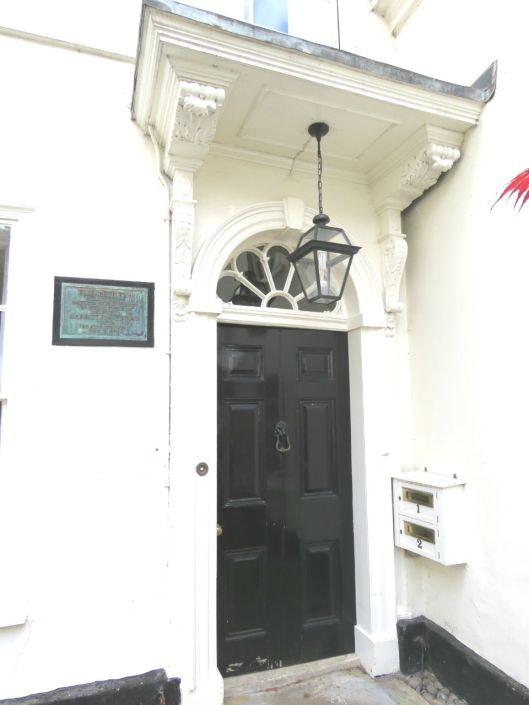
No 14. Gurney’s Court.  This doorway survives more or less as illustrated by Kent and Stephenson although the fine Georgian lamp has been replaced [1]. The carved canopy seems to be Baroque rather than Classical and could be a remnant of a previous doorway.  The plaque to the left celebrates the fact that two notable Norwich women – Elizabeth Fry and Harriet Martineau – were born in this house

Gurneys Court Norwich.jpg

14 Gurney’s Court, Magdalen Street

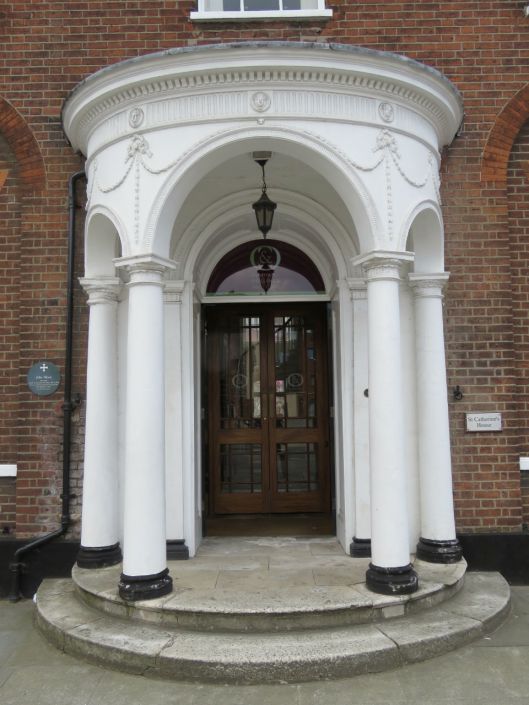
No 15. St Catherine’s Court, All Saints’ Green. This Adam-style porch with its genteel swags was – even in 1948 – a plaster replica. Possibly, the original was damaged in the bombing raid that destroyed porticos in adjacent Surrey Street (see No19).

St Catherines Close Norwich.jpg

St Catherine’s Court

No 16. 79 King Street. Like Magdalen Street, King Street has suffered much since the war but, fortunately, this Georgian doorway remains as does the Venetian window above. The fanlight based on overlapping Gothic arches differs from the more usual variations on radiating sun rays. Contrast this doorway with No 9. (46 St Giles) whose height is exaggerated by a fanlight quite separate from the entablature above. Here at 79 King Street the triangular pediment is broken open at the base, allowing the fanlight to intrude into the entablature. In the second half of the C18th the broken pediment allowed doorways  to be less tall and grandiose (e.g., where dictated by an entrance hall of limited height).

79 King St Norwich.jpg

79 King Street

No 17 20 Colegate. Another fine townhouse belonging to the Harvey family, this Georgian doorway is unusual for Norwich, being made of stone. The temple-like doorway has a Doric entablature and  unfluted columns. One suggestion is that the stone was recycled from the Duke of Norfolk’s Palace, just across the Wensum.

20 Colegate.jpg

20 Colegate

No 18. Churchman House, 68 St Giles (now 71 Bethel Street).  Churchman House, built in the early C18th for Alderman Thomas Churchman, has been described as ‘possibly the best Georgian provincial townhouse in England’[3]. The Churchmans were  worsted weavers, underlining the point that when Norwich was the nation’s second city its wealth was largely derived from the wool trade. Although the wooden entablature and the triangular pediment are very similar to the stone version above, the overall effect here is less squat since the height of the doorway is stretched by inclusion of steps as well as fanlight. Inside, the rooms are proportionately tall. I was witness at a wedding here when it was Norfolk Register Office: now you have to get wed at the Castle.

Churchman House Norwich.jpg

Churchman House

No 19. 25 and 27 Surrey Street (demolished). This terrace is said to have been designed by Thomas Ivory. The projecting Doric entablature, supported by fluted pilasters and free-standing columns, provided the entrance to two houses, each having a fine door and rising-sun fanlight.

Surrey St 25 to 27 Georgian portico [2187] 1938-03-21.jpg

25-27 Surrey St 1938. (c) George Plunkett

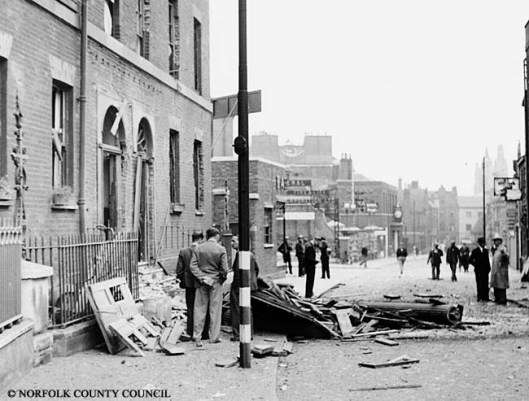
The double portico was amongst the finest in Norwich but was destroyed by an enemy bomb in 1940 [2]. The house itself was pulled down in 1963. The wartime photograph below shows fluted columns and the rest of the portico lying in the road. George Plunkett [2] said that this revealed various pencilled dates on the woodwork, including 1692 and 1740. Another inscription read: “James Rump carpenter and joiner … Norwich made this portico in the year 1821”. It is possible that older pieces of wood were incorporated into the structure. Pevsner and Wilson [4] date the houses to 1761-2 with later porches.

surrey st (c) PictureNorfolk.jpg

25 and 27 Surrey Street. Inspecting the bomb damage, 1940. Source: Picture Norfolk

In the photo below the war-damaged 25 and 27 Surrey Street are the furthest right of the three double porticos, but the other two survive today.

Surrey St 25 to 35 [0588] 1935-05-19.jpg

Surrey Street 25-35 (c) George Plunkett. Photographed in 1935. The two houses/porticos left and centre survived the bombing.

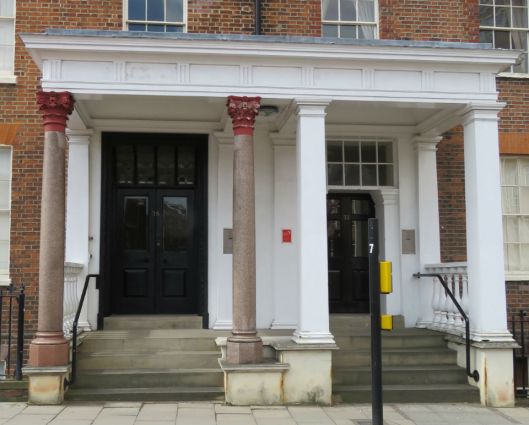
The photographs below are of 35 and 33 Surrey Street (the double portico on the left in the photo above). George Plunkett [2] wrote that the replacement of the square pillars on No35 by round marble columns with ornate Corinthian capitals had been done “with great lack of taste”. This “unhappy” [1] substitution was already visible in the 1935 photograph, prior to the war. I remember reading the damage was caused by a motor accident but cannot trace the reference – can you?

Sueey Street.jpg

35 and 33 Surrey Street

No 20. 31 and 33 St Giles. These houses were originally built in the late C16th – early C17th and refaced in the late C18th [5]. The houses were not, therefore, built with Palladian proportions in mind so the late Georgian doorway would have been retrofitted to a less generous floor-plan. Spanning two doors with a common fanlight above the entablature required structural ingenuity since a semi-circular fanlight of that diameter would have been too tall for the hallways it was intended to illuminate. Instead, height was reduced by: using a narrow segment from a very large circle as a template for the fanlight (and confusing the radial spokes of the fanlight in the process); reducing the entablature to just the supporting architrave – no decorative frieze; and ensuring that the columns did not extend above the head of the door.

31 33 St Giles St Norwich.jpg

31 and 33 St Giles’ Street

The fact that 17 out of the 20 selected doorways [1] can still be seen today might seem to be cause for optimism. However, the selection was made from those still standing after the war. George Plunkett’s [2] much larger survey included doorways known to be present before the war and shows just how many fine buildings and doorways fell victim, not just to the war, but to C20th modernisation. As Joni Mitchell sang, “You don’t know what you’ve got till it’s gone.”

Next post: “Entrances and Exits (Doors II)”. Sign up for free email alerts.

Sources

  1. Kent, Arnold and Stephenson, Andrew (1948). Norwich Inheritance. Pub: Jarrold and Sons Ltd., Norwich
  2. Plunkett, George (1945). Old Norwich doorways. Norfolk Archaeology vol 28, pp39-70.
  3. Nierop-Reading, Vic. (2006). Visit to Churchman House. In, Norfolk Historic Buildings Group Newsletter No 12. pp 8-9.
  4. Pevsner, Nikloaus and Wilson, Bill (1997 ). The Buildings of England. Norfolk I: Norwich and North-East.Yale University Press.
  5. Norfolk Heritage Explorer. NHER Number:26186.

I am grateful to Jonathan Plunkett for allowing me to reproduce photographs from the George Plunkett archive (http://www.georgeplunkett.co.uk/Website/) and to Clare Everitt for permission to reproduce images from Picture Norfolk.

Fancy bricks

Tags

, , , , , ,

The look of a place 

Until the coming of the railways in the mid C19th, towns were necessarily made from the materials around them. The honey-coloured villages of the Cotswolds look so right in their environment for even the stone roof-tiles topping the honey-coloured stone walls derive from the bedrock on which they stand. But as we know, Norwich is about as far from decent building stone as you can get. Only the Church and rich grandees could afford to import building stone by water; famously, the Normans built Norwich cathedral of stone shipped from Normandy. So between the age of the medieval timber-framed building and the arrival of steel-reinforced concrete the majority of the city’s buildings were made from clay in the form of brick and tiles. This post focuses on decorative brickwork, produced by one family, that characterised Victorian building in Norwich.

Norwich from St Giles carpark_1.jpg

Norwich roofscape from St Giles car park

Around 1860, Norfolk contained 114 brickyards spread throughout the county so though Norfolk may have lacked stone there was evidently no shortage of brick clay [1]. In the pre-railway age, bricks tended to be made close to the building site due to the difficulty of transporting heavy loads over long distances. The arrival of railways in Norwich in the 1840s allowed building materials, such as Welsh slate, to be transported more easily and this, combined with the repeal of the tax on bricks in 1850 [2], contributed to the explosion of terraced-house building in Norwich  [3]. Surrounding Norwich were the brickyards of Banham, Lakenham, Reedham, Rockland St Mary, Surlingham and Welborne [1] but the one that perhaps had the greatest effect on Norwich via its red or white decorative products was the Costessey Brickyard five miles to the west, run by the Gunton family.

OS map1882_2.jpg

Gunton Brickyard, Costessey Nr Norwich. (c) Ordnance Survey 1882. Image source, Norfolk Heritage Centre

Many years ago I saw comedian Ken Dodd at the Theatre Royal Norwich. Part of his introductory schtick was to play with local names, pronouncing Happisburgh as Happy’s berg instead of Hay’s bruh and Costessey as three-syllabled Coss-tess-ee instead of Cossey. How we laughed. Anticipating Doddy’s difficulties the Gunton family, who managed the Costessey Brickyard from the 1830s to 1915, called their range of ornamental bricks ‘Cosseyware’. As the map shows, it was quite a large enterprise, employing 40 men and boys in 1882 [4].  (In an update) Costessey resident Peter Mann wrote in to say he was able to name all the workers at the Costessey brickyard (see footnote at end).  Excitingly, he identified James Minns with son John Minns seated on his right. Both were labelled as “Carvers of Norwich”, consistent with census returns giving their occupations as ‘carver’ (or, once for James, ‘sculptor’).  The entry for Minns on the Mapping of Sculpture website gives his full name as James Benjamin Shingles Minns (ca 1828-1904). James was sufficiently confident of his skill to submit (successfully) a carved wooden panel of  ‘A Happy Family’ to the 1897 Summer Exhibition of the Royal Academy; he had also carved the mantelpiece and panelling for Thomas Jeckyll’s commission for the Old Library at Carrow Abbey (1860-1). The presence of this highly skilled sculptor and his son at the Costessey Brickyard strongly suggests they were responsible for the ornate ‘fancy’ bricks and panels for which Guntons were locally renowned. From his independent status as ‘Carver’ it seems possible that “James Minns of Heigham” might have been freelance rather than a full-time employee, especially since his address was ca. five miles away from the Costessey Brickyard. [For more on Minns see the ‘Angels in Tights’ post].

Minns@Guntons.jpg

Employees of the Guntons Brickyard Costessey. James Minns is arrowed (white) with his son John, arrowed red. Pre-1904. (c) Ernest Gage Collection at Costessey Town Council. The key to the workers can be seen in the footnote at the end.

Minns_Heads.jpg

Other yards made decorative bricks in Norfolk during the Victorian heyday but Costessey Brickyard became pre-eminent through its association with Costessey Hall. In 1824, when Sir George William Jerningham became the 7th Baronet Stafford, his “commanding and forceful”[4] wife became dissatisfied with the old Tudor hall at Costessey and so began an overambitious plan to build an elaborate, battlemented, pseudo-Tudor replacement. Designed by John Chessel Buckler, Costessey Hall was to be “the richest Gothic building in England” [quoted in 6] but it became a folly that was never fully completed [4]. The fortunes of the Guntons coincided with the rise and fall of the Hall.

Costessey Hall RIBA7018.jpg

Costessey Hall 1870, architect John Chessell Buckler. Source: RIBA Collections

CossyChimneys_Bridewell_PN.jpg

Costessey Hall showing Tudor Revival chimneys made at the Gunton Brickyard. Source: Picture Norfolk and Museum of Norwich at the Bridewell

Gunton Bros catalogue 1907.jpg

Gunton Bros catalogue 1907. Source: Norfolk Heritage Centre

In 1862, the owner of Costessey Hall, Sir Henry Valentine Stafford Jerningham, who had produced no heir, asked the wonderfully-named Masters of Lunacy to declare the next in line (his nephew The Right Hon. Augustus  Frederick FitzHerbert Stafford Jerningham) to be of unsound mind [5].  When nephew Augustus inherited the estate in 1884 the Lunacy Commissioners suggested the Hall was not suitable for him and that it be closed up. But Norwich’s foremost architect Edward Boardman argued against closure, marking an early connection between him and Costessey. On Augustus’ death his brother, Sir FitzOsbert Edward Stafford Jerningham, inherited to become the last Baron Stafford to live at the Hall. He was described as an eccentric who, mindful of what had happened to his brother, kept his back to the wall (literally) and refused to leave the confines of the estate [4]. After his death the estate was seen as a white elephant to his inheritors, leading to the long drawn out demolition of the Hall.

Costessey Hall demolition.jpg

Demolition of Costessey Hall began in 1920; seen here in 1934 (c) www.picture.norfolk.gov.uk

Tastes had already begun to change some years before the demolition of the Hall. During the second half of the C19th one of the styles within the all-embracing Arts and Crafts Movement was for decorative “Gothick” brickwork (usually red) of the kind that the Guntons had made first for Costessey Hall then for the wider public. However, this fascination for Tudorbethan brick was in decline by the turn of the C20th and in 1915 the Guntons failed to renew their lease at Costessey. All that remains of the Hall is the Belfry Block off the eighteenth fairway at Costessey Park Golf Club. And all that remains (reportedly) of the Brickyard is a derelict kiln at the end of Brickfield Loke.

Brickfield Loke.jpg

The family continued making ordinary bricks (known as ‘builders’) at their Barney, Little Plumstead and Runton works but these outposts closed in 1939 due to fears that the kilns could act as beacons to enemy planes.

Gunton brick furnace.jpg

Stoking the furnace to burn bricks, probably at Gunton’s yard at Barney. Source: Ernest Gage Collection at Costessey Town Council.

After the main phase of building the Hall, George Gunton began to look for alternative outlets for his decorative bricks; their widespread dispersal was greatly assisted by the 1850 repeal of the brick tax – a tax that had been particularly punitive for oversize decorative bricks [6]. Cosseyware began to increase in popularity, first under George Gunton then from 1868 under his sons William and George. It was therefore during the second half of the C19th that Costessey clay started to have an impact upon the appearance of the city.

At the back of the Old Red Lion Beerhouse at 64 Costessey West End, George Gunton built an outhouse. Local historian Paul Cooper told me: “The Red Lion outbuildings would have been a showroom and where they did the intricate carving on the chimneys and fireplaces.” 

Cossy bricks on bldg west end_@BridewellPicNorflk.jpg

Cosseyware letter bricks spell out the name of George Gunton. Bricks like these can be spotted throughout Norwich. Source: ‘Picture Norfolk‘ and Museum of Norwich at the Bridewell.

Gunton gable.jpg

The same gable end in 2016, minus doorways. Note the Cosseyware chimney.

Gunton Chimneys.jpg

Cosseyware chimneys in Costessey West End 2016. Left: grapevine pattern; right: ‘patriotic’ rose/shamrock/thistle bricks on the building shown in the previous image.

The GG tiles beneath the grapevine-patterned chimney on the left suggest this is one of the nine houses that George Gunton is known to have built between 1850-1860 [6] in West End, not far from the brickyard.

Earlham Rd Terrace_1.jpg

Letter and number bricks, identical to those at Costessey West End, on the gable end of a house at the junction of Belvoir and Earlham Roads, Norwich

Aucuba villa_1.jpg

Aucuba Villas (1896) on Earlham Road, Norwich. [Aucuba is an evergreen shrub]. Note the characteristic Gunton ‘A’ in all these examples.

Adelaide villa_1.jpg

... and again at Park Lane, Norwich

Gunton bricks.jpg

The rose bricks above the ‘Adelaide Villa’ lettering were still to be found in the Gunton Bros 1903 catalogue

bricks Plntn garden480.jpg

The same bricks from the ‘patriotic’ range (but no leek!) were incorporated into many of the walls and features of the Plantation Garden, Norwich.

In the mid 1850s, Henry Trevor created The Plantation Garden near St John’s Cathedral on Earlham Road in an old chalk and flint mine. It is a Victorian delight, benefitting from years of careful restoration. If you want to see a range of Gunton’s products look no further: fragments from more than 15 of their 34 patterns on chimneys can be identified here [7].Plantn garden_2.jpg

Fountain Plantn Garden.jpg

The Plantation Garden’s fountain (1857) with its characteristic mixture of flint and ornamental Cosseyware

Curfew Terrace_a.jpg

Not far from the Plantation Garden this plaque can be found on Earlham Road near the junction with Park Lane.

Two of Norwich’s foremost architects, Edward Boardman and George Skipper, used Cosseyware to ornament their buildings – a choice that helped define the appearance of the Victorian city. In 1869, Boardman designed the Princes Street Congregational Chapel (now United Reformed Church) and adjoining Church Rooms in an Italianate style.

United Refd Church.jpg

Boardman’s Congregational Chapel, with triangular pediment, is seen beyond the Church Rooms that he also designed. The Rooms have been renamed Boardman House and are now part of Norwich University of the Arts.

Boardman Untd Refrmd Chrch_1.jpg

Gunton’s white decorative wares were used to realise the classical Italian style 

Pale brick from Gunton’s was used again by Boardman for his office block, Castle Chambers, in Opie Street off Castle Meadow.

Castle chambers2_1.jpg

Castle Chambers 1877. Architect Edward Boardman

Some 20 years later Boardman was to design the Royal Hotel around the corner on Agricultural Hall Plain in red brick and ornamental Cosseyware. This hotel replaced the old Royal Hotel that provided the site for Skipper’s Royal Arcade off the marketplace.

Royal Hotel Norwich_1.jpg

Royal Hotel, Norwich (1896-7). Architect Edward Boardman

The Arts and Crafts Movement roamed widely for its pre-industrial architectural influences. The Royal Hotel is described as being ‘free Flemish’ [8] and – as I saw on a visit to Bruges – is not dissimilar to the Post Office (1891) in the main square.

The lower levels of the Royal Hotel are relatively plain but further up the stylistic tics of Flemish Gothic Revival architecture become more apparent in the ornamented string courses, gables and pinnacles – all richly decorated in Cosseyware.

Royal Hotel detail_2.jpg

royal hotel_1.jpg

The diamond shapes in the triangle at the centre of the gable above form a repetitive pattern or diaper that can be seen on several buildings around Norwich

The former carriage entrance of The Green House 42-46 Bethel Street offers a fine example of Gunton’s diapering …

Bethel St.jpg

Boardman used red Cosseyware diapering on his own offices in Old Bank of England Court, Queen Street. His nameplate, which is a gem of Victorian lettering, was custom made rather then being made from Gunton’s individual letter bricks.edward boardman_1.jpg

Gunton’s red clay was used to make these intricate tableaux on what were once George Skipper’s offices, now subsumed into Jarrold’s department store on London Street.

Skipper's office_2.jpg

Arts and Crafts: Skipper is showing clients the Art of architecture while workmen demonstrate the various Crafts of building

Skipper_3.jpg

In this other Cosseyware panel, Skipper introduces his work to potential clients. In the background are three of his completed Norwich buildings [9]. Now that we know what James Minns, the carver, looked like it is highly likely that top-hatted Skipper is pointing to a shield held by Minns himself who worked on several joint projects.

Glance right next time you exit Norwich Rail Station and you will see one of the most richly decorated buildings in Norwich – 22 Thorpe Road . It was designed ca. 1900 by A F Scott and Son [6] using red Cosseyware in Franco-Flemish neo-Renaissance style.

Bewick House_a.jpg

Bewick House, 22 Thorpe Road, headquarters of the Norfolk Wildlife Trust

Bewick House porch.jpg

The moulding is still crisp after more than 100 years

Buildings in the last quarter of the C19th buildings were often exuberantly marked with terracotta date plaques – perhaps an expression of the confidence felt by Victorian architects and their clients at the height of Empire. This example below is over one metre tall:

13 Ipswich Rd Norwich.jpg

Ipswich Rd date_4.jpg

1878. Number 13 Ipswich Road

Boardman date_4.jpg

1875. Edward Boardman’s office in Old Bank of England Court

Castle Chambers date_4.jpg

1877. Boardman’s Castle Chambers, Opie Street, Norwich

Bewick House date_4.jpg

1894. Number 22 Thorpe Road

Norwich Gaol date_4.jpg

1886. Norwich Gaol, Mousehold Heath

St Ethelbert's date_4.jpg

1888. St Ethelbert’s House, Tombland, Norwich

From terraced houses to large public buildings, Cosseyware left its distinctive mark on Victorian Norwich.

©2016 Reggie Unthank

Sources

  1. Lucas, Robin (1993). Brickmaking. In, An Historical Atlas of Norfolk. pp154-155.
  2. Lucas, Robin (1997). The tax on bricks and tiles, 1784-1850: its application to the country at large and, in particular,to the county of Norfolk. Construction History vol 13, pp29-55.
  3. O’Donoghue, Rosemary (2014). Norwich, an expanding city 1801-1900. Larks Press, Dereham.
  4. Gage, Ernest G. (1991). Costessey Hall. A retrospect of the Jernegans, Jerninghams and Stafford Jerninghams of Costessey Hall, Norfolk. Available from: http://www.costesseybooks.co.uk/purchasebooks.htm
  5. Gage, Ernest, G. (2013). Costessey: A Look into the Past. Pub: Brian Gage, 31 Eastern Ave, Norwich NR7 OUQ (also, see preceding link).
  6. Lucas, Robin (1997). Neo-Gothic, Neo-Tudor, Neo-Renaissance: The Costessey Brickyard. The Victorian Society Journal pp 25-37.
  7. Adam, Sheila (2009). The Plantation Garden Norwich: A History and Guide. (Available from the Plantation Garden, 4 Earlham Road, Norwich).
  8. Pevsner, Nikolaus and Wilson, Bill (1997). The Buildings of England. Norfolk 1: Norwich and North-East. Yale University Press.
  9. Bussey, David and Martin, Eleanor (2012). The Architects of Norwich. George Skipper, 1856-1948. The Norwich Society.

Visit: the excellent website with many photographs of Costessey Hall and of brick-making on: http://www.costesseybooks.co.uk/contact.htm.  I am grateful to Brian Gage for generously providing information and access to the Ernest Gage Collection. Thanks are also due to Paul Cooper, local historian, for sharing his extensive knowledge of Costessey Hall and the Gunton Brickyard. I am grateful to Peter Mann for naming the Costessey workers.

Visitwww.picture.norfolk.gov.uk. An endlessly fascinating archive of photographs of old Norfolk with a great series of photographs of old Costessey Hall. Thanks to Clare Everitt, who runs the website, for her help.

Visit: if you haven’t already seen the Plantation Garden you are in for a treat. Open daily 9.00am – dusk. Their excellent website is well worth exploring (http://plantationgarden.co.uk).

Footnote: Peter Mann mailed in to provide the names of men in the photograph of the Gunton workers. He says: “My Grandfather and Great Grandfather are included in the Picture. Names as follows:
Back Row L/R, Albert White, John Ireson, Charles Doggett, George Gunton (Part Owner), Walter Ireson, James Simmons.
Middle Row L/R, Daniel Drury, William Gunton Jnr, Fred Barber, William Gunton Snr (Part Owner), Noah Mansfield, H.E Gunton, Charles Gotts, Thomas Mann Jnr. Seated Row, Arthur Paul (kneeling), John Minns, James Minns, (Carvers Of Norwich), Joseph Goward, Thomas Mann Snr.
Bottom Row, Robert Burton, James Paul, William Bugdale, Harry Banham.”

Thomas Jeckyll & the Boileau Family

Tags

, , , , ,

You may have gathered from two earlier posts [1,2] that I am fascinated by a local hero, the Wymondham-born architect and designer Thomas Jeckyll. Through his C19th designs for the Norwich foundry of Barnard Bishop and Barnards he became a major contributor to the Japanese-inspired Aesthetic Movement and helped make the sunflower its defining motif.

Jeckyll tabletop.jpg

Sunflower table top, cast-iron. Designed by Thomas Jeckyll ca 1870 for Barnard Bishop and Barnards. (c) Museum of Norwich, Norfolk Museums Service)

Jeckyll was also the original designer of the iconic [3Peacock Room, made to accommodate shipping magnate Frederick Leyland’s extensive collection of china. However, Jeckyll’s mental collapse allowed arch-aesthete James McNeill Whistler to reinvent the room as (an admittedly stunning) ‘Harmony in Blue and Gold’ by literally overpainting Jeckyll’s surfaces to make the best-surviving example of the Anglo-Japanese style.

This post is about the Boileau fountain, a more humble project of Jeckyll’s but another that can no longer be seen as he originally intended.

Boileau fountain.jpg

Boileau Fountain at the junctions of Ipswich and Newmarket Roads, Norwich. Designed by Thomas Jeckyll ca 1870, completed in 1876. (Postcard bought at a local antiques fair).

ipswich_nwmkt roads2.jpg

2016

As a young man, Jeckyll had been the protégé of Sir John Boileau of Ketteringham Hall, a few miles south of Norwich.

Sir John P Boileau.jpg

Sir John Peter Boileau by Sir Francis Grant (President Royal Academy 1866)

It was therefore fitting that one of Jeckyll’s last projects was to design this drinking fountain (ca 1870) as a memorial to his former mentor. Sir John had died in 1869 but it took time to prove his will that provided £1000 for the memorial, which was completed in 1876 [4, 5].

Boileau fountain 1908.jpg

Postcards tended to focus on the electric trams that arrived in 1900

Boileau fountain 61.jpg

“for people and cattle”

Sir John had been concerned for the welfare of animals being driven to Norwich market, explaining the gift of water, but the statue added a more personal note to his legacy. The seated figure represents Charity giving a child a drink of water from a shell.

Boehm plaster 61.jpg

Charity by Sir J Edgar Boehm

Lady Catherine Boileau had died in her fifties in 1862 but the face of the seated Charity is said to have resembled Lady Catherine when younger.

Lady Catherine Boileau.jpg

Lady Catherine Boileau by Sir Francis Grant

Boehm plaster in orangery 66.jpg

The plaster maquette of the Boehm statue can be seen through the door of the Orangery at Ketteringham Hall 1878

KHall School Kindergarten.jpg

The Orangery (above) was later used as the Ketteringham Hall Preparatory School where the  Boehm maquette (top centre) was still in situ ca 1958.

The sculptor, Sir Joseph Edgar Boehm, was born in Vienna and moved to England where he became an Associate of the Royal Academy [6].  One of his students was Queen Victoria’s daughter Princess Louise; she was in Boehm’s house when he died, fuelling speculation in the press of a sexual relationship between them [6].

J E Boehm_1.jpg

Carte de visite of Sir JE Boehm 1860s (Wikimedia Commons)

At the ceremony to dedicate the fountain, Sir John’s son Francis praised Jeckyll’s contribution and noted his famous metalwork designs.

Fountain cheque.jpg

Francis Boileau’s pencilled annotation at the top of the cheque reads, “For luncheon on opening of the Boileau Fountain”. Note the names of the famous Norwich banking families.

But within a week of this ceremony Jeckyll had descended into the manic state that eventually led him to be confined to the Bethel Asylum, where he died in 1881 [4].

Curiously, younger members of the Boileau family were to be involved in a ‘carriage accident’ at the site of this ceremony one generation later.

Boileau fountain panorama_1.jpg

On Wednesday 16th November 1910, according to the Eastern Evening News of that date, a carriage containing Sir John’s grandson Sir Maurice Boileau, granddaughter Lady Margaret and Rev. Hart were in an “Exciting scene in St Stephen’s”. Approximately where the pony and trap are seen to the right of the fountain a cyclist skidded in front of the horses causing them to bolt “at a terrific pace”towards St Stephen’s Gates. Horses and carriage crashed into two stationary vehicles outside Mr Bean’s the corn merchant.  Margaret, who was herself a physician (a fact not mentioned in the report) helped the injured coachman into the adjacent hospital to which her grandfather had been a benefactor. One of the fine bay horses had to be put down.

Jekyll’s double-canopied fountain was dismantled in 1965 in order to ease traffic flow and to increase the visibility of passing traffic.

Boileau fountain Archant_1.jpg

The Boileau Fountain 1965 during demolition. (c) Archant/EDP Library

In 2008 the statue was returned, some 50 metres west of where it had once stood, to a new site next to a pond in the grounds of the former Norfolk and Norwich Hospital [5].

Boehm Charity statue.jpg

Boehm’s ‘Charity” statue in the grounds of the former N&N hospital, 2016.

Boehm maquette.jpg

The plaster maquette of Boehm’s ‘Charity’ remains in Ketteringham Hall

Thomas Jeckyll enjoyed a long relationship with the Boileau family. The son of a cleric, Jeckyll had a fascination for church architecture; he restored many churches around Norfolk and worked on the tower of Ketteringham church, adjacent to the Boileau’s Hall [4].

At the beginning of his career, in the 1840s, Jeckyll had helped design a Gothic folly – a medieval ruin – in an old gravel pit near Ketteringham Hall [7].

Ladyship pit.jpg

Her Ladyship’s Pit also known as St Catherine’s Cell, 1886. The figure here is Lady Lucy, daughter-in-law of Lady Catherine who had died in 1862. 

In about 1847 Jeckyll was called in to complete the pit as a work-in-progress, which he did with the help of Mr Woodbine, a local builder. Jeckyll told Sir John he would, “Build the Ruins for her Ladyship as cheap as I can“. In the event poor Mr Woodbine completed the job for £12 instead of the £18 he had estimated.

Ladypit lime.jpg

Lady Lucy Boileau with her three children (Maurice, Margaret and Raymond) and school friend Harry Bennett disporting themselves in a lime tree in ‘her Ladyship’s Pit’, 1886. Herr Stein maintains his dignity.

In 1849 Sir John had supported a proposal to install stained glass in the west window of Norwich Cathedral in commemoration of his great friend, Edward Stanley, Bishop of Norwich. Only 40 or so years later it was thought that the fifteenth century tracery into which the glass had been set was insufficiently robust and should be replaced. Sir John’s son Francis, who was as avid a collector of antiquities as his father, bought the Perpendicular stonework for £10 and set it above a wall in another part of the Ketteringham estate known as ‘The Abbey’. By this time Jeckyll was too ill to have been involved in the venture.

LadyshipTraceryBefore.JPG

The head of the C15th Perpendicular window set upon a wall, 1885.

Unfortunately, during the great gale of 1895 two elm trees fell on the wall leaving only a narrow course of arches.

LadyshipTraceryAfter.JPG

After the storm of 1895

Abbey wall.jpg

Recently 


Acknowledgements

This article was based on the record generously supplied by local historian and warden of Ketteringham Church, Mary Parker.  The section on the Gothic follies at Ketteringham is based on an article that Mary and I wrote for the Norfolk Gardens Trust News, which can be downloaded online [7]. I am grateful to Hannah Henderson of the Museum of Norwich, Bridewell Alley, for showing me the Jeckyll collection.

If you are interested in the history of Norfolk landscape, gardens and their buildings join the Norfolk Gardens Trust for only £10 single/£15 joint. The NGT promotes the preservation of gardens and designed landscape and has a programme of garden visits and lectures. Their magazine, Norfolk Gardens Trust News, appears twice yearly. Contact membership secretary Tony Stimpson stimpson4@gmail.com

Sources

1.http://wp.me/p71GjT-f1

2. http://wp.me/p71GjT-7q

3. http://www.asia.si.edu/exhibitions/online/peacock/

4. Weber Soros, Susan and Arbuthnott, Catherine. (2003). Thomas Jeckyll. Architect and Designer, 1827-1881. Yale University Press.

5. Recording Archive for Public Sculpture in Norfolk and Suffolk.     http://www.racns.co.uk/sculptures.asp?action=getsurvey&id=571

6. Wikipedia https://en.wikipedia.org/wiki/Joseph_Edgar_Boehm

7.  Norfolk Gardens Trust News No21 Spring 2016 pp12-15.

http://www.norfolkgt.org.uk/Resources/NGT%20Spring%20Newsletter%202016%20.pdf


Art Nouveau in Great Yarmouth

Tags

, , , , ,

Two Art Nouveau buildings (and a surprising one)

If the architect George Skipper was to Norwich what Gaudi was to Barcelona (see previous blog) then, surely, RS Cockrill was to Yarmouth what Skipper was to Norwich. OK, the line from Barcelona to Great Yarmouth does seem rather tenuous but what all three architects shared was a desire to bring the new art to their native towns.

Ralph Scott Cockrill  designed several buildings in Great Yarmouth with a strong Art Nouveau flavour. When researching the Royal Arcade in Norwich as an example of this style I read in Pevsner and Wilson [1] that “only two commercial buildings deserve a place in any book on the subject (The Arts and Crafts) in England: the Royal Arcade … and Fastolff House in Regent Street, Great Yarmouth…“. I didn’t know it, went to see it, and it is tremendous.

Fastolff House_1

Fastolff House, Regent Street, Great Yarmouth. Built 1908, designed by Ralph Scott Cockrill.

Fastolff House is evidently named for Sir John Falstoff  – Shakespeare’s Falstaff – who was born in nearby Caister Castle. The olde worlde reference is appropriate for an Arts and Crafts building that, with bands of casement windows, was designed with Norman Shaw’s Old English Revival in mind. The outstanding examples of English Art Nouveau – The Royal Arcade, Norwich and The Edward Everard Printing Works, Bristol – achieve their stunning effect with polychrome tiles designed by Doulton’s Neatby. But here, Fastolff House is covered by a facade of monochrome grey faience whose effect depends upon three-dimensional sculpturing instead of illustration.

FH decor above door_1.jpg

The strongly three-dimensional moulding of the faience tiles above the front door contrasts with the low-relief tiles used in Skipper’s Royal Arcade, Norwich

RS Cockrill’s father John William Cockrill had an association with the Doulton’s Lambeth factory via his Cockrill-Doulton Patent Tiles so they seem an obvious candidate for the faience here. But Doulton’s archive has suffered over the years from fire and flood and there seems to be no record that they were associated with Fastolff House. Of course, other potteries were available. The impressive frontage of The Empire on the promenade, for instance, came from The Leeds Fireclay Company.

Fastolff House 1st floor_1.jpg

The decorative faience superimposed upon this Arts and Crafts building has been referred to as an “odd facade … with lively Germanic Art Nouveau” [2]. It is true that German Art Nouveau, like British, resisted the excesses of the whiplash line of France and Belgium but there are plenty of domestic sources for this restrained variant of Art Nouveau style – look no further than the front cover of The Studio …

The Studio 1898_A.jpg

Liberty’s of London used a wide variety of bird and tree patterns “recalling the designs of Voysey (see fabric design further down) and Knox … while others are in a typical ‘Glasgow style'”. Such Glaswegian motifs “were organic, but highly stylised, with … sinuous curves contrasting with taut, straight lines“[3]. This neatly summarises the style applied to Fastolff House.

Fastolff House Gable_1.jpg

The upper clerestory punctuated by heavily-undercut foliage around the gable. The roof tiles are green faience.

Fastolff House lanterns_1.jpg

The ‘lanterns’ in the ground floor windows may be a playful reference to pre-electric illumination used in Old English buildings

Fastolff House side door_1.jpg

The lights above the transom and the elongated stems of the flowers accentuate the proportions of the narrow side door


Fastolff House bronze door_1.jpg

The ‘W’ on the beautifully patinated side door probably refers to James Williment who developed this purpose-built office block [1].

The second Art Nouveau building in Great Yarmouth is The Hippodrome (1903).

The Yarmouth Hippodrome and the Blackpool Tower Circus are the only two purpose-built, permanent circus buildings remaining in Britain. The sawdust “ring (was) 45 feet in diameter (and) is so constructed as to be converted in a few minutes to a miniature lake of 60,000 gallons of water” [4]. The original mechanism that drops the floor and floods the ring still works and currently supports a ‘live action water show’.

Yarmouth Hippodrome_3.jpg

A busy and beautiful Art Nouveau facade but metal straps around the columns indicate the urgent need for restoration

The Hippodrome was built on the site of George Gilbert’s Circus.

Gilberts Circus_1.jpg

George Gilbert’s Circus. Courtesy of Colin Tooke.

When constructed, Cockrill’s  Hippodrome directly faced the promenade …

The Hippodrome Gt Yarmouth.jpg

Yarmouth Hippodrome 1911 (c) Great Yarmouth Local History and Archaeological Society

… but later building obscured it from the road.

Yarmouth Hippodrome.jpg

Yarmouth Hippodrome 2016

yarmouth hippodrome_1.jpg

The decorative surface of RS Cockrill’s Hippodrome is provided by buff-coloured terracotta moulded with various Art Nouveau motifs.

Face Hippodrome_1.jpg

Face of a young woman crowned by a wreath of heart-shaped honesty leaves – a common art nouveau motif. This and many of the following panels require urgent restoration.

peacocks_owls_1.jpg

A panel of stylised peacocks (above) and a frieze of owls (below)

faces_tree_1.jpg

Left: Above the capital of honesty leaves is a panel of figures with hair in smoke-like tendrils. Right: Terracotta block depicting a tree bearing the highly stylised leaves.

birds_tree hippodrome1.jpg

The design on this terracotta panel is strongly reminiscent of work by Voysey (below).       The different coloured tile cements further underline the urgent need for restoration.


Birds-in-a-tree was a favourite design of the architect CFA Voysey, which he reworked and updated in many different ways. He used these patterns on an enormous number of wallpaper and textile designs, ensuring their widespread dissemination [3].

voysey design1.jpg

Charles Francis Annesley Voysey. Fabric design 1898 (c) Victoria and Albert Museum, London.

The previous two buildings emerged from the Arts and Crafts Movement of the nineteenth century and depend for effect on surface decoration. In the next building, by contrast, superficial decoration is suppressed (though not entirely) and looks forward to a twentieth century style of construction. The thread running through all three buildings is that they were designed by a Cockrill, except the third was produced not by Ralph Scott Cockrill but by his father John William (1849-1924). JW was born in Gorleston and was appointed to the local Board as Surveyor and (the rather Dickensian) Inspector of Nuisances. It is thought he picked up his other monicker of ‘Concrete Cockrill’ as a result of the concrete pavements he laid [5]. In 1912 he designed the School of Arts and Crafts, now restored as apartments. It is a handsome building but the local mayor ungraciously said it was “a lost opportunity with its austerely unlovely exterior“[5]. This should not be the lasting judgement because the building was an important pioneer of a new kind of architecture.

yarmouth school of art_1.jpg

School of Arts and Crafts with its austere north facade

At about this time Walter Gropius in Germany was expounding his revolutionary ideas of a modernist architecture in which conventional load-bearing walls are replaced by columns of concrete and steel that support large expanses of steel-framed glass. His Fagus Factory (with Adolf Meyer) of 1911-13 is an icon of the modernist movement that dominated C20th commercial building on an international scale.

Fagus-Werke_1.jpg

Fagus Shoe-Last Factory, Alfeld, Germany. Designed by Walter Gropius and Adolf Meyer 1911-1913

JW Cockrill’s Yarmouth School of Arts and Crafts (1912) illustrates many of these principles: the  flat roof, its steel frame, the extensive use of concrete, large expanses of glass and (for the most part) shunning of ornament mark it out as one of the first examples of modernist design in Britain.


yarmouth school of art doorway_2.jpg

The front facade bears the only decorative surfaces


JW Cockrill said that everything in this building was concrete except the doors … but he was working on it [5].

concrete cockrill plaque_1.jpg

Sources

  1. Pevsner, Nikolaus and Wilson, Bill (1997). The Buildings of England. Norfolk 1: Norwich and North-East. Yale University Press. See pages 161 and 509.
  2. http://tilesoc.org.uk/tile-gazetteer/norfolk.html
  3. Morris, Barbara (1989). Liberty Design. Octopus Books Ltd.
  4. Kelly’s Directory of Norfolk 1904, page 45.
  5. Summers, David. The Building Cockrills of Yarmouth. Norfolk Historic Buildings Group Newsletter No25 Spring 2013. pp7-8.


I am grateful to David Summers, Judith Martin and Colin Tooke for their helpful advice.


Skipper’s Art Nouveau Building

Tags

, , , , , , ,

Art nouveau (the new art), le style moderne, Jugendstil (youth style), Secessionism, all refer to the newness of an art that, around 1900, broke away from academic tradition and – in some versions – emphasised the curved line of plant form. But this sensuous, rather decadent, style with its characteristic whiplash line might have had its origins in religious architecture.

Six hundred years earlier the curved line was being used to design the stone tracery decorating the tops of Gothic windows. Instead of scribing complete circles with his compass to produce, for example, the clover-leaf trefoils of the earlier Geometric phase,  the master mason of the Curvilinear period would join separate arcs to produce the sinuous S-shape of the ogee [1].   Nikolaus Pevsner described this window below as, “The best Decorated example in Norfolk” [2].

StMarySnettsiham.jpg

The curvilinear tracery of St Mary Snettisham, Norfolk. Photo: Spencer Means, Creative Commons

Compared to the sinuous line of the English Curvilinear period the continental version seems even more convoluted, reflexing back on itself to produce the flame-like curves of the Flamboyant period.

MilanCathedral.jpg

Flamboyant window in Milan Cathedral. Photo: Mary Ann Sullivan

The reversed curve may therefore have been deeply embedded in the architectural folk memory and, in Britain at least, reawakened  by the Victorian Gothic Revival. However, the first time that the flexuous line emerged as a recognisably art nouveau design was when this book cover by the English designer Arthur Heygate Mackmurdo was published in 1883. It was, said Pevsner, “the first work of art nouveau which can be traced” [3].

MackmurdoWren1883.gif

Book cover for Wren’s City Churches by A. H. Mackmurdo 1883.

Norfolk readers may appreciate Mackmurdo’s early Art Nouveau ‘Cromer Bird’ pattern, which used a similar undulating line.

cromer bird.jpg

A.H.Mackmurdo 1884. ‘Cromer Bird’ design for block-printed cotton.

In medieval Gothic architecture even the most curvaceous designs of the Curvilinear period remained symmetrical: either radially symmetrical (as in the second figure above) or with left/right bilateral symmetry as in the first example of a Decorated window. But in designing this chair-back Mackmurdo resisted the urge for symmetry.

Mackmurdo chair.jpg

Mackmurdo chair of 1883-4. The seat and legs are entirely conventional but the fretwork splat is wonderfully asymmetrical – almost a 3D version of the ‘Wren’ book cover above.

The ‘Wren’ book cover might imply that Art Nouveau originated in Britain but in reality the new art was an amalgam of styles that emerged at about the same time across Europe and America. However, Art Nouveau never fully emerged as a dominant architectural style here, perhaps being thought too decadent and sensuous for Protestant Britain. The major exception was in Glasgow where Charles Rennie Mackintosh’s buildings are masterpieces of a new style, although his version was more rectilinear and geometric than these snaking lines displayed in Victor Horta’s  Hotel Tassel, Brussels.

1024px-Tassel_House_stairway.jpg

Hotel Tassel, designed by Victor Horta, Brussels 1893-4.

Compared to the pent up energy of the whiplash line unleashed in continental architecture the rare examples of Art Nouveau buildings in England appear restrained.

The Royal Arcade in Norwich is a nationally important example…

NeatbyNorwichArcade_1.jpg

Royal Arcade Norwich 1899. Architect GJ Skipper, designer WJ Neatby of Doulton Lambeth Pottery

The photograph below, taken in 1955,  shows the ground floor of the shop that flanked the left entrance to the arcade.

Royal Arcade 1955_Plunkett.jpg

The Royal Arcade 1955 (c) georgeplunkett.co.uk

This shop to the left of the Back of the Inns entrance was known as The Arcade Stores. Originally a Bullards pub, Skipper integrated it into the arcade. Below, we can just make out tiles bearing bunches of grapes (left) but they didn’t survive the destruction of this part of the building when converted to a butcher’s shop in the 1960s (see oldcity.org.uk).

ArcadeStoresNorwich_1.jpg

The Arcade Stores 1956. (c) RIBA

Another jewel-like building with polychrome Doulton tiles by the same designer is the Edward Everard printing works in Bristol.

EverardsBristol_Ribapix_1.jpg

Everard’s printing press Bristol, with tiles by Doulton’s WJ Neatby. Only the facade survives, underlining the relative importance attached to exterior versus the interior (c) RIBA

Both built at about 1900, Everard’s and the Royal Arcade share obvious similarities derived from the Doulton tile designer William James Neatby. The figure to the left of the first floor windows of the printing works is the inventor of the printing press Johannes Gutenberg: to the right is William Morris who revived the art of printing with his Kelmscott Press. This in turn has resonances with another building by George Skipper in Norwich, The Norfolk Daily Standard offices in St Giles Street.

NflkDlyStandard_1.jpg

Norfolk Daily Standard offices  (1899-1900), architect George Skipper.

This Skipper gem is decorated with Doulton brown terracotta tiles. Although there are minor Art Nouveau touches it is not really an example of that movement for its influences are more eclectic [4]. But, recalling those two figures of pioneers on the Everard building (and the tendency of architects to borrow a good idea), the Norfolk Daily Standard building bears portraits of  William Caxton (the first English printer) and Daniel Defoe (one of the first English journalists and novelists).

caxton_defoe_1.jpg

William Caxton (printer) and Daniel Defoe (writer) decorate the Norfolk Daily Standard building.

These newspaper offices and the Royal Arcade are prime examples of Skipper’s imaginative buildings, designed about 1900, that brought a modern dimension to the largely medieval and Georgian-style city. As Sir John Betjeman said:

“He was to Norwich what Gaudi was to Barcelona”

Betjeman probably had his tongue firmly in his cheek when he compared Norwich and Barcelona but, don’t forget, Skipper was big in Cromer too. [5]

It was Neatby’s colourful tiles rather than the underlying architecture that caused the press to say the arcade was like a “fragment from the Arabian Nights dropped into the heart of the old city” [6].  At that stage, Neatby had been Head of Doulton’s architectural department for about ten years.

Sir Henry Doulton (d 1897) made his money from the manufacture of glazed stoneware drainage pipes at a time when there was an increasing demand for better sanitation. By 1870 the same clay used for sewage pipes was being used by students who came to his workshop from the nearby Lambeth School of Art to produce what became the enormously popular Doulton Art Pottery.

my pottery.jpg

Left, A Doulton slip-cast stoneware vase in which the pattern is applied by the mould. Centre, a Doulton stoneware vase that has been turned on a wheel with the pattern applied by hand. Right, a transfer-printed, hand-painted vase (factory unknown) showing the more continental whiplash line.

Neatby was an experimentalist and he helped develop Doulton’s Carraraware, a dense white body made to look like marble [7] that was used to clad the external facing of the Royal Arcade.

Neatby_angel_norwich.jpg

This winged angel guarding the east entrance to the Royal Arcade is a reference to the Angel Inn that once stood on this site [4].

The interior was decorated with another product –  a matt material called Parian ware, which was also developed by Neatby [7].

Neatby peacock.jpg

Neatby_Norwich_tiles.jpg

ConservativeClub Norwich_2.jpg

Neatby’s side entrance to the arcade – Parian ware with a raised sinuous line.

Some particularly  attractive tiles are found in the spandrels of the central arches.  These panels depict a young woman holding a circle that, in original illustrations, contained a sign of the zodiac [7].

Neatby_female figure_1.jpg

working cartoon neatby_1.jpg

Neatby’s working cartoon for the Royal Arcade tiles. From the Proceedings of the Society of Designers c1900.[8]

The image is strongly reminiscent of the women illustrated by Alphonse Mucha in his lithographic posters; for instance Salome (below), published two years before the Royal Arcade was opened.  Mucha’s free-hand drawings for his lithographs use a detailed, sinuous line but Neatby’s freedom was restricted by his medium: he had to pour enamel glazes into indentations impressed into the mould as it was formed [8]. An early article noted, “Everyone knows that enamel painting on pottery is not so ‘go as you please’ as oil or watercolour painting … the actual technique (is) exceedingly difficult” [9].

alphonsemucha_salome_1.jpg

‘Salome’ by Alphonse Mucha, 1897 (c) backtoclassics.com

Postscript

 Many years ago I bought a framed tile in a junk shop in Cambridge. The buff-coloured  sanitary-ware tile, impressed with ‘Doulton’,  was illustrated with the head of a young woman. Much later I realised she was based on Mucha’s Salome, but flipped left/right.

Mucha_like tile_1.jpg

mucha_salome.jpg

Sources

  1. Harvey, John (1988). Cathedrals of England and Wales. Pub, Batsford Ltd, London.
  2. Pevsner, Nikolaus and Wilson, Bill (1999). The Buildings of England, Norfolk vol 2. Pub, Yale University Press.
  3. Pevsner, Nikolaus (1975). Pioneers of Modern Design. Harmondsworth: Penguin Books.
  4. Bussey, David and Martin, Eleanor. (2012). The Architects of Norwich: George John Skipper, 1856-1948. Pub, The Norwich Society.
  5. Hitchings, Glenys (2015).George John Skipper (1856-1948). The Man who created Cromer’s Skyline.  Pub, Iceni Print and Products. [Available from City Bookshop Norwich http://www.citybookshopnorwich.co.uk]
  6. Salt, Rosemary. (1988).  Plans for a Fine City (Victorian Society East Anglian Group, Norwich).
  7. Atterbury, Paul and Irvine, Louise (1979). The Doulton Story. A souvenir booklet produced originally for the exhibition held at the Victoria and Albert Museum London 30 May- 12 August 1979.
  8. http://tilesoc.org.uk/tile-gazetteer/norfolk.html
  9. https://www.fulltable.com/vts/aoi/n/neatby/a.htm

The sailing ship as an Arts & Crafts motif

Tags

, , ,

From the mid-C19th to the early C20th, the sailing ship was a common, if not central, decorative motif in the Arts and Crafts movement. It is difficult at this distance to appreciate how popular this image was but some idea of its pervasiveness is indicated by the number and range of household objects to which it was applied. The ship in full sail appears on several buildings in Norwich.

Billowing sails symbolise adventure and escape, which may explain its popularity at the peak of Victorian industrialisation. A previous blog on the Arts and Crafts house mentioned William Morris’ moral crusade against mechanisation and the revival of a medieval style unsullied by industrialisation. When it came to furnishing their aesthetic homes the middle classes, keen to display their artistic leanings, would have been influenced by magazines like The Studio. In this advertisement from that magazine, which overflows with cultural references, Liberty’s of London (“Arts&Crafts Central”) included several sets of billowing sails.

LibertyAdvert1.jpg

Advertisement for Liberty’s on the back page of The Studio vol 15, No68 (1898).

LibertyAd1.jpg

The Viking ship on the plate on the mantelpiece is in full sail, like the  galleons on the frieze.

Most Arts and Crafts homes would  have had this motif somewhere for it occurred in paintings and book illustrations, on furniture,  jewellery, pottery, stained glass etc.  A quick survey in a favourite Norwich shop specialising in Arts & Crafts [1] revealed ships in full sail on a wooden fire screen and on a hammered-copper clock face …

shipFirescreen_1.jpg

ShipClock _2.jpg

The sailing ship also appears on the building itself; it is seen here on this galleon found on a plaque on Garsett House, named after a former mayor (died 1611). It is said to have been built in 1589 from timbers salvaged from a Spanish galleon defeated in the Armada, hence the alternative name of Armada House [1].

ArmadaHouseNorwich1.jpg

Armada House, St Andrew’s Street, Norwich

The south wing of Armada house was cut away in 1898 to allow construction of a road carrying the new tramway [2].

Armada House.jpg

Armada House on St Andrew’s Hill, opposite Cinema City. (c) Picture Norfolk

Perhaps the best known ship in the city is on George Skipper’s Haymarket Chambers, currently the home of Prêt à Manger.

Haymerket chambers norwich ribapix.jpg

George Skipper’s Haymarket Chambers 1901-2. (c) RIBApix

Not quite as depicted in this drawing, each of the two lozenges on the towers contains a large Royal Doulton tile bearing a galleon [3]. The Doulton artist WJ Neatby (of Harrods’ Food Hall fame) also designed the tiles for Skipper’s Royal Arcade nearby but although the ‘Haymarket’ sailing ship is in Neatby’s bold art nouveau style I have been unable to find evidence in Doulton catalogues that ties him to this work.

SkipperShipSmall_1.jpg

From the grandeur of the building I had thought the facade might have originally hidden a cinema but the semicircular tympani within the arches  contain Doulton terracotta palms – either a reference to J H Roofe’s superior grocery stores on the ground floor or to the exotic possibilities offered by the Norwich Stock Exchange situated above the shop [4].

This beautiful stained glass panel on Tower House (below), at the junction of Kingsley and Newmarket roads, is quite similar, hinting at common influence.

TowerHouseNorwich_1.jpg

For a source of these influences we can look again to The Studio, which disseminated the designs of contemporary style-makers. Christopher Dresser, for example, was a luminary of the Arts and Crafts Movement and an 1898 edition of the magazine shows one of his fabric designs…

Ch Dresser Ship Design.jpg

Christopher Dresser design for cretonne. From, The Studio vol 15 No. 68 (1898)

Charles Robert Ashbee was another artist of immense importance to the Arts and Crafts Movement and was founder of the Guild of Handicraft. The sailing ship was one of his favourite motifs and it appeared frequently in the guild’s work.

C R Ashbee vam.co.ac.uk.jpg

Brooch, originally a pendant, designed by CR Ashbee ca 1903. (c) V&A Images

CFA Voysey’s designs for Arts and Crafts houses were widely copied but as someone who designed contents as well as houses his influence was all-pervasive, as seen here in his design for fabric.

CFA Voysey fabric design.jpg

‘Three Men of Gotham’. Design for printed velvet by CFA Voysey ca 1889. RIBA Collections

Another key figure was Edward Burne-Jones, associated with the Pre-Raphaelite  Brotherhood and a founding partner of William Morris’ decoration and furnishing business, Morris & Co. Burne-Jones was commissioned by Morris to design this dramatic stained-glass panel for the home of an American tobacco heiress who had been told of the Viking origins of the area.

Burne-Jones-Viking_Ship1.jpg

The Voyage to Vinland the Good 1883-4. Designed by Edward Burne-Jones, made by Morris & Co. (c) Ad Meskens/Wikimedia Commons

It may be unfair to follow this technical and artistic tour de force with the ship in the window of The Gatehouse pub on Dereham Road for the building is a very late example of Arts & Crafts style (see Twinned Towers post); when the glass was installed in 1934 contemporary artists would have been more familiar with a simpler, geometric Art Deco style.

TheGatehouse Norwich_1.jpgAround 1900 Glasgow was the undisputed centre for art nouveau design in Britain and Jessie Marion King was one of its leading exponents, focusing mainly on illustration. She, along with Margaret MacDonald – wife of Charles Rennie Mackintosh – was one of the ‘Glasgow Girls’ and Jessie’s feminine, curvilinear style shares resemblances with the MacDonald/Mackintosh group. The sailing ship in the illustration below does not look as ruggedly seaworthy as the Burne-Jones Viking ship but is one of countless examples of the sailing ship in children’s books, stretching to ‘Swallows and Amazons’ and beyond.

JessieM King_4.jpg

‘Wynken Blynken and Nod’ by Jessie M King. The Studio vol 15 No. 70 (1899)
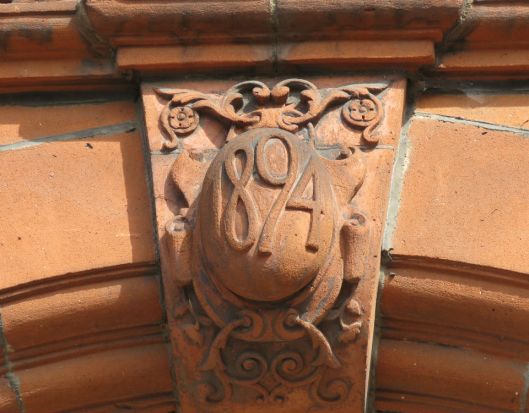
No ships in the image below – just an excuse to show one of Jessie King’s beautiful book covers.

JessieM_King.jpg

From her ‘Three Ages of Woman’ designs, Jessie M King’s cover illustration for George Routledge and Sons’ series of classic books

As we have seen, the ship motif was executed in a wide variety of materials, one of the more unusual being the coloured pebbles used on this post-war panel outside St Paul’s church Tuckswood, Norwich.

St Paul Tuckswood_1.jpg

The last of the Norwich ‘ship’ emblems comes from Norfolk House in Exchange Street. The building – now a part of City College – was constructed after the war on the site of a furniture store that had been bombed in the Baedecker raids. Although constructed in a modern style it was intended that the building reflect something of local history and this was effectively achieved with the artwork below. The East Anglian shield is comprised of the cross of St George and the smaller St Edmund’s shield with its three golden crowns. Surmounting this is a craft that must have been a common sight into the early C20th – the Norfolk wherry whose shallow-draught allowed it to trade on the Broads.Norfolk House_1.jpg

Before the war, Raymond King and his wife had been impressed by the simple style of modern architecture in Sweden and wanted to build something forward-looking on the site. The model was the Town Hall at Halmstad in southern Sweden.

Norfolk House_Plunkett_1.jpg

Norfolk House, Exchange Street Norwich. Taken in 1951 by georgeplunkett.co.uk

This plaque in the foyer marks the inauguration of the building in 1951, the year of the Festival of Britain that celebrated British renewal and enterprise after a debilitating war.

NorfolkHousePlaque_1.jpg

The bronze plaque includes the Norfolk wherry, mirroring the ship on the parapet. Like all ships with wind in their sails it projects a brighter future … and one with an appropriately local flavour.

NorfolkHseRoundel_1.jpg

Please let me know if you know of any other ship motifs in Norwich and Norfolk.

Sources

1.Antiques & Interiors, 31-35 Elm Hill, Norwich (www.artsandcraftantiques.co.uk)

2. georgeplunkett.co.uk. See entry on ‘Princes St 1 Garsett House’.

3. Bussey, David and Martin, Eleanor (2012). The Architects of Norwich. George Skipper, 1856-1948. Pub, The Norwich Society (available from citybookshopnorwich.co.uk).

4. racns.co.uk